
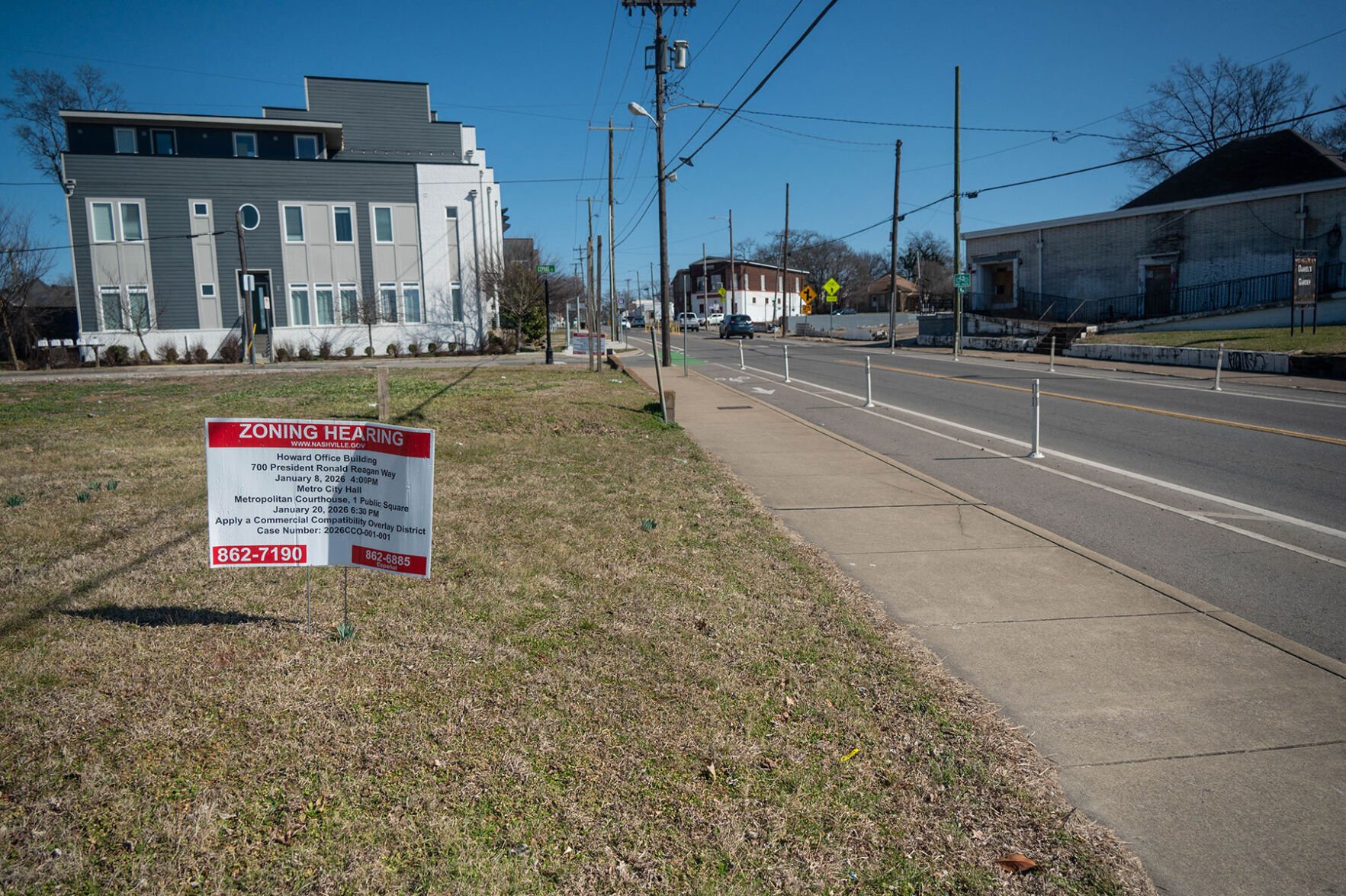

A controversial commercial overlay for Buchanan Street will return to the Metro Planning Commission on Feb. 26 after being deferred in January by the same body. Second-term Councilmember Brandon Taylor, whose District 21 includes much of North Nashville, designed the overlay through years of conversation with area residents and businesses. Taylor sponsors the legislation in the Metro Council, where the two bills will come up for second reading on March 3.
As real estate speculators, new business districts and rezoning strategies transformed neighborhoods in the past decade, Taylor has struggled to keep North Nashville — Middle Tennessee’s historical center of Black life — both insulated from rapid change and on board the city’s real estate boom.
“Gentrification is very real in Nashville, and we are working with the last frontier in North Nashville,” Taylor tells the Scene. “I take pride that that has not happened in North Nashville. We’ve seen growth, we’ve seen development, but we are trying to drive smart growth and smart development. I’m not thinking of 12South or Hillsboro Village — that is not what we’re striving to be. We’re striving to be the Buchanan Street and Jefferson Street that we’ve always been historically.”

New zoning policies, proposed Buchanan Street regulations lead to contentious public hearing about fairness and displacement
In June, Taylor co-sponsored legislation creating business rules for a “Commercial Compatibility Overlay district,” a codes section that officially passed in October. In November, Taylor introduced two bills that drew a CCO district around several blocks of prime Buchanan Street properties. Fierce public pushback in January criticized the overlay as an attempt to hold Black businesses to a separate standard that would doom their profitability.
Taylor’s new rules add explicit restrictions on what new businesses can operate on Buchanan Street — no “alternative financial services,” a legal category that includes high-interest loan giants like Advance Financial, whose confusing contracts and litigious business practices wreak havoc on low-income households. No beer and cigarette markets, including vape shops and smoke shops. Auto repair shops, car washes and liquor sales must have a 2,640-foot buffer from one another, while bars and nightclubs can’t amplify sound outside after 9 p.m. and must close between midnight and 9 a.m., among other rules about buffer space and outdoor seating. During the public hearing, some pointed to Lower Broadway, where parties rage into the early morning and owners make millions hand-over-fist.
“This zoning bill, the Buchanan Street Commercial Compatibility overlay, is being framed as order — as compatibility, as progress — but to the people who live here, build here, create here, it feels like erasure,” said Jordan Gaither, a Tennessee State University graduate, during the Jan. 8 public hearing. “Buchanan Street has never been quiet. It has never been designed to fit inside a box that makes other people comfortable. Buchanan Street is culture, it’s music spilling into the street, it’s Black-owned businesses surviving without apology, it’s nightlife conversation, entrepreneurs and community — not just during business hours, but when the city actually comes alive.”
Taylor says that at times, criticism has strayed into misunderstandings or rumors, which he says he hopes to set straight at an upcoming Feb. 21 community meeting.
“ We’ve had to do some work in communicating or debunking some of the myths or misinformation that was out there,” Taylor tells the Scene. “ One of the big things was that there’s a curfew on Buchanan Street — that was false. Or that some folks were gonna have to close down — that is false. This legislation would only affect brand-new businesses or brand-new development. If there’s currently a business operating, they’d be grandfathered in.”
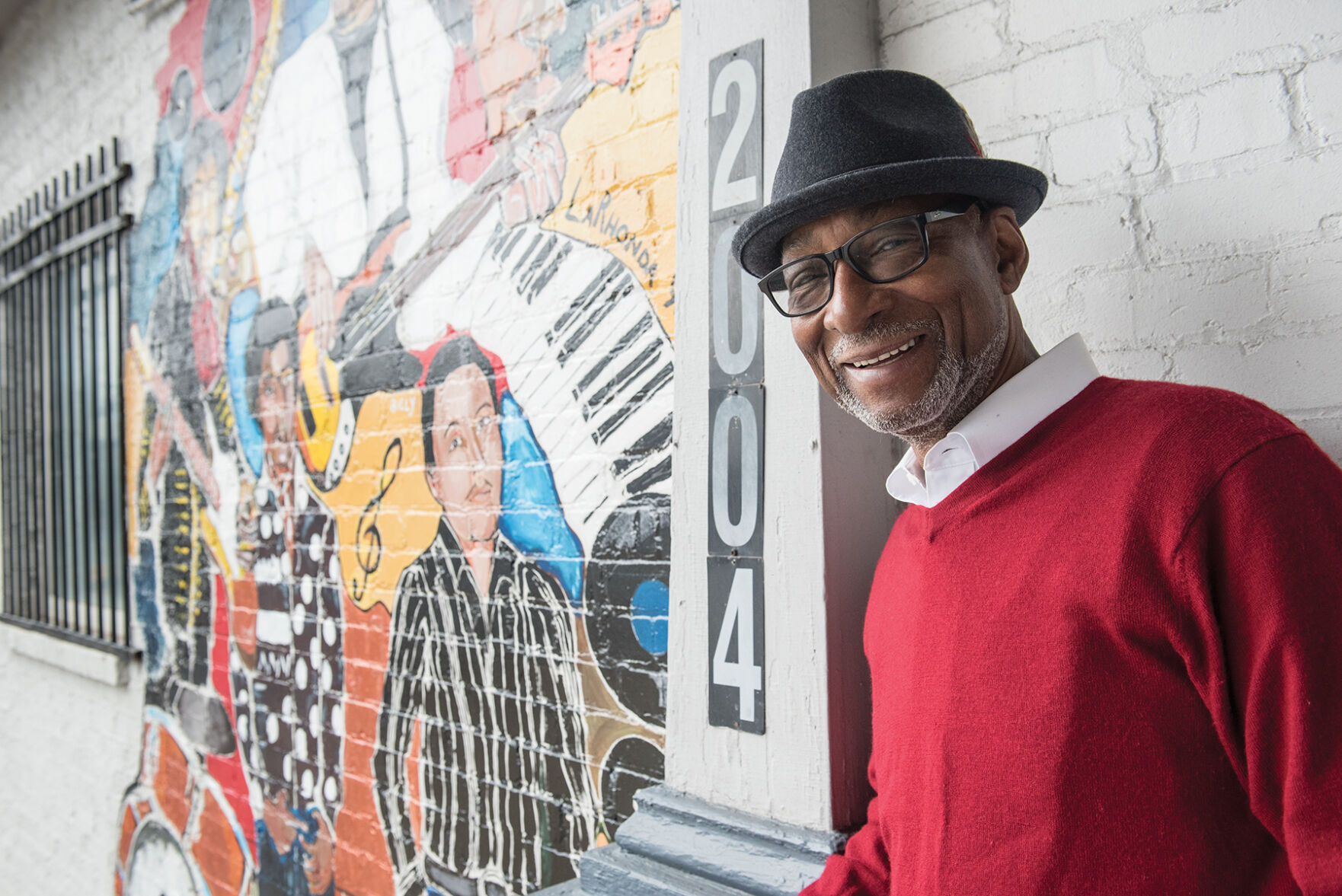
Jefferson Street Sound Museum spotlights the history of North Nashville’s once-bustling music scene
Decades ago, North Nashville’s streets teemed with Black-owned businesses and a strong middle class, anchored by nearby institutions TSU, Fisk University and Meharry Medical College. The history rivals any great chapter of America — civil rights leaders organizing in churches, music legends performing in Jefferson Street clubs, generations of students graduating into stable careers. A sharp decline followed in the post-segregation era, hastened by public disinvestment and targeted decisions that tore apart North Nashville’s commercial and residential fabric. Taylor now hopes that, with cautious and careful urban planning, the neighborhood can flourish for Black residents, not real estate speculators or transplants. Life has always revolved around the campuses, livelier entertainment and socializing on Jefferson Street, and quieter local businesses on Buchanan Street.
Pizzeria Slim & Husky’s opened in 2017 at the corner of Buchanan and 10th Avenue; at the time, owner Clint Gray called the neighborhood a “food desert.” Slim & Husky’s oblong pizzas soon commanded a strong local following. Slowly, the blocks filled up. Former Titans cornerback Kristian Fulton opened a boutique clothing store across the street in an airy space now home to The Loading Dock Cafe. The strip now has at least three coffee shops and bakeries — Sift, Morning Glory Cafe and All or Nothing Bagels — and plenty more social gathering spaces like Moguls Barber & Lounge, Tio Fun! and The Locker Room, a sports bar co-owned by local rap legend David Darnell Brown (known on the Billboard charts as Young Buck).
This momentum has included new and old faces in the area, including many who are extremely proud, protective and wary as Buchanan charts its path into the future.



Post a comment as anonymous
Report
Watch this discussion.
(0) comments
Welcome to the discussion.
Log In
Welcome to the discussion.
Keep it clean. Please avoid obscene, vulgar, lewd, racist or otherwise abusive language. Comments featuring hate speech or threatening or violent content will not be tolerated.
PLEASE TURN OFF YOUR CAPS LOCK.
Be truthful. Don't knowingly lie or mislead.
Be proactive. Use the “report” link on any comment that violates our comment policy.
Share with us. We'd love to hear your feedback.