

Nashville neighborhoods typically welcome new greenways, and homeowners’ associations typically don’t volunteer legal teams suing the city into a corner.
A new lawsuit from Devin Schultz — contract attorney by day, Harpeth Crest Homeowners’ Association president all the time — disputes a key condition of Metro’s agreement with Texas real estate developers in an ongoing effort to stop the Ariza, a controversial 417-unit apartment complex on the Harpeth River. In 2023, then-Councilmember Dave Rosenberg of District 35 conditioned the Ariza’s building permits on developers first connecting two portions of the popular Harpeth River greenway, which links Bellevue to the Warner Park system.

Metropolitik: For more than 20 years, the greenway system has struggled to evolve from recreational to functional in a car-focused city
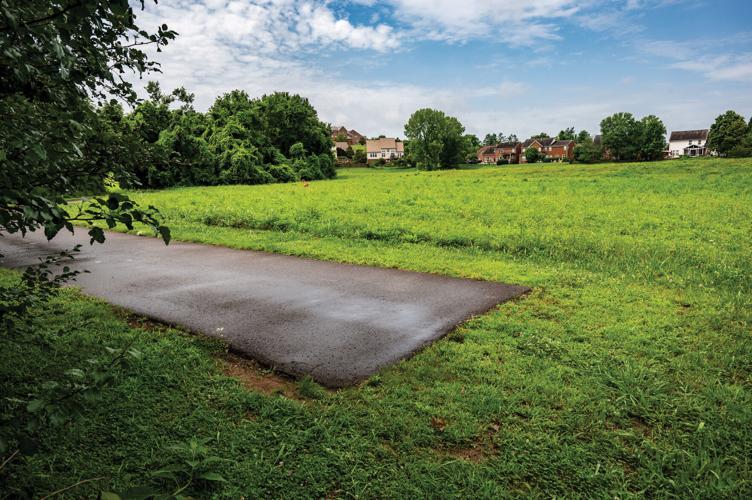
Schultz lives a few hundred yards from where the Harpeth River greenway currently ends, and a hundred-yard wedge critical for the project’s preferred connection runs through his HOA. In May, he petitioned to block any further greenway construction, alleging that Metro and the Houston, Texas-based Cypressbrook Company negotiated the Ariza deal with land that neither controls. At the time, the deal was a win for Rosenberg, who was helping advance Metro’s vision for better parks and recreation. Now the rezoning plan’s fine print is one of many stumbling blocks impeding Nashville’s piecemeal greenway effort.
“Metro has authorized and set in motion an imminent and concrete physical invasion of private property without instituting condemnation proceedings or providing any mechanism for just compensation,” alleges Schultz in his 36-page complaint filed May 5 in federal court.
The suit makes a constitutional appeal to the Takings Clause, a Fifth Amendment protection against government overreach. Schultz, who declined the Scene’s request for an interview, has a valuable legal resource in Jim Rossi, a professor at Vanderbilt Law School and fellow Ariza opponent. Rossi’s scholarly niche includes government agency decision-making, tort law, environmental regulation and the very same Takings Clause on which Schultz has built his greenway defense. Rossi lives in a cul-de-sac across the Harpeth River and has marshaled neighbors’ support against the apartment proposal.
“This is a physical invasion — at its simplest, every member of that HOA, pursuant to their covenants, has an enforcement right with respect to common property, and that gives them a property right,” Rossi tells the Scene. “This suit is a formidable barrier to the developer constructing the project as it was originally approved and envisioned and the beginning of potentially a long line of litigation.”
Metro could escalate the issue with an eminent domain claim, though the city has historically avoided suits directed squarely at its citizens and would face more tough litigation. A 2024 state law significantly raised the legal standard required for using eminent domain to build a greenway.
“Isn’t this why we have a Bill of Rights?” Rossi continues, with no detectable hint of sarcasm. “You can’t take away an individual’s rights just because a majority deems it’s popular.”
The city’s defense tells a different story. Metro attorneys call the project a “long-anticipated greenway” and call Schultz’s suit an “11th-hour crisis of his own creation.”
“[Schultz] asks this Court for the extraordinary remedy of a preliminary injunction without offering a shred of evidence of imminent, concrete harm and despite years of notice about the project that he now claims is ‘urgent’ to stop,” reads Metro’s response to the lawsuit. “His allegations rest on speculation, his asserted rights do not exist, and the governmental process he seeks to interrupt has not even produced a final decision.”
That last part is the only relevant detail for now. Schultz’s case played out over five weeks in May under Judge Waverly Crenshaw, ending in a kind of stalemate. Crenshaw appeared sympathetic to Schultz’s argument but dismissed the suit on June 2 without prejudice, meaning Schultz can file again. (He is likely to.)

Nearby homeowners plan to contest construction access and greenway expansion in bid to stop 417-unit complex
Crenshaw ruled that Schultz’s Takings Clause claim is not “ripe” until the Metro Stormwater Commission formally rules on a pending variance sought by Cypressbrook. That decision could come as early as July 9, the next scheduled Metro Stormwater Commission meeting. In the meantime, project opponents are winning the peace. Construction delays are costing the real estate developer $9,000 a day, according to a legal affidavit.
The site’s previous owner approached the Metro Planning Department to discuss multifamily development as early as the mid-2010s and sold the parcel to Cypressbrook in 2023. Rosenberg finally passed the legislation in July 2023 after brokering the rezone plan over several years, a win for density and housing advocates. Nearby residents cast the plan as an existential threat. Opponents at the time frequently described a hypothetical scenario in which traffic and flooding could conspire to block ambulance access to Lakeshore Meadows, a neighboring senior community.
Like the greenway itself, Schultz’s lawsuit is a piece of a larger puzzle; neighbors have opposed Cypressbrook’s Ariza development since at least 2021, and the greenway suit is part of a multifront effort to delay its arrival. Schultz’s HOA was behind another lawsuit in 2023 over ingress and egress access necessary for Ariza construction; that case ended in Davidson County Chancery Court with a favorable ruling for Cypressbrook. With Schultz poised to sue again, the city has met a determined legal opponent who has made a small greenway connection into a big deal.
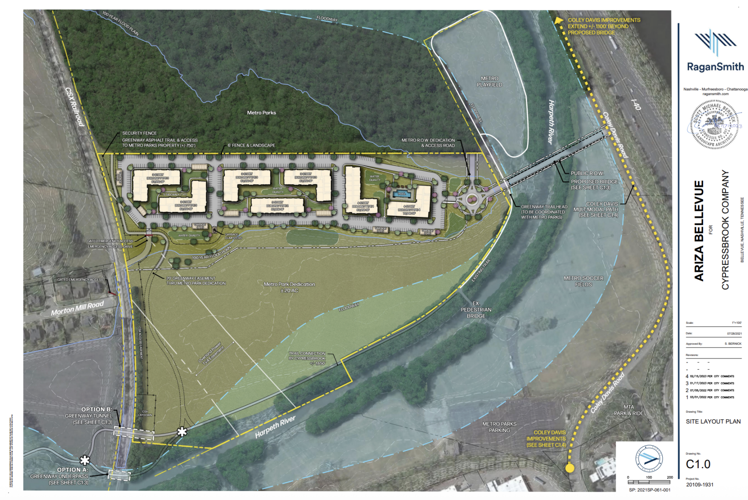
The Specific Plan passed in 2023 shows greenway connection options via tunnel or underpass. See a screenshot of the plan below.




Post a comment as anonymous
Report
Watch this discussion.
(0) comments
Welcome to the discussion.
Log In
Welcome to the discussion.
Keep it clean. Please avoid obscene, vulgar, lewd, racist or otherwise abusive language. Comments featuring hate speech or threatening or violent content will not be tolerated.
PLEASE TURN OFF YOUR CAPS LOCK.
Be truthful. Don't knowingly lie or mislead.
Be proactive. Use the “report” link on any comment that violates our comment policy.
Share with us. We'd love to hear your feedback.