

By the time Phoebe Bridgers’ third album Lost Weekend came out in August, it had already been swallowed by discourse. A week before its release, fans were theorizing using years-old Instagram comments that the song “The Governor’s Waltz” centered on the end of her relationship with actor Paul Mescal and his subsequent linking with musician Gracie Abrams. It was the latest instance of a trend in how audiences engage with her work. Since her meteoric rise with the 2020 release Punisher, a trove of real and imagined lore has been mapped onto online fan charts and “love octagons” that connect Bridgers with everyone from Mescal and her now-boyfriend Bo Burnham to the similarly-named (but otherwise unrelated) Fleabag creator Phoebe Waller-Bridge.
Somewhere in all of the fanfare, it’s gotten lost how genuinely compelling an artist Phoebe Bridgers can be. Her confessional indie folk-rock doesn’t need a cinematic universe to be interesting — it just needs to be good. On Saturday, the first of her two phone-free nights at Bridgestone Arena, she achieved all that and then some, cutting through the noise to transport the audience with an immersive set that celebrated Lost Weekend’s release and honored the rest of her career.

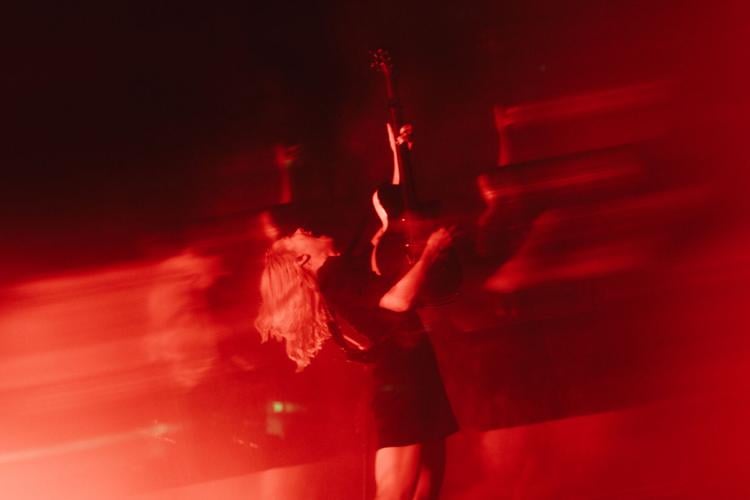
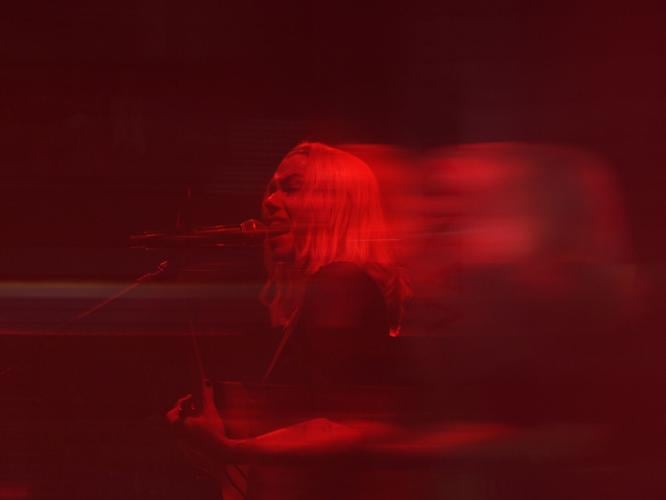
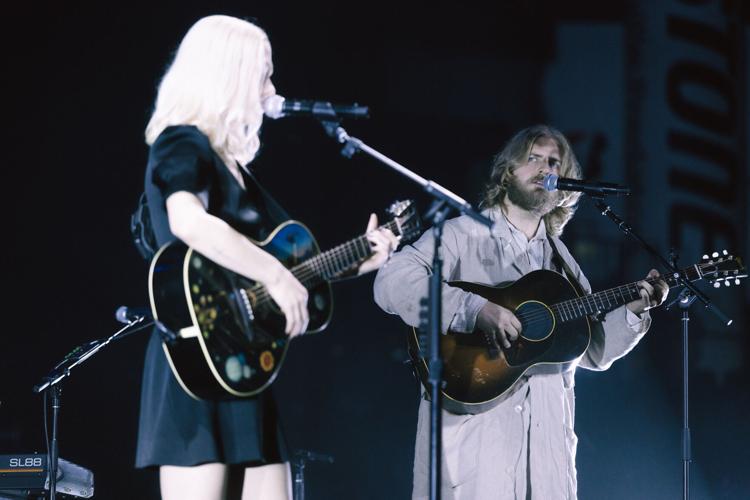
Phoebe Bridgers at Bridgestone Arena, 10/10/2026
When the doors opened on Saturday, the line to get into Bridgestone stretched down Rep. John Lewis Way and across the street along Demonbreun, with buzzing fans decked out in everything from skeleton onesies and Lost Weekend-themed alien outfits to elvish attire in reference to the recent “Lost Boys” music video. Inside, the preshow playlist skewed ambient, pairing Aphex Twin with piano tunes from the Eternal Sunshine of the Spotless Mind and Donnie Darko soundtracks. At one end of the stage, a massive white dome stood against a projected teal curtain. At the other, a circle of speakers and an orb of lights formed a stagecraft UFO.
Alex G stood beneath this UFO for his opening performance, which combined selections from his 2025 release Headlights with favorites from previous albums. He most recently played Nashville headlining a packed Ryman show last October — and has held onto his penchant for onstage hijinks. He let out a yawp during “Runner,” and joked with the audience about how difficult the accordion on “June Guitar” was to play. After playing “Afterlife,” he asked if there were any Matchbox 20 fans in the house before a frenetic a capella snippet of “Unwell,” which gave way to a tidal wave of noise. The extended set ended with a powerhouse rendition of “Headlights,” the sound of his guitar climbing to dizzying heights.
A total blackout and the sounds of alien hums and mechanical beeps signaled the start of Bridgers’ set. Lost Weekend opener “The Outside” began to echo as the orb over the B-stage descended, flashing green lights as if the music was emanating from inside of it. At the other end of the arena, the dome rose up. Bridgers stood there in a black minidress and glitter tear tracks, playing the first chords of “Motion Sickness" with her band. The breakout Stranger in the Alps number has been a common feature of this tour’s set lists; its frequent juxtaposition with “The Outside” feels reflective, as though she’s comparing the beginning of her career to today.
The reflections continued during “Garden Song.” Its line about looking up “from my phone to see my life” was all the more resonant in a crowd full of sealed Yondr pouches: The audience felt centered, and focused on Bridgers alone. For longtime fans, songs like this one are reminders of a long gone time, when she was coming up in the indie circuit and hadn’t exploded as the lonely collective soundtrack of the COVID-19 lockdown. As if aware of this nostalgia, she paired it with fellow Punisher feature “Moon Song” — a one-two tearjerker punch that knocked me to my metaphorical knees. I was crying, and I wanted to live in it forever.

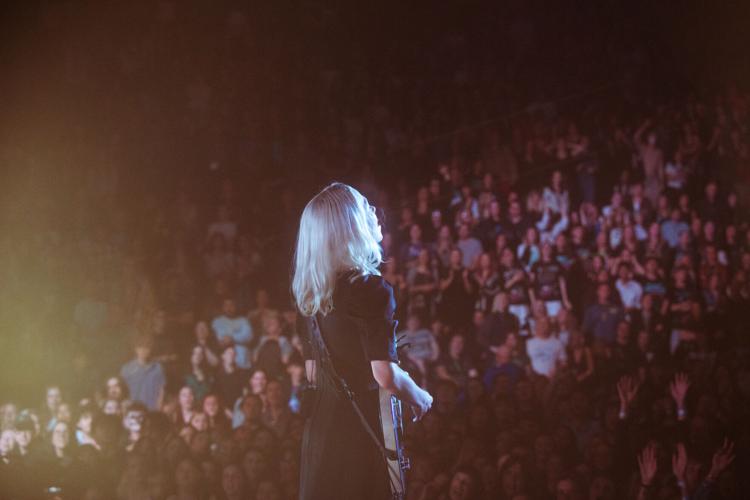
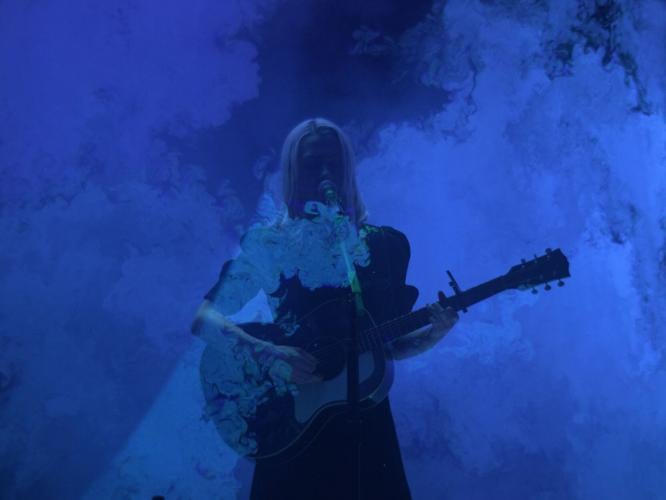
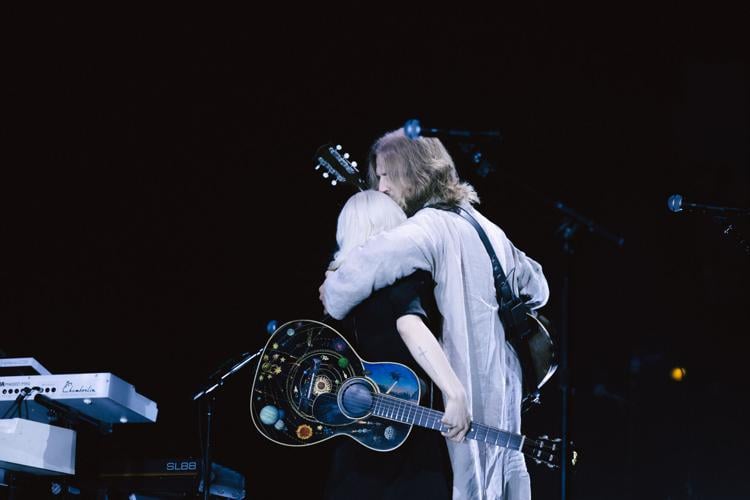
Phoebe Bridgers at Bridgestone Arena, 10/10/2026
Despite the “sad girl” label that haunts her — and that she later skewered onstage, pointing out that it’s “weird we fetishize the suffering of women and queer people” — Bridgers is an expert at balancing emotional wells with joy. “Liberty Tree” came next, a striking juxtaposition to the nuanced grief of “Moon Song” with its uncomplicated proclamation, “It feels so good to have you in my life.” Later, “As Above” built to a crescendo, with Bridgers screaming “you don’t have to believe me” as beams of light and a flood of sparks appeared behind her. She followed it up with the jubilant “Bobby,” then fan favorite “Waiting Room,” which the audience answered with shrieks and cheers.
There’s a kind of permission to embody the experience that a no-phone concert grants you. During the outro of “Waiting Room,” and again in the cathartic cry that closes “I Know the End,” I realized how long it had been since I felt so comfortable screaming along at a show. Instead of harsh white phone flashlights, the crowd lit up with a warm constellation of lighters. By the encore, which led with a “Lost Weekend” reprise, Bridgers had quick-changed into a white dress. Under the light of the UFO, it glowed a ghostly blue. She was beaming. As “Scott Street” began, fans throughout the arena waved their arms along with the beat — their empty palms outstretched to her.




Post a comment as anonymous
Report
Watch this discussion.
(0) comments
Welcome to the discussion.
Log In
Welcome to the discussion.
Keep it clean. Please avoid obscene, vulgar, lewd, racist or otherwise abusive language. Comments featuring hate speech or threatening or violent content will not be tolerated.
PLEASE TURN OFF YOUR CAPS LOCK.
Be truthful. Don't knowingly lie or mislead.
Be proactive. Use the “report” link on any comment that violates our comment policy.
Share with us. We'd love to hear your feedback.