
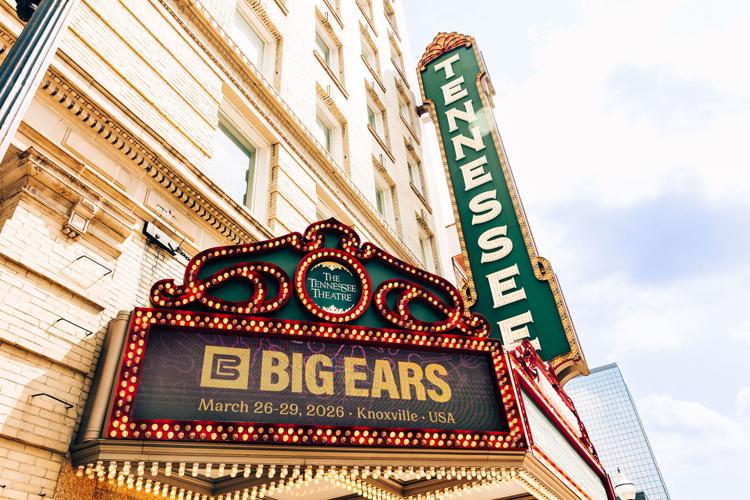
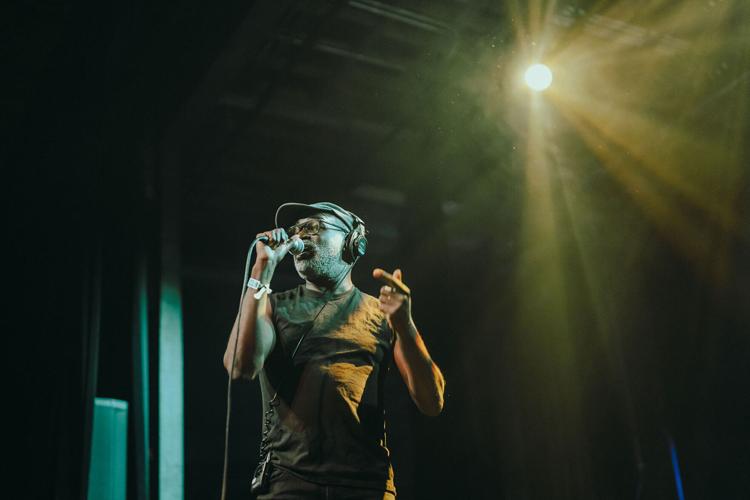


It’s impossible to talk about Knoxville’s annual Big Ears Music Festival without acknowledging that it’s continually the most impressive gathering of artists, theorists and icons in the state. It competes on a nationwide level as well, but there’s something of a challenge in it for Nashville as Music City. Nashville could never — not without going back in time and maintaining a walkable district that also has free municipal parking on weekends and after 6 p.m., with several performance spaces of varying size and amenity, while also keeping developers in check. But lest you think I’m trying to explore hateristic tendencies, there is a central paradox to what makes the liberating possibilities of Big Ears so overwhelming: Having all these venues so close together leads people to second-guess themselves, often abandoning shows after 10 or 15 minutes to see something else. It can be an absolute mukbang of FOMO.
But in these current horrifying and agitated times, there’s something truly liberating about what an event like Big Ears offers. A quality, transformative live music experience lets you punch through the obfuscating chaos of this particular moment — whether that means proper grooves that set the ass free or something spiritual and evolutionary. Each new set can be the ritual that grants a spiritual reset, even if just for a little bit. And most explicitly a ritual was Sō Percussion’s Sunday performance of Steve Reich’s Drumming, a 78-minute experience involving evolving percussive elements that, on conclusion, won a thunderous response from the crowd. It was as if an obstacle to enlightenment fell at the same time some miraculous sporting-event victory occurred. It was awesome, and it rewarded the shared durational aspect of the experience.

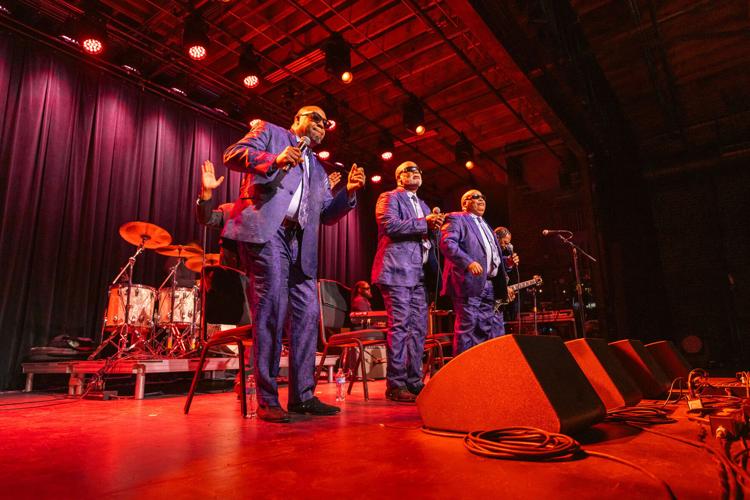
Blind Boys of Alabama
Similarly, the legendary Blind Boys of Alabama (hands up from anyone who saw their remarkable Belcourt show in 2002) stepped up for a proper Palm Sunday musical revue and church service, with testifying, sing-along sections and those incredible voices and harmonies. Now a vocal trio, these gentlemen work hard onstage to deliver the frisson of sacred music in a soulful, rocking context, and it’s still quite a transformative moment. It doesn’t matter how many times you’ve heard their incredible take on “Amazing Grace” using the arrangement of “House of the Rising Sun,” you still feel that in your spine when they sing. My dissatisfaction with organized religion is well-documented and well-earned, but there’s a lot to be said for the concert-as-church-service mode of performance, because it allows you to explore that kind of spiritual experience without getting tangled up in tithes, congregational drama and political broadsides.

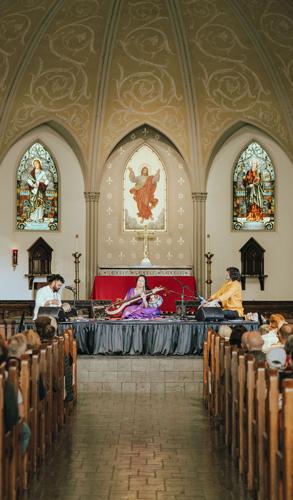
Ragamala
For 10 hours on Saturday (I was there for six of them), the Chicago-based minifestival Ragamala set up shop at St. John’s Episcopal Cathedral, and it was bliss. Working to bring Carnatic and Hindustani classical music to more mainstream domestic attention, this was an assortment of musicians and teachers playing with joy and technical wizardry. They may not have seen themselves as educators, but honestly, I learned more about the evolution of musical instruments and time signatures in this one day than at any previous point in my life. Opening with Kunal Gunjal on the santoor (a 100-stringed Indian ancestor of the hammered dulcimer) and the tireless Praveen Narayan on tabla (he would play tabla for the first three sets), the performance started with the Hindustani tradition, and it was just beautiful. The santoor is quite an instrument, and it feels soothing and mellifluous — the breeze and the brook.
Next up was Saraswathi Ranganathan playing the saraswati veeṇa (and yes, she was named for it). The saraswati veeṇa is, as she called it, “the great-great-great-great-grandmother of the sitar,” and it is one of those intimidating musical instruments that you can’t help but respect — if only for the back and upper-arm strength its mastery requires. We were also introduced to percussionist Swaminathan Selvaganesh (who was going to be working his ass off for pretty much the rest of the day, like Narayan), working with Narayan on tabla again. The trio was having a blast, weaving a sound that was alluring and evocative and emotionally freeing, contrasting beautifully with the opening santoor set.
The third set involved Ranganathan dipping out, with legendary kanjira player Selvaganesh Vinayakram taking point position alongside his son Swaminathan and Narayan. The kanjira is like a stealth tambourine, capable of much more precision and nuance. But in addition to that, Vinayakram is also a master of konnakol, a style of vocal percussion. (He compared it to beatboxing.) This was when the vibe shifted into kinesis and learning, because not only did he get an entire sanctuary full of people synced up to some incredibly complex time signatures, but there was palpable joy on his face as we all committed to the experience.
After stepping out for Perfume Genius’ set (more on that in a bit), I returned for the Ragamala grand finale, where Vinayakram and Selvaganesh were joined by the legendary Shankar Lakshminarayana, a major figure in world music for 60 years now (and also well-respected in this house for his work with Wendy & Lisa for the show Heroes). Shankar is an innovator of the violin, having crafted the “LSD” (L. Shankar Double Violin), a fascinating instrument that found a whole new language for blending the string and the synth.
But speaking of violin innovation, one has to give a shoutout to performance art icon Laurie Anderson, who had several performances and experiences available at Big Ears 2026. Still resentful at Vanderbilt for having made Anderson’s 1989 performance on the Strange Angels Tour an 18-and-older event (it’s hard to express, unless you were in Nashville then and listening to Lightning 100, how massive a regional hit “Babydoll” was), I was delighted to finally see her in action. She presented a piece called “What War Is This? What Time Is It?” Like Christopher Walken and William Shatner, Anderson is an artist who can be identified by cadence, and she has used that gift to give voice to the thoughts that proliferate throughout the modern mind. I find her work soothing and sometimes scabrous, and I love her stories. (There’s a particularly staggering JFK tale here.) If I have some misgivings about her experiments with AI, know that it’s the technology itself that unnerves, not what she uses it for. But would it be a proper music festival without some form of controversy?
A similar tech marvel, Reggie Watts took the stage at the Knoxville Civic Coliseum surrounded by several instruments and a beloved sampler/sequencer rig, and proceeded to craft an improvised musical-comedy set that worked. Unless you’re in the jazz trance, “fully improvised” can be a warning. But Watts, a musical and comedic polymath, was enthralling. With such a broad swath of musical knowledge and ability, he was leaping genres and characters with the greatest of ease. Personal faves include The Oak Ridge Boys’ lighting designer, the music festival historian and his joy at playing in Tennessee, “one of the more symmetrical states.” Watts really is a must-see, for covering so much ground and managing to feel diaphanous but also informative.

Perfume Genius
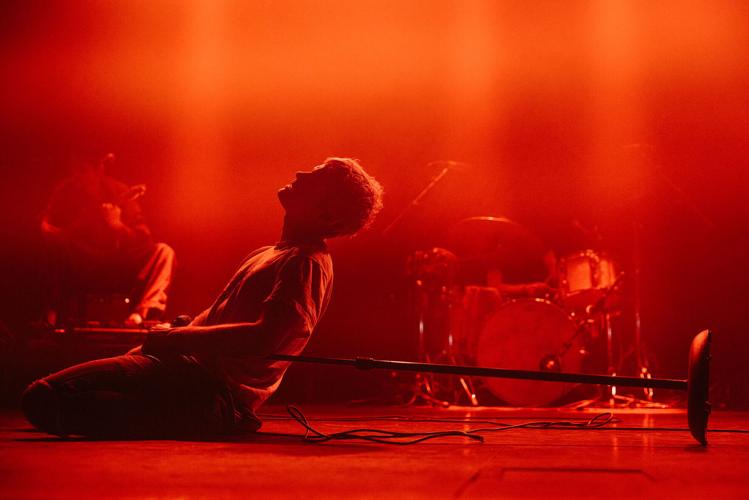
There’s something I find deeply encouraging when queer artists rock audiences on their own terms. And Mike Hadreas set up shop and gave the crowd an intimate set that nonetheless rocked very hard, delivering multiple simultaneous modes of experience and deploying that voice with control and passion. Joking about trying to improvise a Xanax for the sober, and summoning the exact right amount of drama, Hadreas’ Perfume Genius was exactly the right performance. He served up a rock show that delivered on traditional expectations but also something more focused on big emotions and vibes — and that includes the punishing strobes toward the end.

Tunde Adebimpe
The emotional highlight happened early and hit hard, with the opening-night set from once and future TV on the Radio frontman Tunde Adebimpe, digging into much of his 2025 solo album Thee Black Boltz. Performing with just a boom box and a sequencer, Adebimpe brought intense and clarifying focus to the emotions that record is steeped in, with the occasional moment of between-song explanation or clarification. Adebimpe’s voice is an incredible instrument (watch out for the powerful, Princely falsetto he can deploy), and in his all-too-brief 45-minute set, he took The Mill & Mine on quite the journey. There are a lot of artists who can perform sincerity for maximum audience effect, but Adebimpe embodies sincerity rather than performing it, and you feel that in a way that stays with you.



Post a comment as anonymous
Report
Watch this discussion.
(0) comments
Welcome to the discussion.
Log In
Welcome to the discussion.
Keep it clean. Please avoid obscene, vulgar, lewd, racist or otherwise abusive language. Comments featuring hate speech or threatening or violent content will not be tolerated.
PLEASE TURN OFF YOUR CAPS LOCK.
Be truthful. Don't knowingly lie or mislead.
Be proactive. Use the “report” link on any comment that violates our comment policy.
Share with us. We'd love to hear your feedback.