
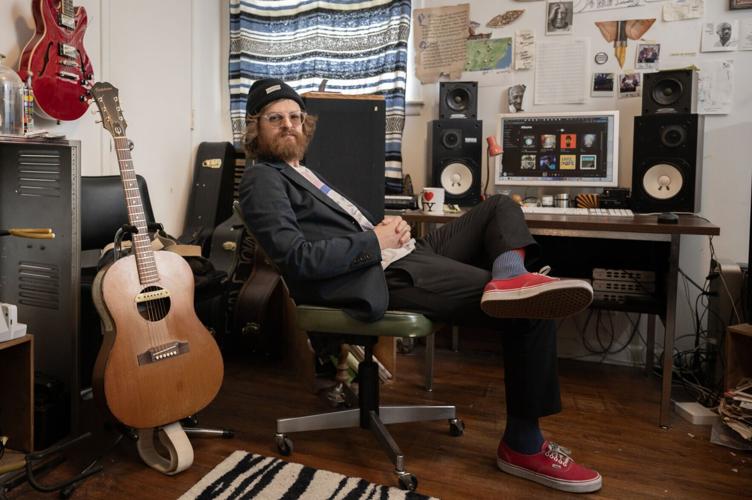


Eagle Johnson in his home studio and Juniper headquarters
Over the past 15 years, streaming has become a dominant force in the music industry, offering billions of fans instant and low-cost access to a dazzling array of music and offering musicians instant access to a massive potential audience. However, it’s also become increasingly rare to find someone who doesn’t have qualms about the business of streaming.
Between anger about industry-leading platforms like Spotify making meager payouts to the overwhelming majority of musicians and concerns about where subscription dollars go — see the 2025 backlash against Spotify’s then-CEO Daniel Ek investing about $700 million in a startup that develops AI-powered military tech — it feels like there’s a new call for a streaming boycott every few months. Still, it’s a big jump from decrying issues with streaming economics and ethics to starting a service of your own.

With a new crop of potential hurdles to making money from recordings, how can musicians earn a living?
Eagle Johnson, a Nashville-via-Florida psych-rock musician born Chris Nanney, had a brainstorm about an alternative monetization model for streaming. Instead of the typical plan — in which all of a service’s subscription fees over a given period get pooled and an algorithm divides them among artists based on a per-stream royalty rate — Johnson wanted to see artists paid based on the portion of users’ total streaming time spent listening to them. He points out that this model not only feels more fair to musicians, but could potentially quash issues like unscrupulous parties juking their numbers with fake streams (and the attendant cost of policing). So he reached out to contacts he found for executives at Spotify and Apple Music to share his idea. He wasn’t surprised when he didn’t get a response.
“[The system is] not working for us, but it's working for them, so they don't want it to change,” says Johnson. “Eventually it became obvious that if I ever wanted a streaming service with this system to exist, I would have to do it myself.”
That was the seed for Juniper, the fledgling streamer that Johnson runs off a small server he built himself in his East Nashville home, which is also his band’s practice space and recording studio. He sought out advice from friends who work in software development, and using resources like GitHub and artificial intelligence coding platforms like Cursor, he did the dev work on Juniper himself.
Another founding principle of Juniper is choosing an alternative to traditional corporate structures that give immense power and primacy to shareholders. Citing businesses like Ben & Jerry’s and Patagonia as examples, Johnson set up Juniper as a B Corporation, which enshrines the company’s bylaws and their statement of Juniper’s intent for the public good as the ultimate authority.

Discussing an array of issues with generative artificial intelligence in creative work
While Johnson isn’t opposed to business uses of AI like coding, he is very much against AI in creative work. Section 1.3 of the bylaws is all about keeping the bot-driven music that’s wreaking havoc on other platforms off Juniper, and he’s partnered with ArtyShield to maintain the AI-free integrity of Juniper’s catalog.
“The Frist has great art, great artists, but they’re not going to hang AI art in there,” Johnson says. “But they might use AI to advertise that they have such and such artists in their gallery right now. [They might] use AI as a tool for the business side of things and to try to get people there, but they're not going to replace their artists with it.”
When we spoke in May, Juniper offered a very small catalog of music — with half a dozen artists including two of Johnson’s own projects — and was serving between 60 and 100 subscribers. He was just on the cusp of being ready to roll out paid subscriptions; a few weeks later, Juniper survived its first cyberattack.

Eagle Johnson
Johnson has identified a very intriguing use case for Juniper that circumvents some of the challenges to growing the catalog; it’s also something he could replicate in other music towns. He’d like to see Juniper stocked with a curated selection of local music and be offered to tourists hungry for a taste of local flavor via official channels like the Nashville Convention and Visitors Corp.
Juniper is decidedly modest, but Johnson sees his role as proving the concept and giving the company the strongest possible foundation.
“I started a business, but I do not try to pretend to be a businessman. One day I'm not going to be in charge of Juniper. I’m happy to get it going and bring it into this world, but I think for it to be a great success, that means I'll probably at some point step aside and not run it.”




Post a comment as anonymous
Report
Watch this discussion.
(0) comments
Welcome to the discussion.
Log In
Welcome to the discussion.
Keep it clean. Please avoid obscene, vulgar, lewd, racist or otherwise abusive language. Comments featuring hate speech or threatening or violent content will not be tolerated.
PLEASE TURN OFF YOUR CAPS LOCK.
Be truthful. Don't knowingly lie or mislead.
Be proactive. Use the “report” link on any comment that violates our comment policy.
Share with us. We'd love to hear your feedback.