

This story is a partnership between the Nashville Banner and the Nashville Scene. The Nashville Banner is a nonprofit, nonpartisan news organization focused on civic news. Visit nashvillebanner.com for more information.
This fall, A.B. Eastwood paused mid-session when another producer proposed something he never thought he’d encounter in a professional recording studio.
Eastwood, a Nashville native producer and songwriter who now splits his time between home and Los Angeles, says he and a group of collaborators were midway through writing a song when the co-producer suggested they run the track through Suno, an AI platform that specializes in generating music, to see how it would sound filtered through a different genre, like ’90s R&B.
Eastwood was shocked.
“It was the first time I had come face to face with somebody jumping to AI in a session,” he tells the Nashville Banner, catching up over the phone while working in Los Angeles. "I've seen people do AI post-production for, you know, ornamental additions. I understand that as a tool, and [a way to] pull some cool ideas to finish a project. I get that. I’m not too upset. But we weren't even done with the song. It was weird.”

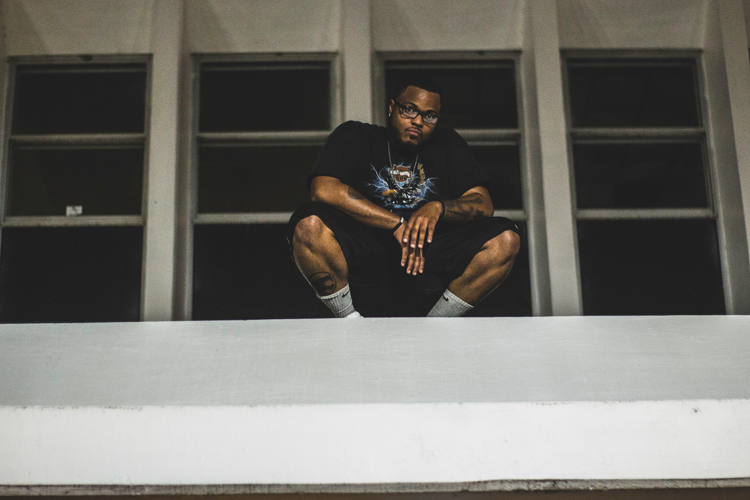
A.B. Eastwood in 2020
Though it was a first for Eastwood, it almost certainly won’t be the last time he and other musicians like him will have to reckon with artificial intelligence and its effects on their careers, creativity and livelihoods. AI-generated music is gaining popularity at a rapid clip, and songs by AI avatars have started charting on streaming services and on Billboard.
Like the launch of Napster at the turn of the millennium and the introduction of the drum machine two decades before that, the infiltration of generative AI into music making marks another watershed moment for the industry — an industry still recovering from the devastating effects of the COVID-19 pandemic and still struggling to compensate artists fairly in an ecosystem dominated by on-demand streaming and lagging record sales.
Even as some major labels and artists experiment with licensed AI tools (in late November, Warner Music Group announced a partnership with Suno, for example), many musicians in Nashville see the technology less as a collaborator than as an existential threat.
![Trump’s ‘One Big Beautiful Bill’ Could Prohibit Tennessee AI Laws [Updated]](https://bloximages.newyork1.vip.townnews.com/nashvillescene.com/content/tncms/assets/v3/editorial/2/a5/2a59d6c8-4aac-5ea9-967f-0a79a6a462ac/65fd9f5a1d707.image.jpg)
U.S. Senate votes to remove provision from federal budget legislation that would infringe upon states’ right to legislate artificial intelligence
While he knows he needs to make a living, Eastwood says he is primarily concerned with AI’s potential as a creativity killer. Getting “stuck” while writing a song or working in the studio can be frustrating, he says, but working through those moments often yields serendipitous results, whether leading a song down an unexpected path or challenging him to branch out from preconceived ideas about the project he’s making.
“I know for a fact I didn't like it,” he says of bringing AI into the studio. “I was trying to find my peace with it in the session, but I'm an explorer and a searcher when it comes to music. I don't mind trying another idea and trying to find the thing that really sits well. But we didn't give ourselves a chance to rack our brains about it before we put [AI] in there. ... It just didn’t feel good. It felt like cheating.”
That “cheating” comes at the expense not just of human creativity, but also the actual livelihoods of the artists whose music is used to train algorithms for platforms like Suno. These platforms are not “creating” music in a vacuum; instead, they pull from millions of existing songs to approximate a particular sound or style, with no recognition or compensation for the creators whose work is being mined for data.
Eastwood says he already sees colleagues losing money to generative AI, particularly behind-the-scenes players like mastering engineers and others in post-production roles.
"There are already people not working as much,” he says. "It’s Pandora's box. It's open, and it's not going to close.”
Certified Human
Lili McGrady knows she can’t close that box, but she and her company Humanable are doing their best to protect the work and income of human creators anyway.
Humanable, launched by McGrady and co-founder Tim Wipperman in September 2024, offers artists a way to certify their music as human-made. She likens a Humanable certification to a “certified organic” designation on a piece of produce and sees Humanable as valuable not just to artists seeking to distinguish themselves from AI avatars, but also to listeners who wish to support music made by human beings.
McGrady, a Nashville transplant with a background in theater and trademarking, tells the Banner that upon landing in town and getting involved in the local music scene, she noticed similar AI-related fears among artists and industry folks alike.
“They were afraid of generative AI eating their lunch, their minimal lunch,” McGrady tells the Banner. “I was especially hearing things from kids who had just gotten their first publishing deals, after working years and years to get that first pub deal. They’re just terrified, like, ‘I finally have a pub deal. Is this going to go away?’”
She and her team dreamed up Humanable in February 2024, hired software developers within weeks and had a functioning platform within the year. She connects the speed of Humanable’s launch to the urgency of the situation facing the music industry, saying that at the end of the day, “It all comes down to money.”
“A conservative estimate right now is that in two years at least 24 percent of royalties from actual human music creators is going to be gone due to AI music and streaming fraud,” McGrady explains. “That is a loss of over $5 billion a year for the music industry. ... It's a crisis financially to the music industry, and it's a crisis to actual human art and expression. And it's also, frankly, a crisis to the city of Nashville, because this is a big chunk of what makes us who we are.”
Any artist can sign up with Humanable, regardless of whether they are affiliated with a label, publishing company or other industry entity. McGrady says their vetting process is rigorous, and half-jokes that they know which attorneys general to alert should an artist lie about a song’s provenance.
"The first step is we verify your ID,” she says. “When creators certify a piece of work with us, they sign an affidavit for each song going forward that says, ‘This was created without generative AI, and to the best of my knowledge, if I had co-writers, they did not [use generative AI either].’”
Jennie Hayes Kurtz is one-half of the Americana duo Brother and the Hayes, alongside her brother David Bingham. Brother and the Hayes is an official Humanable artist, and Hayes tells the Banner that protecting the pair’s work from the growing threat of generative AI feels imperative in today’s rapidly shifting landscape.
Asked when that threat first appeared on her radar, Hayes shares an anecdote from her work leading songwriting workshops at the Country Music Hall of Fame and Museum as part of the Words and Music Program for schools. As large language model chatbots like ChatGPT grew in popularity, teachers and songwriters involved in the program began to notice that some tech-savvy students were using AI to write their songs — something that goes against the ethos of the educational workshop.
“It's kind of like using a calculator to do your math homework,” she tells the Banner. “Or at least, the kids probably thought of it that way. It might seem harmless, but the point of that program is to think through your lyrics, think through your meaning, think through what you're trying to convey.”
Like Eastwood, Hayes says she feels something essential is lost when human ingenuity is outsourced to AI. While she ultimately blames AI companies for creating products that discourage creativity and critical thinking and enable intellectual property theft, she understands that the toothpaste is out of the tube, so to speak, and that the burden of protecting creative industries like music from being cannibalized by generative AI ultimately, unfortunately, falls on the very people it endangers.
“The question [people ask most] is, ‘Hey, why does the onus have to be on the artist, on the human? Why can't it be the people that are making the AI songs?' ... That takes legislation, for there to be a law that says if you’re publishing an AI product, you have to pay an extra $5 for a label that says, ‘This was made with AI.’”
That kind of hypothetical legislation feels unlikely. This month, President Donald Trump issued an executive order titled “Ensuring a National Policy Framework for Artificial Intelligence” that aims to create a uniform federal approach to AI and discourage individual states from enacting their own AI regulations. The order directs federal agencies to review and, in some cases, challenge state laws that conflict with its policy goals, a move that has drawn criticism from leaders in some states —including Trump allies like Florida Gov. Ron DeSantis — who say they will continue enforcing local AI protections. Without regulation, it will be incumbent upon artists and fans to protect creative industries.
Tennessee becomes first state to codify voice, image and likeness protections against AI
Is regulation impossible? No. And a split among Republicans on tech issues shows how this might not be a traditional red/blue issue. Tennessee, for instance, signed the ELVIS Act into law in 2024 — the legislation goes after the proliferation of deepfakes and AI-driven impersonations. California passed an AI-guardrails law in September, and most states have considered some form of legislation this year. But Trump’s executive order may put a chill on some efforts.
“We all would prefer to eat organic food, right?” Hayes says. “But the non-organic stuff is going to seep into our world one way or the other. [It's about] informing the consumer, like with a product label. I believe the consumer has a right to know, and then the consumer has a right to decide."
McGrady also says she sees consumer education as essential to protecting human-made music, pointing to the unexpected success of the Velvet Sundown, an AI-generated psych-rock band that went viral on Spotify over the summer. That incident quashed hopes that listeners could easily delineate between human and AI-generated music, not to mention the belief that the average consumer would outright reject non-human music.
“It’s very clear that the retraining of music consumers has already started,” she says. “An AI song is topping the country charts, and the Velvet Sundown happened. Human beings can absolutely be retrained, and I think artists should do whatever they can to prevent that before it's too late.”
Climbing the Charts
An AI-generated song climbing the country charts sounds sacrilegious in a town built on the bedrock of three chords and the truth, but in November, an AI avatar called Breaking Rust found streaming success with “Walk My Walk.” With a soulful vocal and moody production, “Walk My Walk” sounds like it was trained on artists like Chris Stapleton and Luke Combs, with prickly, outsider lyrics that recall the outlaw country subgenre.
A quick scroll through the rest of Breaking Rust’s catalog reveals that all of the avatar’s music seems to come from similar prompts. Most Breaking Rust tracks open with a moody vocalization and employ similar chord structures, with lyrical narratives that focus on individualism and vaguely patriotic titles. Another popular AI-generated country artist, Cain Walker, employs a similar tactic, suggesting that generative AI models may be prone to homogeneity.
Eastwood balked at the idea of an AI-generated artist finding success in country music, a genre that historically has used concepts of authenticity and purity as a means for gatekeeping, particularly against minority artists.
“Country is so protective over its genre, and if AI isn't creating anything new and is only pulling from what exists, I'm so surprised that country isn't upset that somebody's stealing from them," Eastwood says. “That blows my mind more than anything. You’re so gatekeep-y about how country is made and who makes it, but you're letting a computer take your money from you? That’s just interesting for me.”
McGrady hopes that Humanable and other generative-AI-focused efforts will help prevent “success” stories like those of Breaking Rust and Cain Walker. She notes that getting major streaming services on board with the effort will be crucial, particularly to help consumers distinguish between what’s real and what’s fake.
“We would love to have a Humanable toggle, in the same way that streaming services have a toggle to filter out explicit music,” she says. “That is what we would eventually love, so that consumers always know what they're getting, and they know that [the royalties from] their streams are not going into the pockets of fake artists.”
In the meantime, Hayes says there are plenty of ways to help musicians weather the rising threat of AI, and that fans intentionally engaging with their favorite artists is more important than ever.
“Buying physical music from the artist is huge,” she says. “Collecting vinyl is a great way to support artists that you like, and buying merch, all that stuff. ... If you're like, ‘Wow, I really like this artist, but I only find out about the new music if it comes out on a Spotify playlist,’ get on their email list. Get on their Patreon."
Eastwood agrees and points out that artists have to meet fans halfway by regularly releasing quality music and finding ways to engage and connect with listeners meaningfully.
“There’s a responsibility on us to create a world and show our face more, so people know, ‘Oh, this is who this is, and this is their music,’” he says. “The scale doesn't have to change. We just have to be more intentional about the investment into the people who listen. They'll follow, and they'll care, and they'll still be there.”
For musicians like Eastwood and Hayes, the threat of generative AI isn’t theoretical — it’s already present in writing rooms, in classrooms and on streaming charts. While it’s hard to sum up all that generative AI can do, Hayes is crystal clear on what it can’t.
“What's so cool is the human relationship that music creates, and the community that it creates,” she says. “AI cannot do that.”
This article first appeared on Nashville Banner and is republished here under a Creative Commons Attribution-No Derivatives 4.0 International License.



Post a comment as anonymous
Report
Watch this discussion.
(0) comments
Welcome to the discussion.
Log In
Welcome to the discussion.
Keep it clean. Please avoid obscene, vulgar, lewd, racist or otherwise abusive language. Comments featuring hate speech or threatening or violent content will not be tolerated.
PLEASE TURN OFF YOUR CAPS LOCK.
Be truthful. Don't knowingly lie or mislead.
Be proactive. Use the “report” link on any comment that violates our comment policy.
Share with us. We'd love to hear your feedback.