
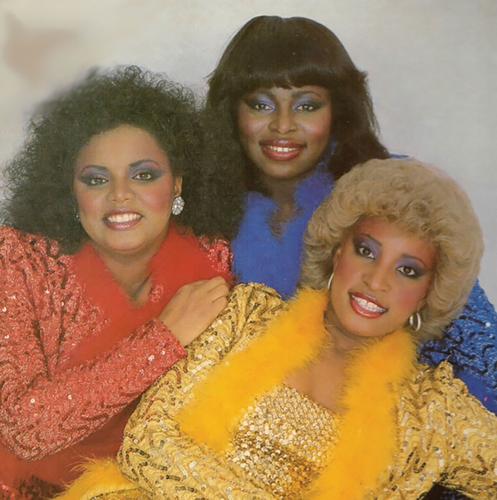


Vintage promo photo of The Sequence, from left: Cheryl 'The Pearl' Cook, Angie Stone and Gwendolyn 'Blondy' Chisolm
The members of all-female rap trio The Sequence spent decades fighting for the royalties and recognition they were owed as a breakthrough act in early hip-hop. The South Carolina crew had a star-making debut with 1979’s “Funk You Up.” Not only was it the first commercial rap single performed by women, it was also the first hit recorded by Southern MCs — 16 years before a defiant André 3000 told the antagonistic Source Awards audience “the South got something to say.”
The Sequence was set for a moment of historical recognition on Saturday, April 25, when Gwendolyn “Blondy” Chisolm was scheduled to speak at an event celebrating the addition of a crop of items from the band’s recording and touring days to Nashville’s National Museum of African American Music. The memorabilia includes onstage outfits like black jackets and sequined shoes as well as photos. Some of the items belonged to fellow member Angie Stone, who died in 2025.
But in a sad turn of events, Blondy died on April 6 in Atlanta after a brief illness-induced septic shock. She was 66. Speaking to Scene just three days before her death, she said it was exciting that the group was about to be honored by an institution based in the South.
“We deserve it,” said Chisolm, “and we are the first.”

Thanks to groups like BlackCity, Six One Tribe, and ThirdEye & Co., Music City is experiencing a rap renaissance
Originally the Scene was slated to speak only to Chisolm, but in a pleasant surprise she added bandmate Cheryl “The Pearl” Cook to the phone call. The two still shared a sisterly chemistry, volleying stories of their time in music back and forth.
As detailed in a 2017 Rolling Stone profile on The Sequence, the three high school friends had heard some early rap recordings throughout the ’70s and decided to pen a song themselves after the Sugarhill Gang’s “Rapper’s Delight” blew up. They adapted their cheerleading routine and injected it with hip-hop swagger. When Sugarhill Gang performed in The Sequence’s hometown of Columbia, S.C., Chisolm, Cook and Stone (rapping as Angie B. at the time) hustled their way backstage. They met Sugar Hill Records CEO Sylvia Robinson and impressed her with a performance of “Funk You Up.” She promised to make them stars.
Robinson signed them to the label, and “Funk You Up” became another hit for Sugar Hill. Robinson and her husband Joe set the girls up in New Jersey and acted as mentors and guardians, offering plenty of advice about safety during visits to New York City.
The Sequence was billed on tours alongside acts like Sugar Hill Gang, Grandmaster Flash and the Furious Five and the Funky Four + 1 (which included fellow female MC Sha Rock). The New Yorkers were like older siblings to the Southerners, and The Sequence members said they were very humble offstage.

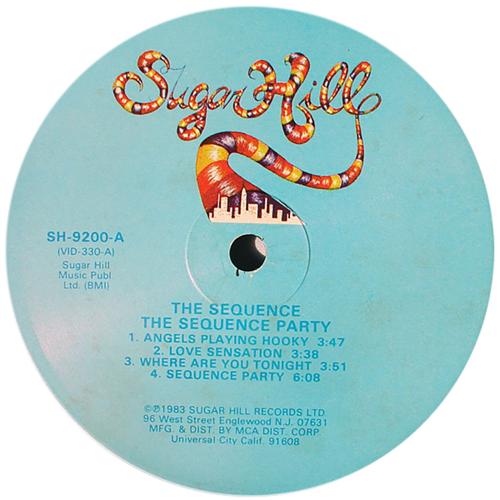
Label detail of The Sequence's 1983 12-inch 'The Sequence Party'
“Each group had their own aura,” said Chisholm, but none of them had “big heads,” signing autographs for kids at each stop. (Although she recalled Flash and his crew had a built-in-the-Bronx roughness to them.)
The Sequence was also active behind the scenes, its members writing rhymes for other Sugar Hill acts. Cook was also working in A&R and production.
In 1985, the group declined to renew their contract. They admired the Robinsons, but they weren’t receiving a fair cut of the royalties. It would be another 30 years before the rights to their breakout single returned to The Sequence. They weren’t the only acts dissatisfied by Sylvia Robinson’s penchant for offering predatory contracts, which remains a large blemish on her legacy.
See also: "NMAAM’s Celebration of Black Art Should Be a Call to Action for Country Music," by Andrea Williams.
“We respected her, we loved her, and we thought that she would watch out for our best interest, but it didn’t turn out that way,” said Cook. The three pursued different careers, and would reunite for a few performances in the 2000s. Angie Stone continued to make music, scoring a commercial and critical hit with 2001’s Mahogany Soul — the gold record issued with the certification from the RIAA is being added to NMAAM alongside the Sequence items.
All the while, “Funk You Up” continued to live on in hip-hop and R&B. The trio’s iconic harmonizing of “ring, ding, dong” was the hook to Dr. Dre’s G-funk hit “Keep Their Heads Ringin’” and a more straightforward lift featured in the remix of En Vogue’s “Whatever” with Ol’ Dirty Bastard. Erykah Badu sampled “Funk You Up” for the jubilant “Love of My Life Worldwide” and brought aboard Angie Stone (along with Queen Latifah). The group also sued Bruno Mars and Mark Ronson, whose “Uptown Funk” bears noticeable similarities to parts of The Sequence single.
“We’ve been through a lot,” said Chisolm.
“But God built us strong,” added Cook. “We’re strong Black women. And when I look back over it, I thank God that we had that opportunity to show our talent at an early age, to be able to step out there among the many men who were out there during the time,” and still get top billing next to them.
Chisolm, who was writing a memoir, told the Scene she had regrets. “I just think I would have been more financially stable if I could have been in the service,” she said. She was in ROTC and planned on becoming a drill sergeant before hip-hop whisked her away. But don’t mistake that for a lack of pride.
“I’ve always believed that I was ahead of my time,” said Chisolm. “I was the sassy one. I was the — excuse me — the shit-talker.”
Blondy had a reputation for bawdy rhymes like “You can ring my bell all through the night / You could rock my body till the early light” and “I get more sex than a cat chase mice” on “Funk You Up.” While they’re tame by today’s standards, Blondy noted she predated raunchy rappers like Lil’ Kim. She probably would have sworn more on the record if Robinson had let her. “I used to come to Sylvia Robinson and say, ‘Sylvia, can I say I’m the baddest bitch?’ ‘Oh no, you can’t say that!’”
“I think we did a great job, Gwen,” said Cook, reflecting on the group’s legacy.
The National Museum of African American Music is continuing with its scheduled inclusion of The Sequence’s items on Saturday. The event starts at noon and will feature a discussion with Cook as well as remarks from friends and family of The Sequence members: Angie Stone’s children Michael Archer Jr. and Diamond Stone; Chisholm’s sister Monica Scott; and The Sequence’s longtime DJ Deltonia Cannon.
“The Sequence made history in 1979, and NMAAM’s responsibility is to make sure that history is felt, not just filed,” says William Jeffries III, the executive director of NMAAM, in a statement. “These three women from Columbia, South Carolina, walked into Sugar Hill Records and built the foundation that generations of artists have stood on. We are honored that Cheryl, Deltonia, Monica, Michael, and Diamond are bringing this story into our walls. This is exactly what this museum was built to do.”




Post a comment as anonymous
Report
Watch this discussion.
(0) comments
Welcome to the discussion.
Log In
Welcome to the discussion.
Keep it clean. Please avoid obscene, vulgar, lewd, racist or otherwise abusive language. Comments featuring hate speech or threatening or violent content will not be tolerated.
PLEASE TURN OFF YOUR CAPS LOCK.
Be truthful. Don't knowingly lie or mislead.
Be proactive. Use the “report” link on any comment that violates our comment policy.
Share with us. We'd love to hear your feedback.