


It’s no secret that the backbone of the Nashville music industry is its murderers’ row of session musicians. Often called “sidemen,” some of these players and vocalists are as well-known as the artists they support. The famed Nashville Cats, heard on recordings by Bob Dylan and Johnny Cash among many, many others, were at the center of the massive Dylan, Cash and the Nashville Cats exhibit at the Country Music Hall of Fame and Museum from 2015 to 2017.
The biggest and most reverent celebrations of country musicians tend to focus on white men, and the same applies to session players. This should come as no surprise — the term “sideman” in itself is a gendered one, and debates about gender and racial diversity in country music have reached a fever pitch in recent years.
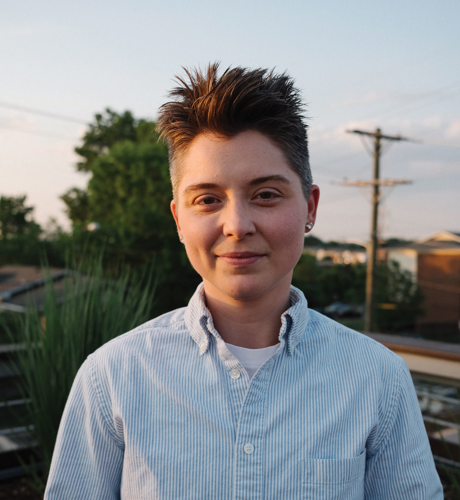
Local musician and historian Tiffany Minton is working to change the narrative of session musicians in Nashville. Minton is pursuing a graduate degree at Middle Tennessee State University, and through the school’s Center for Popular Music, she has spearheaded The Women Musicians in Nashville Oral History Project. The archival endeavor seeks to discover, preserve and advance the stories of women session players and vocalists in Music City.
“I was thinking about the side player and thinking about the fact that that story is generally and popularly known through people like the Nashville Cats or the A Team, when it comes to Nashville,” Minton tells the Scene. “And that most of the people who are being discussed are all white men. But there were other people doing it, and there still are.”
The project currently consists of two-hour interviews with 15 Nashville women who are musicians, with more to come. There are instrumentalists like drummer Megan Coleman, bassist Ryan Madora and guitarist Ellen Angelico, as well as songwriters like Angela Kaset. There are also folks who’ve worn a dazzling array of hats, like Judy Rodman, a singer, songwriter, vocal coach and producer, among many other things.
Minton herself has completed the bulk of the work, which includes researching candidates, conducting interviews, typing transcripts and editing the final histories that will live in CPM’s substantial archives. You’ll be able to check out the project for yourself online beginning some time in the spring 2021 semester. It’s a labor of love that brings together Minton’s passions for music and for archival history.
You’ve quite possibly encountered Minton or her work around town. She has played drums for artists like Adia Victoria, Thelma and the Sleaze, Pujol and Heavy Cream, and she co-founded the She’s a Rebel girl-group tribute show series. She says she’s excited for people to encounter this new chapter of her musical work.
“I always thought I would attend grad school eventually, even while I was working as a musician,” she says. “I didn’t want to get too comfortable and too reliant on just being a professional musician, when I had this other lingering goal in my mind. … Public history just seemed like the natural next step if I was going to go to grad school.”
In late November, Minton hosted a virtual seminar outlining her goals for the project. Co-presented with MTSU professor, documentarian and author Kristine McCusker, the seminar featured Angelico, Rodman and Coleman as guests. Minton says that while many of the seminar’s attendees were already connected to the music community, she heard from several viewers that they gained a deeper understanding of why initiatives like the Women Musicians in Nashville Oral History Project are so important.
“When you’re looking at all the people who have been canonized into any kind of history, it’s always a lot of white male figures,” Minton says. “What oral history does is allow us to see that history actually happens from the bottom up and not the top down. It doesn’t start when you’ve become canonized by your greatness. It begins as normal people in time and space. Especially when it comes to understanding the diverse array of histories and how that tells a story about humanity.”
The project is ongoing, and Minton says she is still open to hearing from women musicians in Nashville with stories to share. She hopes that making these women artists’ stories available will not only help to add depth and context to our current understanding of Nashville’s musical history, but that it will encourage future scholars, journalists and even musicians to reconfigure their idea of what a session player can look like.
“Any time you see a man doing something, you have to assume there’s a woman doing the same thing, in order to see them hiding in plain sight,” she says. “In order to deal with this issue, we need to be thinking about women’s work differently. We need to be thinking about how to talk about women in such a way that they are historically present. We need to move beyond the inclusion narrative. … We also need to think about what women are doing and have been doing all along, and tell those stories as though they have always existed. It shouldn’t be a surprise.”



