
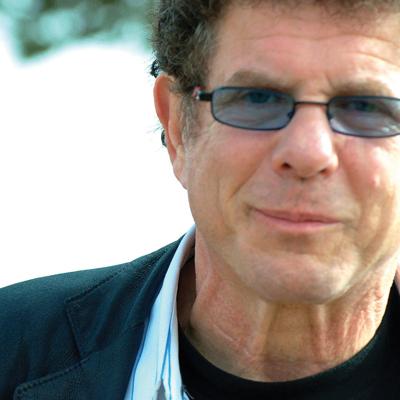


Most music fans know Lee Oskar for his superb harmonica solos and other contributions to the dynamic sound of funk and soul band War. More than half a century after War began, Oskar still maintains ties with his former War colleagues, guitarist Harold Brown and drummer Howard Scott; in the 1990s, the three and bassist B.B. Dickerson, who died last year, formed the War follow-up the Lowrider Band.
But Oskar’s expressiveness and talents are multifaceted, even beyond his array of solo records. He’s also been an impressive painter and visual artist for decades. His newest album Passages Through Music: Never Forget, released in January, is a tour de force for both his music and visual art. Oskar will be in Nashville April 13 and 14 for the opening of an exhibit of his paintings at the Gordon Jewish Community Center. From 6 to 8 p.m. on Wednesday, he’ll give a talk and a brief performance to introduce his work that will be on display in the GJCC’s Sig Held Gallery through the month, and he’ll perform again from 12:45 to 1:45 p.m. on Thursday in the Senior Lounge adjacent to the exhibit.
Oskar has always viewed music and art as vehicles to inspire and to serve the greater good.
“I’ve always felt as an artist that reaching people — bringing them together — was my primary purpose,” Oskar tells the Scene. “One thing that really hit me while putting together this album, which is very special, is the fact that there were — and are — so many people who focus on division, on conflict. I wanted to make music and art that was about unity, and also about emphasizing the good part of humanity that triumphs over the worst of it.”
The inspiration for Never Forget comes from his family heritage. During World War II, Oskar’s mother and aunt — teenagers at the time — survived the Holocaust by escaping from the Nazi concentration camp at Stutthof in northern Poland. In the bitter cold, they traveled on foot to evade almost certain death, eventually settling in Denmark. As the number of living Holocaust survivors dwindles, it’s vitally important to Oskar to keep these stories alive.
“Those stories, those memories, have been with me all my life,” says Oskar, “and this album contains music and songs that I’ve written over the years.”
Unlike you’ll find with the archetypal LP that features just a couple of key tracks designed for radio, there isn’t an ounce of filler among the nine tunes on Never Forget. The presentation of the mostly instrumental pieces is deceptively mellow — the sequence allows the passion of compositions like “Far Away Dreams,” “Last Moments (Saying Goodbye)” and “Liberty (An American Waltz)” to resonate with a unified power and authority. The eclectic orchestration includes vocalists, a string section, horns, reeds, piano, flamenco guitar and oud, creating a work that combines symphonic majesty and timeless relevance.
The record is a natural showcase for his virtuosic and expressive harmonica playing, which includes ferocious solos as well as lyrical melody work throughout the pieces. Oskar began playing the instrument as a child, and shaped his technique not by studying the style of such blues giants as Little Walter Jacobs or Rice Miller (aka Sonny Boy Williamson II), but as an instrumental echo of Ray Charles’ soulful vocals. Such War classics as “Lowrider,” “The World Is a Ghetto” and “Me and Baby Brother” (and its earlier, bluesier rendition “Baby Brother”) were enhanced by Oskar’s flamboyant yet disciplined harmonica solos and their interplay with Charles Miller’s energetic sax performances.
Oskar’s soaring, melodically intense approach reflects his love for the instrument, and is also the driving force behind his very popular line of signature harmonicas. The instruments are built so that users can replace the reed plates inside if they’re worn down by constant use, or if the player wants to change the tuning. Since 1983, they’ve been manufactured in a partnership with Japan’s Tombo Musical Instrument Company.
Visual art in general and painting in particular have long been an important part of Oskar’s life. He contributed to the art for many of War’s hit albums, and the impressionistic portraits that accompany Never Forget add an extra personal dimension.
“I look at Never Forget as my premier statement,” he says. “It’s the one that I feel really summarizes and presents a lot of the thoughts and feelings I’ve had for years — not just about the Holocaust, but also about how we relate to each other as human beings. For me, if as an artist you’re not trying to say and do something to make things better, then you’re not really fulfilling your duty. We have the power to inspire and reach people, bring them together. That’s what I hope to do with my art and the music on Never Forget.”



Post a comment as anonymous
Report
Watch this discussion.
(0) comments
Welcome to the discussion.
Log In
Welcome to the discussion.
Keep it clean. Please avoid obscene, vulgar, lewd, racist or otherwise abusive language. Comments featuring hate speech or threatening or violent content will not be tolerated.
PLEASE TURN OFF YOUR CAPS LOCK.
Be truthful. Don't knowingly lie or mislead.
Be proactive. Use the “report” link on any comment that violates our comment policy.
Share with us. We'd love to hear your feedback.