
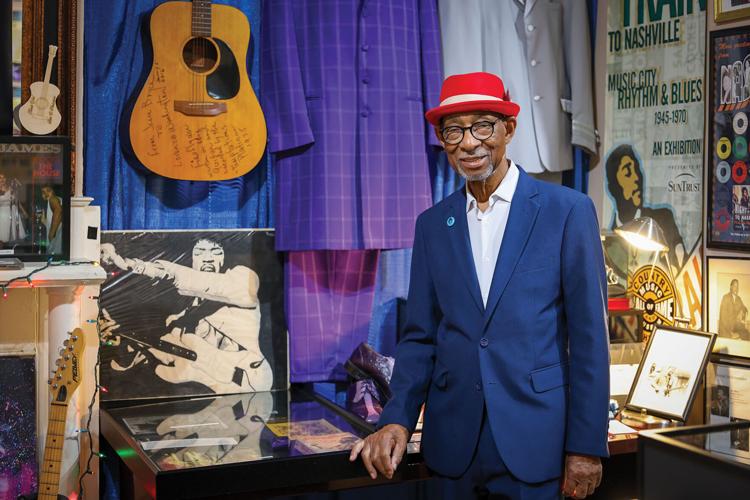


Lorenzo Washington at Jefferson Street Sound Museum
Two more Nashville sites are now a part of the U.S. Civil Rights Trail. The Jefferson Street Sound Museum and the Museum of Christian and Gospel Music were added to the national heritage trail this month.
Before he opened Jefferson Street Sound Museum in 2011, Lorenzo Washington had visited only one museum in his life. He did not expect his own to still be open 15 years later.
“I intended to be there for maybe a year or two, because I didn’t think that that the history was going to be as important to the community [as it has become],” Washington tells the Scene.
Jefferson Street was the hub of North Nashville’s thriving Black business and cultural district from the 1930s through the 1960s. Artists including Jimi Hendrix, B.B. King, Etta James, Ray Charles, Little Richard and Sam Cooke played in clubs up and down the street and nearby on their rise to national prominence. North Nashville was also the only place in town they could play since clubs in places like Printers Alley were still segregated.
The U.S. Civil Rights Trail spans 14 states and features more than 100 sites — from museums to national parks to historic homes and beyond — relevant to the civil rights movement. There are 17 sites on the trail in Tennessee, including Memphis’ iconic Black music and business corridor Beale Street as well as that city’s National Civil Rights Museum. In Nashville, sites include Griggs Hall at American Baptist College, where civil rights leaders conducted training sessions for nonviolent protesters, and the National Museum of African American Music. The Nashville Public Library’s Civil Rights Room is also part of the trail, but the main library branch where it is housed has been closed since June due to a fire in the parking garage.
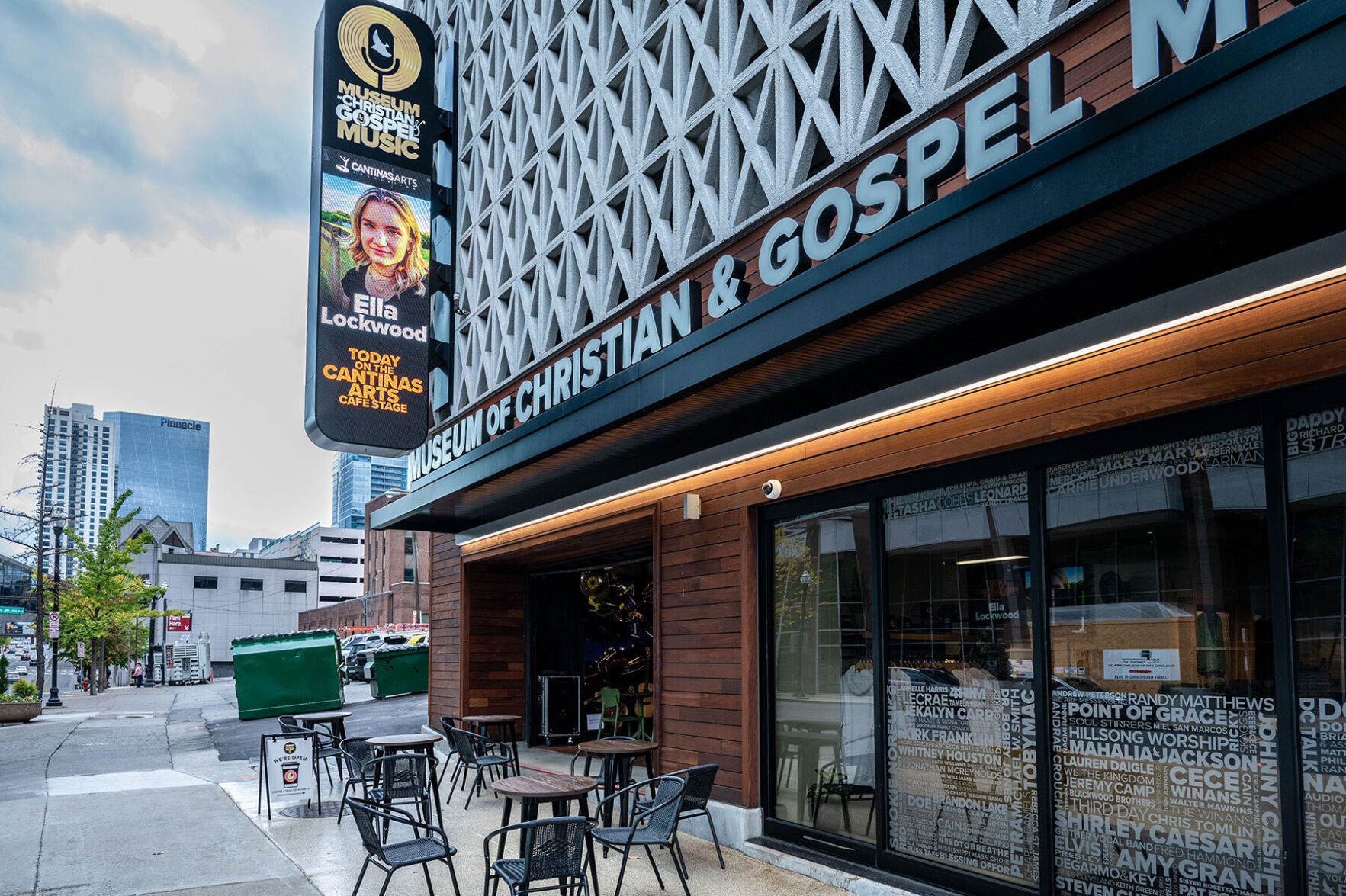
Outside the Museum of Christian and Gospel Music
The civil rights movement and Christian and gospel music are deeply entwined, explains Steve Gilreath, executive director of the Museum of Christian and Gospel Music. The folk song “Keep Your Eyes on the Prize,” which evolved from the African American spiritual “Gospel Plow,” was adopted by civil rights leaders who encouraged protesters to sing the song out loud if they could, and in their heads if they couldn’t.
“The music in the museum equates to the movement,” Gilreath says. “It’s woven all through it. We call it the soundtrack of the movement. It’s obvious that gospel music didn’t just accompany the civil rights movement along the way, but it really helped shape some of the moral structure and reinforce some of the people involved at the hardest of times to bring them renewed energy.”
Now 84 years old, Lorenzo Washington lived through the civil rights movement, and even participated in some of the seminal sit-in protests at the lunch counter at Woolworth’s downtown, which refused to serve Black patrons. He remembers Dr. Martin Luther King Jr. visiting Nashville, where he spoke at Fisk University, just down the street from the museum.
“That was a proud moment for the city, for the Black community,” Washington says, “to know that he came to Nashville to gain inspiration, to take that inspiration to other cities and to inspire the students in Birmingham and other cities that were dealing with the sit-ins.”
The construction of I-40 in the 1960s all but decimated North Nashville, a fact that many current locals don’t know about, Washington says. He hopes the addition of the museum to the Civil Rights Trail will mean more visitors, both Nashvillians and tourists.
“I know we’re going to enjoy taking it all to the next level by being a part of the U.S. Civil Rights Trail,” Washington says.





Post a comment as anonymous
Report
Watch this discussion.
(0) comments
Welcome to the discussion.
Log In
Welcome to the discussion.
Keep it clean. Please avoid obscene, vulgar, lewd, racist or otherwise abusive language. Comments featuring hate speech or threatening or violent content will not be tolerated.
PLEASE TURN OFF YOUR CAPS LOCK.
Be truthful. Don't knowingly lie or mislead.
Be proactive. Use the “report” link on any comment that violates our comment policy.
Share with us. We'd love to hear your feedback.