
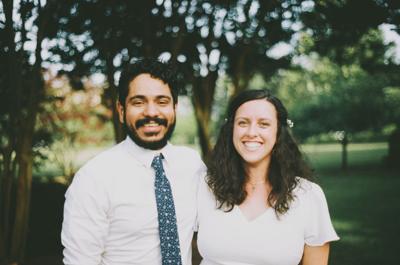

Gustavo Moradel calls Nashville his favorite city in the country. After moving to town from Los Angeles roughly 10 years ago, he started building his music career, playing everywhere from Mexican restaurants to entertainment center Plaza Mariachi to most of the city’s “legendary” venues (aside from the Opry, he says). He met Liza Landry on Bumble in 2018. Landry came to town as a teacher with AmeriCorps. Her father was dying of cancer; Moradel was trying to navigate life as an undocumented immigrant who arrived from Honduras as a child in 2006.
They married in 2020 at Bicentennial Park, broadcasting to their families on Zoom. They had a daughter, now 4 years old. In 2022, Moradel — a recipient of the Deferred Action for Childhood Arrivals (DACA) program, which offers some protection from deportation — began the process of adjusting his immigration status. Then the 2024 election happened. The couple remembered how Donald Trump’s first term went, and his reelection campaign promised more extreme immigration crackdowns. They also expected Tennessee’s supermajority of Republican lawmakers to bring the same anti-immigrant fervor to state-level policy. So they moved to Landry’s home region of New England in winter 2024.
Nashville is “a town we love,” Moradel tells the Scene, sitting with Landry on a video call. “It’s a town that was not easy to leave.”
Love is complicated — and so is immigration law. Marriage has long been considered a reliable pathway to citizenship, but during Trump’s second term, couples now navigate a more chaotic legal landscape than in the past.
Will York, an attorney with immigration-focused firm Ozment Law, says there’s a common misconception that marrying a U.S. citizen automatically grants status. In reality, marriage- and family-based applicants face heavy screening. This includes an interview to verify the bona fides of the relationship.
“The idea of having all of their intimate details put out on display in front of a government official can be intimidating, even in the most immigrant-friendly times,” says York.
Federal agencies like Immigration Customs and Enforcement and U.S. Customs and Border Protection have been the source of terrifying headlines — including killing Alex Pretti and Renée Good in Minneapolis, detaining a 5-year-old and bragging about shooting a Chicago woman. Immigration agents have also turned courthouses and federal buildings into unsafe terrain, arresting people who show up to traffic hearings or green card interviews. In December, ICE agents even blocked some immigrants from proceeding with a citizenship ceremony in Boston.
York says that in the past it was “exceedingly rare” for people “showing up for some sort of benefit to be arrested at interviews.” It’s caused a chilling effect: Some families decide not to file petitions out of fear, or decide the risk of living in a mixed-status household outweighs the risk of enforcement action at an interview.
As far as York knows, no local couples have avoided seeking a marriage license out of concerns the paperwork could trigger enforcement. He has, however, noticed couples asking more detailed questions about the process. York stresses the need to seek individualized legal counsel before filing any petitions to determine whether marriage offers “strategic benefits” or if it could risk “triggering” enforcement.
“We see Nashville [and] Middle Tennessee families navigating this landscape every day, because love doesn’t really wait for papers,” he says. “Love doesn’t wait for permission, right? So people fall in love in all circumstances, in all climates, in all weather conditions, in all political environments.”
Moradel and Landry’s prediction that Tennessee would fall in line with Trump’s immigration policies materialized. The state legislature has filed several bills targeting immigrants, including a vague bill prohibiting the “harboring” of undocumented immigrants. (It could affect mixed-status couples, says York, but there remains a lot of “confusion and questions” about the law.)
ICE also coordinated with Tennessee Highway Patrol to conduct a massive traffic sweep of South Nashville in May of last year, detaining almost 200 people. The couple says the news was heartbreaking — they have both worked and volunteered with South Nashville’s immigrant communities.
Moradel is in the final steps of his status adjustment. The process has taken years, and the couple has spent thousands of dollars on the process — “a luxury that not everybody gets to have,” says Moradel.
While Moradel’s status adds complexity to the marriage, the couple doesn’t consider it a strain on the relationship. It helps that the couple enjoys a lot of love and support from friends and family.
“Our families are from completely different parts of the world,” says Landry, “but the essence of what they are and the love that they exude is the same.”
Moradel was born in Honduras and raised Christian and says Landry’s family of Jewish New Englanders “took me as one of their own.” Landry references a similar warmth in Moradel’s family when they visit.
“I think that the way our families have come together [is] representative of what brought Gustavo and I together, which is really just like our values and the things that make us feel at home,” says Landry. “We really, I think, found home in each other.”

Exploring mixed-citizenship-status romance, potent advice from a sex therapist, Nashville’s first romance-only bookstore and more



