
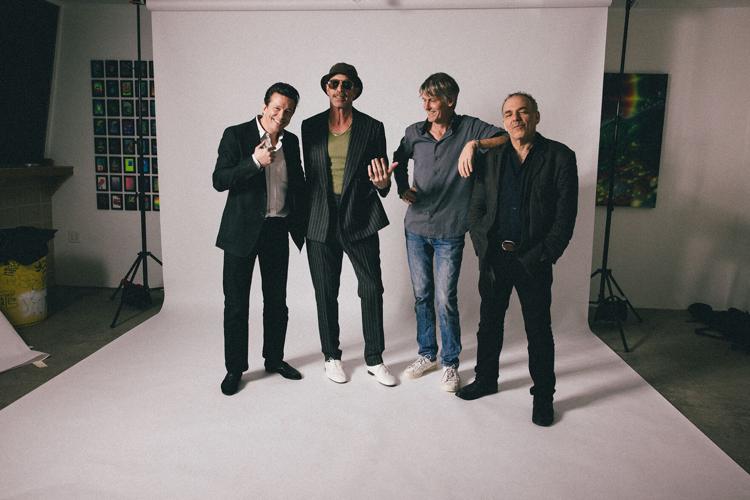
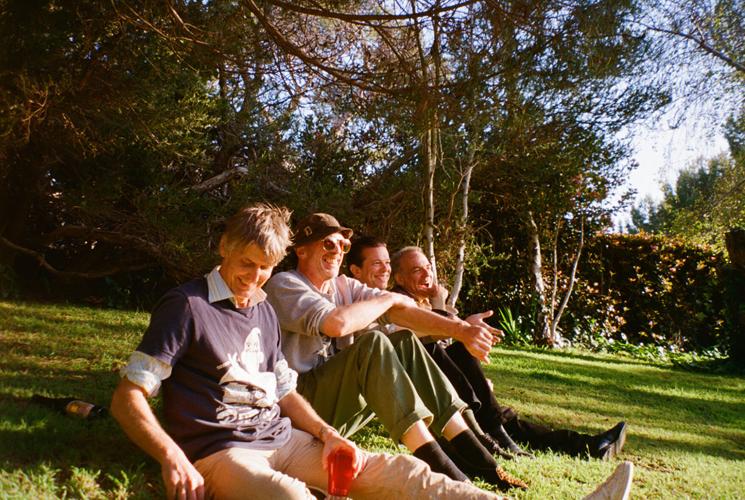


The Hard Quartet
The members of The Hard Quartet share a “collective head.” At least, that’s how Matt Sweeney describes the foursome’s seemingly psychic connection while chatting with the Scene ahead of their show at Brooklyn Bowl on Friday.
“I think we all feel that way about the other three members,” Sweeney says, chatting via phone from his home in New York City. “I think I can confidently speak for the other guys in saying that everybody’s paying attention to the other three guys, and that alone is a pretty fun situation to be in when you’re playing.”
The band itself is technically new to the rock scene, having released a self-titled debut album in October. But its four members are genre veterans, each having logged miles as part of seminal bands from varying points on the rock music spectrum over the past few decades. Sweeney has been with Skunk, Chavez and Zwan; Stephen Malkmus with Pavement, Silver Jews and The Jicks; Jim White with Dirty Three, The Blackeyed Susans and The Tren Brothers; and Emmett Kelly with The Cairo Gang, Clinamen and The Double.
That’s just a sampling of each player’s musical résumé; listing each band, project or artist they’ve worked on would require more space than this feature allows. The sheer breadth of their collective experience is on full display on The Hard Quartet, on which they seamlessly dip in and out of a bevy of rock subgenres from power pop to proto-grunge and beyond across 15 tight tracks.
It’s no surprise, then, that Sweeney, Malkmus and Kelly wear multiple hats in the band — trading off vocal, guitar and bass roles — while White stays at the drum kit, holding down the beat. That variety is part of the appeal for celebrated guitarist and producer Sweeney, who says he particularly enjoyed having the opportunity to sing.
“I haven’t been the singer in a band in a really long time, so that alone is fun,” he says. “My band Chavez — when I was the singer, I was in my 20s, and I was a pretty reluctant singer. That band was about coming up with things together. … Since we all write [in The Hard Quartet], and everybody sings lead and different things, it’s really fun to know that I have a band who is sympathetic to what I’m doing as the guy singing the song.”
Sweeney’s voice is loose and warm on “Rio’s Song,” which lopes along to a leisurely beat from White, building and releasing a bit of tension in Malkmus’ silvery, tightly wound licks. “Six Deaf Rats” finds Malkmus on lead vocal, and while that tune certainly wouldn’t sound out of place on a Pavement record, Kelly’s heftier guitar tone and White’s almost improvisational-sounding drum performance distinguish it as its own animal.
Despite the rotating duties, the album is a cohesive listen, a feat likely possible because of that unspoken connection Sweeney finds so meaningful. It’s also thanks to the band’s shared mentality, which kindly but firmly rejects the “supergroup” label. This is a project each member hopes will last well beyond this initial record.
“One of the reasons that we’re doing press and, you know, that we have a fucking social media presence and all that stuff, is just to cut through the noise and show everybody that this is a band,” Sweeney says. “This is something that exists, something you can go see and something that you can trust will be there and be good.”

The Hard Quartet
Performances like Friday’s show are the real heart of why Sweeney loves being part of The Hard Quartet, as they allow the group to operate as a unit and dig into that shared consciousness. Sweeney attributes that sense of connection not just to their friendship, which is certainly part of it, but to the ease that comes when you’ve paid your dues and really put the time into developing, maintaining and expanding upon your craft.
“There’s just an understanding,” he explains. “And that comes from a collective knowing that we’ve all been in a lot of the same places and felt some of the same things about playing in bands. We just don’t need to discuss much.”
Skipping over the discussion means there’s more time for the music itself, and more energy to focus on the things that matter to the guys, like making sure the audience is having as much fun watching their shows as they are playing them. That feels especially important to Sweeney given the current social climate, which he likens, in some ways, to growing up during the ’80s, when the “mores were awful and the way people behaved was shitty.”
“Music can give you the feeling that people don’t suck. That’s important to know, because the evidence of them sucking is everywhere. It’s good to know that some people don’t suck.”





Post a comment as anonymous
Report
Watch this discussion.
(0) comments
Welcome to the discussion.
Log In
Welcome to the discussion.
Keep it clean. Please avoid obscene, vulgar, lewd, racist or otherwise abusive language. Comments featuring hate speech or threatening or violent content will not be tolerated.
PLEASE TURN OFF YOUR CAPS LOCK.
Be truthful. Don't knowingly lie or mislead.
Be proactive. Use the “report” link on any comment that violates our comment policy.
Share with us. We'd love to hear your feedback.