

Marty Lanham
Editor’s note: While music stores continue to limit their availability to the public in an effort to slow the spread of COVID-19, we’re profiling some of the people around town who make, repair or sell the instruments and other equipment that musicians use. It’s an occasional series we’re calling Gearing Up.
As the pandemic continues, independent makers and sellers of instruments are beginning to see their businesses lose steam. While the largest brands and retailers aim for a product consistency that guarantees better margins, these smaller outfits build, maintain, restore and sell characterful instruments that preserve the history of the craft and point toward its future. We’ve profiled two of Music City’s many small-scale instrument makers and one vintage instrument dealer to call attention to what will be lost if their businesses can’t survive.
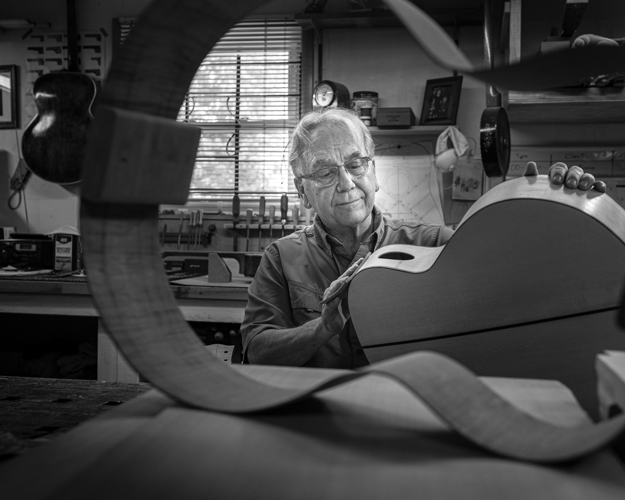
August in a normal year for Marty Lanham would have kicked off with a trip to California’s Healdsburg Guitar Festival. The widely attended custom guitar show is the Nashville luthier’s primary source of new business. But with large events canceled due to COVID-19, Lanham changed his plans and spent the time in his workshop instead, trying to make as many guitars as he could.
As the sole proprietor and builder at Nashville Guitar Company, Lanham has made custom stringed instruments for clients like Steve Martin, Alan O’Bryant and Marty Stuart. Lanham also does repair work, specializing in what he calls “prewar Martin-esque” guitars, and he’s restored instruments that belonged to Johnny Cash and Jimmie Rodgers. Since March, the number of Lanham’s custom orders has fallen, and a gig teaching at the Nashville Guitar Academy also remains uncertain.
“In my business, you need to pass a guitar back and forth to give feedback,” says Lanham. “Not being able to do that has changed everything.”
With the extra time, Lanham does projects on spec, increasing his risk by making one-of-a-kind guitars before nailing down a buyer. Fortunately, Lanham has become well-acquainted with risk and how to manage it over nearly 50 years of working on guitars. As a touring banjo player in the early ’70s, Lanham performed on many stages, including on the Grand Ole Opry with Wilma Lee Cooper. He and his wife Charmaine were part of the group that opened the Station Inn before he left that business to start his own venture.
Lanham hasn’t applied for any financial relief — yet. “It’s really just me, so a microbusiness applying for a government loan just doesn’t appeal to me. But in the future, who knows.”

Manuel Delgado
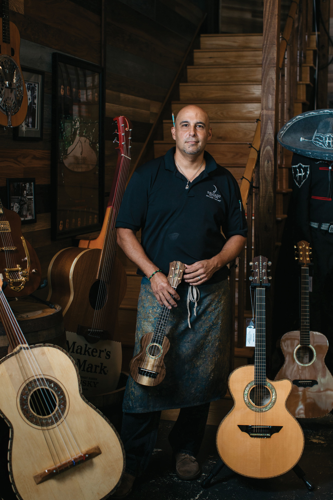
Exactly one year before the pandemic struck, Manuel Delgado opened a small music venue connected to his East Nashville guitar shop, Delgado Guitars. The space is a showroom during the day, and serves as the nonprofit Music Maker Stage venue in the evening. It currently serves as a platform for streaming performances.
“It was a community-building decision, not a business decision,” says Delgado.
He’s a remarkably keen entrepreneur, but he’s dedicated to following the principles of craftsmanship and business that have guided Delgado Guitars since 1928. Manuel’s grandfather and great-uncle started the company in Mexico, and handed it down to Manuel’s father. Today, Manuel uses the same old-world techniques. Each guitar is made from scratch, and even most of the tools are made from scratch. Delgado feels it’s crucial to foster a familial bond with employees and customers. Those who’ve owned Delgado instruments run the gamut from classical-guitar legend Andrés Segovia to members of Los Lobos and Old Crow Medicine Show.
Additionally, Delgado Guitars helps supply school music programs with its La Tradición brand, and presented the inaugural Music City Mariachi Festival. Delgado, several members of his family and their friends also make up Los Delgados, a mariachi band that’s performed at Exit/In, the Country Music Hall of Fame and Museum and on other stages around the city.
Delgado says his business has seen custom building and repair orders drop because most of his clients are not touring. Thanks in part to funds from the Small Business Administration’s Paycheck Protection Program and Economic Injury Disaster Loan program, Delgado hasn’t laid off any of his employees, and isn’t considering it.
“If the ship were to sink, I’d rather know we continued to do the right thing for our customers and community regardless of what is happening in the world,” says Delgado.

Bryson Nelson
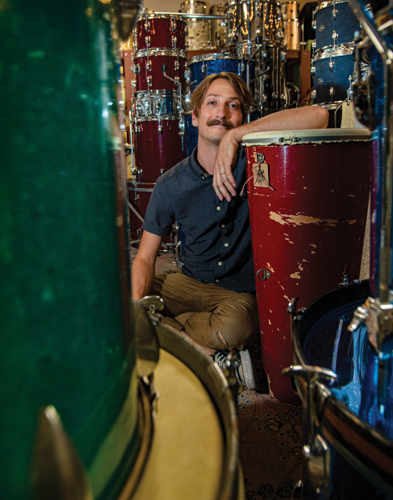
Eighty percent of the drums at Nelson’s Drum Shop can be classified as vintage, meaning they were made between the late 1800s and the 1990s. For drum nerds — especially ones who are also Nashville studio musicians — vintage drums are an indispensable part of their arsenal. Age and use shape the wood and other materials, creating a coveted “worn” tone.
“Right now, we sell a lot of stuff from the 1920s,” says Bryson Nelson, the shop’s owner. “Most of all the big studio drummers in town have at least one ’20s snare.”
Before the pandemic, many of the shop’s buyers were out-of-town musicians stopping through during tour or before heading to the studio. According to Nelson, that means the shop’s average of 50 visitors per day has dropped to 10 or fewer. Though the PPP and EIDL funds have helped, Nelson has been forced to reduce the hours of some employees by half. At the beginning of 2020, he was giving them all raises.
Once the pandemic happened, Nelson and his team pivoted, as many have across so many industries, to selling from their online store. This means most of their time is now spent on e-commerce — writing product descriptions, taking photos, packing and shipping drum kits.
Though the change to selling mostly on the web is economically essential, Nelson doesn’t love it. It diminishes the store’s other vital purpose as a gathering place for drummers to meet as equals with a shared passion.
For now, even with setbacks, Nelson says he can still pay bills without making even bigger changes to his business. “There’s not a lot of other retail businesses in the country that do what we do.”




Post a comment as anonymous
Report
Watch this discussion.
(0) comments
Welcome to the discussion.
Log In
Welcome to the discussion.
Keep it clean. Please avoid obscene, vulgar, lewd, racist or otherwise abusive language. Comments featuring hate speech or threatening or violent content will not be tolerated.
PLEASE TURN OFF YOUR CAPS LOCK.
Be truthful. Don't knowingly lie or mislead.
Be proactive. Use the “report” link on any comment that violates our comment policy.
Share with us. We'd love to hear your feedback.