

Ray Charles spent his lifetime blurring idiomatic boundaries. He was rightly called a genius, and though credited with being one of soul’s breakthrough artists, Charles explored the entire realm of American popular music throughout his distinguished six-decade career.
Perhaps nothing Charles did was initially more controversial than his decision to cut a country LP. In the early 1960s, he was a proven hit maker at the peak of his career who had enjoyed acclaim and success with jazz-, R&B- and gospel-tinged soul albums. But he wanted to use many of the same musicians on country songs. His label, ABC-Paramount, wasn’t exactly enamored by the move. Questions of promotion and radio airplay aside, few believed Charles could make an album that would be deemed “authentic” in the eyes and ears of the country faithful. Meanwhile, how would his loyal black audience react?
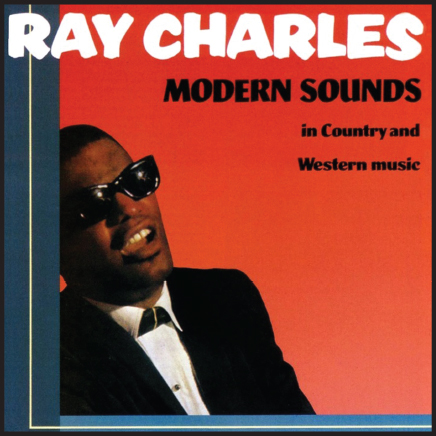
Charles decisively proved the naysayers wrong. He delivered a marvelous exploration of great songs and masterful stories originally done by artists like Don Gibson, Hank Williams Sr., Eddy Arnold, The Everly Brothers and Hank Snow with his album Modern Sounds in Country and Western Music, released in April 1962. Both the LP and the single “I Can’t Stop Loving You” were certified gold, and the album spent 14 weeks atop the Billboard pop chart. The follow-up Modern Sounds in Country and Western Music Volume Two was released six months later.
Black History Month is an ideal time for Concord Records, which now owns the rights to the albums, to revisit this material. The original Modern Sounds will be reissued on vinyl, and both volumes will be released on CD and across all digital platforms on Feb. 22. In addition, the Country Music Hall of Fame and Museum is hosting a discussion Saturday at the museum’s Ford Theater on Charles’ impact on country music.

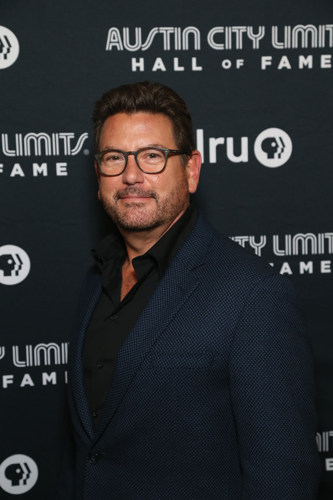
John Burk
The illustrious panel includes John Burk, Concord Records president and producer of Charles’ phenomenal posthumous album Genius Loves Company, as well as Grammy- and Dove-winning songwriter, producer and musician Shannon Sanders. Also joining are Tennessee-born singer-songwriter Valerie June, who works in both blues and country, and country star Travis Tritt, who appeared with Charles in a CMT Crossroads concert special in 2002 and in the Grand Ole Opry program An Opry Salute to Ray Charles in 2018.
“The Modern Sounds in Country and Western records are groundbreaking, genre-breaking,” Burk tells the Scene. “They came at such a pivotal time in the country’s history. The civil rights revolution was happening, and Ray helped put country into the forefront of the conversation in a way no one expected, and also totally went against the grain of what some people felt a black performer could do. Its impact was so extensive, and it crossed musical boundaries.”
But it can also be argued that Burk’s project with Charles was nearly as important as Modern Sounds. It was a massive success — pairing Charles with an array of marvelous artists from B.B. King and Gladys Knight to Van Morrison and Elton John brought his music back into the mainstream consciousness in a big way. But Genius Loves Company was also Charles’ swan song, released in August 2004, two months after his death. It was his only other album to hit No. 1 on Billboard’s main chart (by this time, the Billboard 200). In 2005, it was certified triple platinum by the RIAA and won eight Grammys. Still, Burk feels Modern Sounds remains Charles’ crowning achievement.
“Those albums still sound revolutionary to me all these years later,” he says. “I am really happy they are coming back out, and even happier to talk about what a great man and incredible force Ray Charles was, and what it was like to work with him and hear his music firsthand.”
* Editor's note: After this issue went to press, Ray Charles Foundation president Valerie Ervin left the panel and Shannon Sanders joined.



Post a comment as anonymous
Report
Watch this discussion.
(0) comments
Welcome to the discussion.
Log In
Welcome to the discussion.
Keep it clean. Please avoid obscene, vulgar, lewd, racist or otherwise abusive language. Comments featuring hate speech or threatening or violent content will not be tolerated.
PLEASE TURN OFF YOUR CAPS LOCK.
Be truthful. Don't knowingly lie or mislead.
Be proactive. Use the “report” link on any comment that violates our comment policy.
Share with us. We'd love to hear your feedback.