

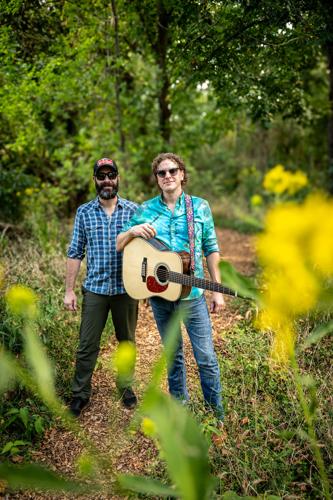

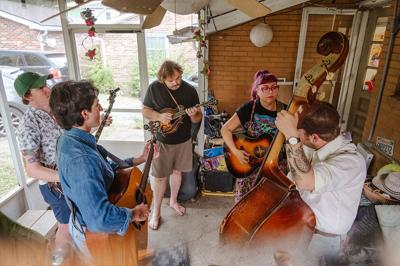
In late August, the four young guys who play as Mountain Grass Unit invested in white sport coats, string ties and black cowboy hats — an homage to the sartorial standards of the 1950s — for their debut on the Grand Ole Opry. Twenty-four hours later, in their more typical jeans and cozy overshirts, the band played down their new album Appalachian Smoke for almost 1,200 fans packed into Brooklyn Bowl. Less than a year ago, they were playing The Basement East, which is about half the size.
Emerging bluegrass bands don’t usually experience this kind of rapid liftoff. But the Birmingham-born jamgrass quartet is, probably more than any other group, catching the updraft of arena-filling star Billy Strings.
Another show, days earlier, presented a more familiar scenario. Three generations of the famous McCoury clan took over the Ryman for a show billed as “The Legacy Continues.” Pompadoured patriarch Del McCoury led his band during the first half, with his bluesky tenor in perfect shape at age 87. He sang the propulsive spiritual train song “All Aboard,” Hank Williams’ “Jambalaya” and his legendary cover of Richard Thompson’s ballad of love, black leather and tragedy, “1952 Vincent Black Lightning.”
Then The Travelin’ McCourys — basically the same band without Del, and thus the long-term vehicle for sons Rob and Ronnie McCoury in a post-Del world — offered their more progressive vision of the string-band music this family has been making out of Nashville since settling here in 1992. Rob, on banjo, and Ronnie, on mandolin, match up in this tight and fluid group with fiddler Christian Ward, guitarist Cody Kilby and bass player Alan Bartram, all recruited over many years from Nashville’s peerless acoustic talent pool.
If Mountain Grass Unit represents the youth brigade of bluegrass and string-band musicians moving to Nashville to establish a professional beachhead, the McCourys embody the genre’s living lineage here. Since Bill Monroe and His Blue Grass Boys debuted their revolutionary sound on that same Ryman stage just after World War II, bluegrass has had a home and hub in Music City. Eighty years after the genre’s Big Bang, a case can be made that bluegrass has never been more dynamic, more ubiquitous or more artistically exciting than it is in 2026. Billy Strings and Molly Tuttle — both Grammy-winning touring acts with bands of Nashville pickers — are the big stories of this decade. But at the club and street level, a lot more is going on.
“It is a really special time,” says singer and songwriter Lindsay Lou. Her new album Lindsay Lou Presents Bluegrass Women showcases a who’s-who of Nashville’s top-tier musicians. “Right now, when I look around at the scene, I feel so lucky. We’re all inspiring each other and bouncing ideas off of each other. Creativity is at its peak when you’re in a world where everybody’s collaborating. So it’s a really beautiful place to be.”

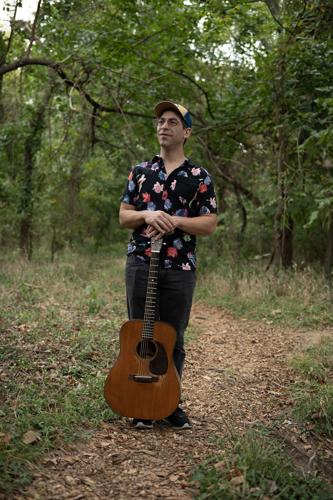
Ethan Hawkins
The Talent
When histories of music scenes are told, they tend to focus on the spotlight artists — those who wrote and sang the songs. Bluegrass is different, with a foundation built on musicianship, because it’s demanding ensemble music that requires expertise on its component instruments: fiddle, banjo, mandolin, guitar, upright bass and resophonic guitar (that square-necked slide thing Jerry Douglas plays, commonly called a dobro even though that name is taken from one of many brands).
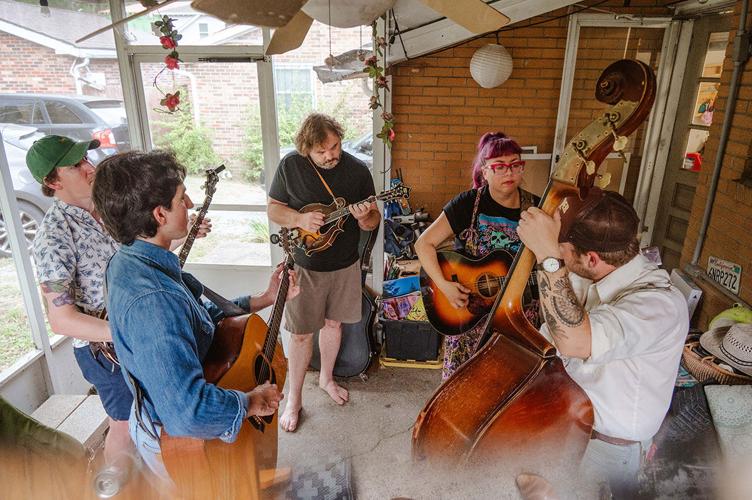
Before and even more so after the COVID pandemic, young players have surged into town to grow as musicians, to build networks and to make this niche work for them. Some came from family band situations around the South and Midwest, and quite a few from music colleges like East Tennessee State University and Berklee in Boston. Some were anxious about finding too many players chasing too few gigs, but they’ve often been surprised. Opportunities expanded. They found their peers and elders to be more supportive than competitive, and there were places to play.
Among the pilgrims is 35-year-old Ethan Hawkins, a guitarist, singer and bass player who moved here three years ago from his hometown of Staunton, Va., after music college in Boston. “It’s unlike anything I’ve ever experienced,” Hawkins says. “I’ve been chasing music and community as part of my life for the better part of 15 years. My dad played and my grandfather played. Nashville, to me, is the biggest [talent] pool, and it’s also closest to the culture that I grew up in. So that’s why I’m here.”

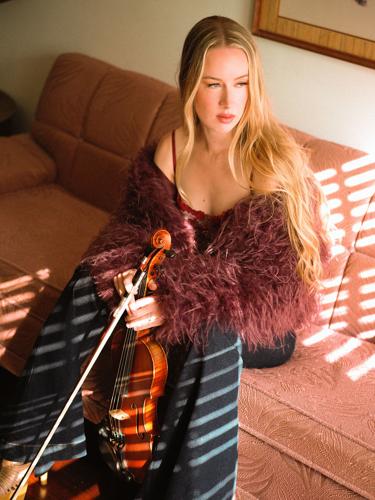
Bronwyn
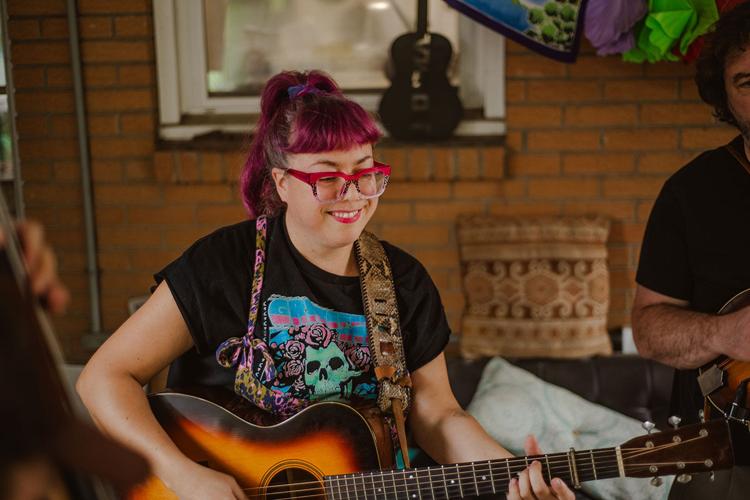
Award-winning fiddle player and singer Bronwyn Keith-Hynes came to town in 2018 as a side musician and emerged as an artist. After almost three years touring and recording (and winning a Grammy Award) with Molly Tuttle’s band Golden Highway, she’s released two albums of her own work, including the brand-new Rattlin’ Bones. Now touring as Bronwyn, she says Nashville, for bluegrass, is “the epicenter of everything” — a place where the musician-centric nature of the genre is super-served.
“The fans get really attached to the individual musicians, and that doesn’t really seem to happen nearly as much in other genres, you know?” Keith-Hynes says, referencing her year or so leading the Monday night house band residency at Dee’s Country Cocktail Lounge in Madison. “People become fans of all these different banjo players and guitar players, and then it’s almost like trading cards. Like, ‘What if we put this combination together? What superpowers is this combination gonna have?’”

Jeff Burke
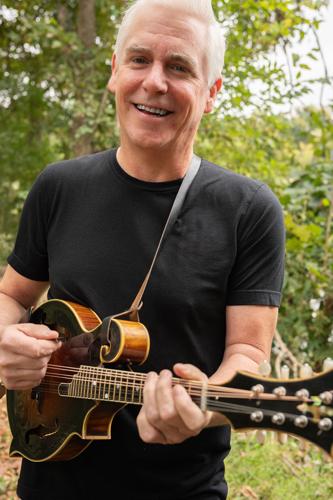
These pickers — and there are scores if not hundreds of them in and near town — live an on-call kind of lifestyle, stitching together tours long and short with local gigs, recording sessions, and other musical and nonmusical hats besides. But scenes require catalysts and instigators as well. In the past year or two, an important one has been mandolin player, talent booker and former touring artist Jeff Burke, founder of the concert calendar and show production company Bluegrass Nashville.
“I guess I’m a promoter now,” says Burke, a trim 51-year-old known for his ubiquity around town and his coiffed shock of silver hair. “I never thought I would be one, but I’ve kind of just turned into that because it’s sort of fun, and I’m passionate about the music. We’re all passionate about the music — about the people that play it and the venues that host it.”
If anyone knows how vibrant and busy bluegrass is right now, it’s Burke. “As people doing our best to search every website and reach out to the community and to at least try to know where all the bluegrass gigs are,” he says, “that’s getting harder and harder every day, because there’s more and more of them popping up.”

Bluegrass Monday at Dee's Country Cocktail Lounge
The Spaces
Things can only “pop up” with the participation of venues, and Nashville has more music rooms welcoming bluegrass than folks can remember.
For decades, while the Grand Ole Opry and the Ryman held a place for bluegrass, the Station Inn had mostly a monopoly on the genre at the club level. Opened in the mid-1970s, it became the community’s home and hearth, with shows all week and an open jam session on Sundays, where countless relationships were forged. Magical and historic collaborations have been playing out on its stage for 50 years, and they still do. But in recent years, the exploratory hangout culture for younger musicians and bands-in-progress has moved to the East Side and to Madison, the suburb north of Briley Parkway where numerous bluegrass legends — including Bill Monroe, Earl Scruggs and John Hartford — used to live.
Leading the way has been Dee’s Country Cocktail Lounge. Starting around 2017, the cozy dive turned Monday nights over to a bluegrass collective, which gelled over time into East Nash Grass, an extraordinary and original band. Though its founding lead singer James Kee recently stepped away, the band retains his spirit and is now largely on the road, supporting its three albums. Dee’s maintained Bluegrass Mondays, with a residency slot from 6 to 8 p.m. — held by Bronwyn and then modern banjo player Kyle Tuttle — followed by a ticketed full band show. It’s where the sound of Nashville grass is being worked out week to week.
Another headquarters for the music has been a long-running East Nashville Wednesday night jam. It started at The 5 Spot around 2007 with epic nights where star players, new-to-town hopefuls and skilled hobbyist musicians met one another, picked together and sometimes formed bands. In the 2010s, it moved up Gallatin Road to the American Legion Post 82 and became a kind of string-band complement to the venue’s popular Honky Tonk Tuesdays. While the latter dance party shifted to Eastside Bowl in 2024, Bluegrass Wednesdays are still a hot spot.
“It just feels like the place we’re always meeting,” says Burke. “Post 82 is where we go to pick and commune and talk about, you know, where you’re going out next, or to trade mandolins.”

Cody Kilby (left) and James Kee
The Legion isn’t just for informal sessions either. This summer, the space hosted a wild and colorful album release concert by Nashville fiddler Matt Combs — a veteran of the Opry house band and John Hartford’s last group — for his whimsically titled 50 Years of Clown School. Working with Burke and Bluegrass Nashville, Combs cooked up a carnival outdoors and a mini-circus indoors, with clowns, jugglers, a sword swallower and a magician. After the thrills and laughs, the band got serious with lushly arranged instrumental originals played by top Music City masters, including fiddler Brittany Haas, mandolinist Dominic Leslie and clawhammer banjo player Victor Furtado. It evoked the imagination and spectacle that show promoter Bill Graham was famous for in San Francisco and New York in the 1960s and ’70s.
Burke leads his own collective Get Off My Grass at East Nashville’s Drifters on Sunday afternoons. It’s always a great hang during the temperate months. He has also helped the venerable 3rd and Lindsley make a push into bluegrass, promoting shows recently by major league touring artists such as Frank Solivan & Dirty Kitchen, Laurie Lewis and Tim O’Brien. Other venues hosting variations on the high lonesome sound recently include Acme Feed & Seed and Chief’s on Broadway, Tennessee Brew Works in SoBro, The Nations Bar and Grill, Star Rover Sound in Germantown, Honeytree Meadery in East Nashville and the Countrypolitan downtown — plus a Sunday old-time jam at Fran’s Eastside on Dickerson Pike.
No venue owners have welcomed bluegrass in the past few years quite like those behind Nectar Urban Cantina and Tennfold Brewing in Donelson, sister businesses that sit almost across the street from each other on Lebanon Pike near Briley Parkway. Nectar, with its Mexican-inspired menu and juice/coffee bar, opened in 2017. Co-owner Hunter Hakanson decided to build a stage in its big backyard, then did another at Tennfold. Billy Strings played Nectar before he blew up. So did Mountain Grass Unit when they were still high schoolers visiting from Birmingham.
“I just love bluegrass and wanted to give back to the community,” says Hakanson. “There’s so much talent here in this town that really needs a place to kind of spread their wings. I do love the fact that I can go, ‘Hey, so-and-so played at the Nectar stage.’” In September, Nectar hosted its first all-day Music City Flatpicking Festival and Guitar Championship, with a slate of local bands, including a mix-and-match outfit called Melody Walker and the Bluegrass Pride Jambassadors. Therein lies one more side of the string-band community.
Singer and songwriter Melody Walker is a Bay Area native who moved to Nashville when her bluegrass circuit friends Billy Strings, Molly Tuttle and Lindsay Lou were doing so. Among her efforts here — including sharing the 2025 Grammy for Best American Roots song for co-writing Sierra Ferrell’s “American Dreaming” — has been tending to LGBTQ inclusion and representation in the music through Bluegrass Pride. One manifestation is a monthly picking party at Canvas Lounge, the gay bar and club in East Nashville. From that cohort, the Jambassadors band was drawn.
“We’ve been doing the jam on first Sundays for over two years now and get a ragtag mix of American Legion jammers, touring superpickers, hobbyists and folks who only come to this jam because of the open atmosphere,” Walker tells the Scene by email from the road. “If you wanna bring people back to bluegrass, it needs to be a big tent, because the gatekeeping has too often been wrapped up in the right-wing version of identity politics. My favorite part of the jam is the Canvas regulars who come specifically to listen and sing along to the music they grew up with. It’s emotional for them.”

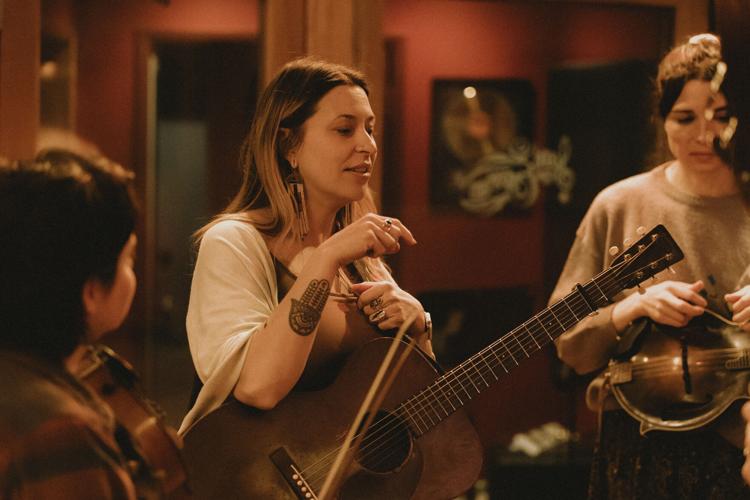
Lindsay Lou
The Recordings
Two albums released this season illustrate not only the sound of today’s bluegrass, but also the collaborative ethos that Nashville artists and musicians bring to the music.
Lindsay Lou Presents Bluegrass Women is the kind of multi-artist project that periodically concentrates the power and skill of the acoustic roots world, calling to mind 1972’s Will the Circle Be Unbroken by the Nitty Gritty Dirt Band (and featuring lots of bluegrass collaborators). She curated familiar songs from the folk canon that were written by women and rallied a cohort of stellar female musicians, mostly from Nashville. Every song gets a custom mix of voices and arrangement. The beautiful “All I Ever Loved Was You,” composed by Dorothy Skaggs (mother of Ricky), features vocals by 75-year-old pioneer Laurie Lewis. “High on a Mountain,” a much-loved song by Ola Belle Reed, is propelled by Sierra Hull’s mandolin.
“I didn’t want to have deep cuts on the record,” Lou says. “I wanted them to be songs that everybody knows, because that’s the impact. That’s when you’re like, ‘Oh, I’ve been singing this forever. I didn’t know it was written by a woman!’ That’s where the big ‘aha’ moment happens.”
Bronwyn’s project Rattlin’ Bones is a more straightforward studio opus that completes Keith-Hynes’ journey from band member to leader. The two-time IBMA Fiddler Player of the Year developed her dynamic stage presence working with Molly Tuttle and has toured heavily since that band went on hiatus in 2025. Her aim, she says, was to write and choose songs that will translate well to the stage. While hers is not a jamgrass band, she and her posse insist on keeping things spontaneous.
“A big thing that I was thinking about was, ‘How can I make arrangements that might have some built-in places to stretch out and and have a longer jam section?’” says Keith-Hynes, “And just be able to kind of shift and change night to night, based on what the music needs and how the audience is reacting?”
Other records released this year by Nashville-based artists show impressive range and imagination. Mandolinist Thomas Cassell made Guitar Collection, featuring a set of duos with master flatpickers including Jake Stargel and Frank Rische. Three members of Punch Brothers live here — Brittany Haas, Chris Eldridge and Paul Kowert — and their new Unsung Adventures album is super-cerebral instrumental music. Toronto native (and Bronwyn band member) Frank Evans, one of the best five-string banjo pickers to move to Nashville in years, dropped his solo debut Fit for a Dog this spring. Meanwhile Jarrod Walker — mandolinist for Billy Strings’ band — made his solo debut with Nighthawk, a mix of straight-ahead songs and brain-melting instrumentals.

Melody Walker
The Lore
Bluegrass history is Nashville history. Born here. Raised here. The genre branched and blossomed around the world like only a few other American musical experiments, such as jazz and rock ’n’ roll. And while not the only hub of change by any means, Nashville kept pace with hotbeds in the Bay Area, Colorado, New England and the D.C. region. Music City was (and still is, in some cases) home to Bill Monroe, Flatt & Scruggs, Mac Wiseman, Jimmy Martin, New Grass Revival and Sam Bush, John Hartford, Ricky Skaggs, Jerry Douglas, Vassar Clements, Stuart Duncan, the Nashville Bluegrass Band, and Béla Fleck. It’s the city of Will the Circle Be Unbroken, O Brother, Where Art Thou?, The Grass Is Blue (Dolly Parton’s breakthrough bluegrass album) and The Nashville Network, which helped keep the music visible to the nation in the ’80s and ’90s.
Youngsters flock here to be part of this lore and lineage. They learn a common repertoire and study old recordings and videos with the zeal of scholars. Picking parties build bonds across generations, and excellent musicians get recognized and onboarded into a busy, transnational string-band ecosystem. This alacrity has made the city rich with bands who play locally and nationally, including veterans like The SteelDrivers and Sister Sadie and newer outfits such as Wood Box Heroes, Nash Grass Unit, Thunder and Rain, DownRiver Collective and the Jason Carter Band.
Whether this translates to a proportional surge of interest among fans is an open question. The “Billy Strings Effect” has been more muted than some had hoped, but his tours and his ambassadorship for the music are definitely minting new, younger bluegrass fans. For the uninitiated — especially those weary of Live Nation corporatism and wary of AI fakery — bluegrass offers a mix of authenticity, musical virtuosity and familial warmth that’s hard to match.
For those who’d like to take a deep dive, the World of Bluegrass — the annual convention of the International Bluegrass Music Association — is now taking place every fall in nearby Chattanooga. The key public-facing component of the event is the ticketed festival Bluegrass Live! taking place Oct. 23 and 24.
Craig Havighurst is host of The String and The Old Fashioned on WMOT Roots Radio, an emcee and interviewer at regional festivals, and the 2024 International Bluegrass Music Association Writer of the Year.

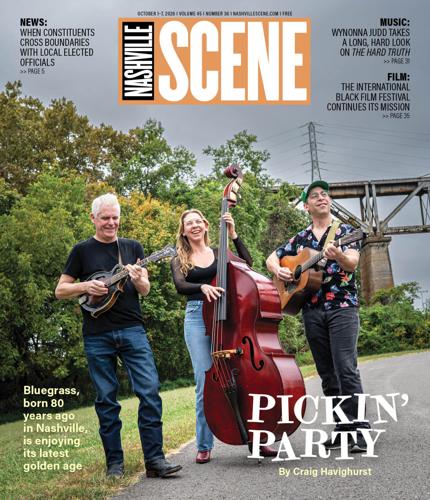
Jeff Burke, Amanda Accardi and Ethan Hawkins



Post a comment as anonymous
Report
Watch this discussion.
(0) comments
Welcome to the discussion.
Log In
Welcome to the discussion.
Keep it clean. Please avoid obscene, vulgar, lewd, racist or otherwise abusive language. Comments featuring hate speech or threatening or violent content will not be tolerated.
PLEASE TURN OFF YOUR CAPS LOCK.
Be truthful. Don't knowingly lie or mislead.
Be proactive. Use the “report” link on any comment that violates our comment policy.
Share with us. We'd love to hear your feedback.