

J.T. Gray at the Station Inn, 2020
Ask just about any bluegrass fan or musician about their favorite places to see live music, and it won’t be long before the conversation comes to the Station Inn. In many ways, it’s been possible for the venue to earn the support of fans and the allegiance of musicians because of the commitment and passion of Earl “J.T.” Gray. He’s owned the venue for 39 of the 46 years it’s been in business; he stopped touring in Jimmy Martin’s band and took the reins from the Station Inn’s founders in 1981. When the International Bluegrass Music Association announced three new inductees to the Bluegrass Hall of Fame in June, Gray was among them, and he’ll be recognized at the IBMA’s awards program Oct. 1.
“Bluegrass is like one big family, and we’ve all stuck together through the years,” Gray tells the Scene. “If someone gets sick or down on their luck, their family is ready to come to their aid. It makes you appreciate your family.”
“Every bluegrass musician of note considers the Station Inn home, and J.T. Gray is the connecting point who makes it all work,” says Chris Joslin, executive director of the Bluegrass Music Hall of Fame & Museum, located in Owensboro, Ky. As a student at Belmont University, Joslin joined many other young pickers in looking to the Station Inn as a place to play bluegrass and to build relationships within that community. Well before they became stars, performers across a wide range of country, roots and string-band music — like Alison Krauss and Vince Gill — honed their skills in the room.
The Station Inn played a vital role in making space for bluegrass in Music City at a time when top talent would seldom play here. In the 1980s and ’90s, legends like Bill Monroe — the man who gave the genre its name and became its ambassador — would drop in unannounced and sit in with the band. Western swing aces The Time Jumpers got their start at the Station Inn, and the long-running lampoon The Doyle and Debbie Show still calls it home. Before COVID-19, there was still an open jam session each weekend.
From far behind the scenes, Gray has cultivated an acoustic live music venue that feels naturally intimate and authentic. Like the Ryman Auditorium, the Station Inn is considered sacred by artists and fans, a piece of the fabric that holds country music together.
“It’s almost like church,” says Ketch Secor, frontman and fiddler for Old Crow Medicine Show. “The audience are parishioners, and J.T. is the reverend. He is as important of a bluegrass legend as any banjo picker, record producer or Grammy-winning artist. Management of the Station Inn has been his five-string.”
Despite not playing traditional bluegrass, Old Crow Medicine Show earned a recurring monthly gig at the Station Inn in 2000. The next year, the group played on the Grand Ole Opry at the Ryman, and in 2005, they headlined the first of many shows at the Mother Church. Their New Year’s Eve gigs at the Ryman have become a Nashville tradition.
“If it weren’t for the Station Inn, my band probably wouldn’t ever have gotten a toehold in Nashville,” says Secor. “We probably wouldn’t have ever made it.”
Molly Tuttle, a rising singer-songwriter and award-winning bluegrass guitarist, sees playing the Station Inn as a rite of passage for emerging artists. Despite the exhilaration and nervousness that playing on such a hallowed stage entails, Tuttle says Gray could not be more welcoming or supportive to young musicians.
“He does so much for the community,” Tuttle says, “by providing a space for multiple generations to learn, grow, perform and make a living playing music.”

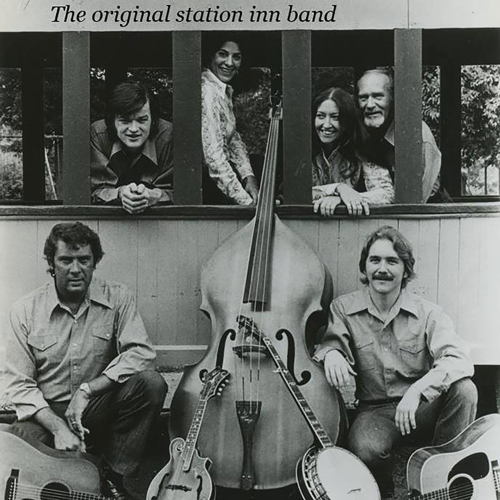
The original Station Inn Band: Bob Smith, Birdie Smith, Charmaine Lanham, Marty Lanham, Bob Fowler and Jim Bornstein
Over the past two decades, the Gulch neighborhood has grown up around the Station Inn, becoming chic and trendy with high-rise hotels and condos and upscale restaurants. The club has changed little since 1978, when it moved from its original home near Centennial Park into the square, limestone-faced building with a Wild West-jailhouse vibe at 402 12th Ave. S.
Bobby Cudd, a booking agent with WME, has a long working history with Gray. He’s keen on both the Station Inn’s significance in bluegrass history, and what it represents as a bare-bones live-venue holdout in a part of the city that has morphed dramatically. When considering whether the Station Inn might one day need to move, he says he sincerely hopes not.
“To me, it’s a national treasure,” says Cudd. “It’s too important to Nashville and music. I think everybody would be disappointed — then, maybe after 30 years, everybody would be OK with it.”
As the city has reverted back to phase two of its COVID-19 reopening plan, Gray is determined to keep the music going. That’s nothing new. When times were tough — as they often were through the first two decades of his ownership — Gray would drive tour buses to keep both the club and himself afloat. This time, he’s especially well-equipped to keep the club in business. The venue established its innovative streaming platform Station Inn TV in 2019. During the pandemic, the platform has afforded the opportunity to showcase artists playing to an empty house via livestream, and to stream shows previously recorded on the venue’s stage.
Though the four months since social distancing and self-quarantine began have been difficult, the club’s marketing director, Jeff Brown, remains optimistic. He also notes that streams from the club have raised approximately $26,000 for musicians playing during the shutdown.
“We’re definitely losing a lot of money, but we’re not sinking,” Brown says. “Since livestreaming has become viable, we no longer have to ask whether or not we will make it through this.”
Gray remains just as optimistic about maintaining the club’s location. He says the Wehby family, owners of the property the club sits on, have agreed not to sell as long as he wants to keep his world-famous bluegrass club rolling.



Post a comment as anonymous
Report
Watch this discussion.
(0) comments
Welcome to the discussion.
Log In
Welcome to the discussion.
Keep it clean. Please avoid obscene, vulgar, lewd, racist or otherwise abusive language. Comments featuring hate speech or threatening or violent content will not be tolerated.
PLEASE TURN OFF YOUR CAPS LOCK.
Be truthful. Don't knowingly lie or mislead.
Be proactive. Use the “report” link on any comment that violates our comment policy.
Share with us. We'd love to hear your feedback.