


Hayley Williams
Hayley Williams was a rock star long before Nashville was known for party buses and celebrity honky-tonks. She’s become globally recognized as the frontwoman of Paramore, whose second album Riot! became an emo-pop-punk smash hit in 2007, and who cranked up their danceable art-punk influences starting with 2017’s lauded After Laughter. Fans know her for her boldness, both as a versatile talent and as someone who isn’t afraid to speak up and speak out about causes that matter to her.
Williams has been building her catalog of solo material, starting with 2020’s Petals for Armor and its 2021 follow-up Flowers for Vases/Descansos. This year, she released a suite of singles that were eventually collected as a 20-track album called Ego Death at a Bachelorette Party. It’s a heartfelt look at the ebb and flow of relationships with romantic partners, with herself, and with the area she’s called home off and on since she moved to Franklin with her mom as a child in the early Aughts. Within the musical worldbuilding so intrinsically tied to Nashville, it’s easy to imagine yourself in Williams’ shoes, sitting in a tourist-trap Broadway bar, nursing a drink and lost in asking yourself: “How did we get here? How did I get here?”
Ego Death is Williams’ first release on her own label Post Atlantic. She shared the debut single “Mirtazapine” via public radio station WNXP and uploaded MP3s of the 17 tracks originally being considered for the album to her website. Once they hit traditional streaming platforms, she asked fans to share playlists to help her determine the running order for the official release. The record has three Grammy nominations, and Williams’ upcoming headline tour will stop for three nights at the Ryman — April 25, 27 and 28. The Scene caught up with her to talk about the record, her creative process and what it means to call Music City home today. Our conversation has been edited for length and clarity.

Hayley Williams
COVID forced the rescheduling and eventual cancellation of tour dates around your first two solo albums. I’m sure promotion had to evolve as well. How did that experience shape the unconventional rollout for Ego Death?
Even more than this album, [Petals was] the most unique experience I think I’ll ever have putting out music. And I felt so pregnant with it too — I needed to be releasing that off of me and out of me, and it’s like I couldn’t, because we never really got to complete the cycle by playing shows. And even the release plan changed a few different times. It was very bittersweet in a lot of ways, being forced to experience it more within myself than externally. … It’s the thing I wouldn’t have asked for, but it’s what I needed.
And it ended up being a good summer. I would be home with a routine for the first time in my life. Sort of enjoying a soft life, learning how to just experience and feel things more slowly, and I’m still trying to get back to that in certain ways. And then obviously the bitter side of it was just that I really, really wanted to feel like these things I was singing about weren’t mine anymore, and I wanted to witness other people having their own experience of it. … [Ego Death completes] what now feels like a trilogy. I’m so ready to eventually get to the Petals for Armor songs.
“Ice in My OJ” begins the record with an interesting groove, and includes an interpolation of a song that predates Paramore.
The night that we wrote that, my friends were staying with me, and one of them is Daniel [James], who I made the record with, and his wife Elise, who is one of my closest friends. They were here trying to figure out if they were going to move back to Nashville, because they’re from here as well. … We knew we were making music, we just didn’t know we were making an album. But something came up — I think maybe one of us saw a TikTok video or an Instagram story, something that had this song called “Jumping Inside” that I was the singer of when I was a kid.
And we were laughing so hard. I have smoked a lot of pot this year. I’ve just really let myself have whatever vice — other than coffee, I’m trying to cut that. But it’s been a hard year emotionally, and I’ve found myself just being like, “You know what? I need to let myself go a little bit because I’ve been so hard on myself, and touring was so rigorous the last few years.” So we were having a night where, like, I was ripped out of my mind and we were dying laughing at, honestly, the Christian music industry.
I almost got into [the CCM business]. [A mutual friend] worked for a Christian music label when he was younger, so it led to, “Let’s put it in a song, let’s just use it.” But we did it at like 11 at night, and I wrote this synth horn part, and the song kept getting more aggressive. Dan added drums, and we just were truly having the time of our lives making shit that had no meaning. And then suddenly it did have a meaning when I started screaming, “I’m in a band.” And when I said the lyric about “a lot of dumb motherfuckers that I made rich.” … I really love that song because it wasn’t supposed to be anything but “ice in my orange juice.” I use this logo of a rotted orange a lot, like for my Spotify page, or I had it on my Substack for a while. And I thought it was funny because — I don’t know, orange hair. [It was] just in my subconscious.

On repeated listens, one of the themes that comes up is how you have a kind of fractured relationship with your adopted hometown. Some of the songs on this LP are among the most Nashville-centric you have written.
It’s a multipronged thing where I have my own experience of having grown up in a broken home, which is very common. And yet the fact that it is such a common experience is the very reason that I sort of overlooked it for so long. … For me, there’s so many hurdles to feeling safe and at-home, not only in a place, but with people. Home has been people, which leads to a lot of codependence and kind of means that your [definition of] north changes often throughout your life. That’s one struggle that I think I write from a lot.
And then there’s also just the literal leaving of homes since I was young, going on the road. Looking back, I always wanted to go. I was like: “Get me out of here. I want to leave and see the world, and I want to make my home on the road.” I think I was already kind of writing about that on [Paramore’s 2005 debut All We Know Is Falling] with the song “Franklin.” There was a lot of tension in that leaving, coming-and-going kind of repetition in my life. And when I moved to L.A. in my early 20s, I think I did get my first taste of what it felt like to be home with myself. And it was interesting because I was so far from my family, my city. And then that really confused me.
It took a long time to wind myself back down in Nashville, and I did that after my divorce. And I’m doing it again now, after trying to leave at the top of this year. When things go down in my life, or [when] it feels like I’m drowning and I need to get above water, I leave. It’s not a great trait about myself, but it makes it 10 times harder when other people have the exact same syndrome, and then I feel the effects of that on myself. It’s like, “Uh, oh fuck, OK, before I get any older, I need to actually address this.” So writing about home from both of those perspectives that we just talked about was necessary to being able to let go and move back here.
It seems to me that these songs cover a span of time — a full cycle of emotions about all the different subjects you’re working through. Some eagle-eyed fans have pointed out they saw song titles in screenshots of your voice recordings years ago. Have some of the songs been sitting in the vault for a while?
Parts of them, yeah. Which isn’t that new for me. I love looking back at photos, I love looking back at my Notes app and listening to my old voice memos. Hindsight really can change perception or perspective on things that you’ve written that might be more subconscious, you know? I’m always looking for how to connect dots through my life. … The chorus of “Love Me Different” was hanging around for years. I’m trying to think of any of the others off the top of my head. “Brotherly Hate.” I think I started that late 2023. “Glum,” I started when we got back from the final This Is Why Tour [dates].
And they were just pieces. [Then] Dan and I started to work together. I think he was in a creative low spot, and I kind of was in a confused spot. And we had a conversation one night about creative constipation, and how artists really need to — and writers in particular always need to — be letting things come out so that there’s even flow. And then it kind of became like, “OK, well, if there’s not something that’s just coming out, then let me go back and see if I have anything we can rummage through to bring to this. Maybe there’s a new perspective or new life to give it.”

Hayley Williams
The cool thing about Dan is he can hear a tiny part of something — oh, for instance, the piano of “Ego Death.” So the first day we went into a studio — I think it’s called Fatback in East Nashville. [Paramore bandmates] Taylor, Zac and I went to Fatback to start writing This Is Why. It would have been the same week that we wrote “Running Out of Time” and whatever else we started that album off with, “Thick Skull,” I think. They had this gorgeous grand piano, and it sounded like nothing I’d ever played in person before. And I started banging around on the idea that I was trying to steer [the song] toward, like a Carole King-type vibe. [On] the original voice note, you can hear Zac come into the room and go, “That’s cool.” And I was like, “Thanks.” And I just kept it. And obviously, I knew it wasn’t for Paramore, so I never really brought it back up for This Is Why.
I sent it to Dan once I had left L.A. after the fires. [The Jameses and others in my circle have a mutual friend who] moved away from Nashville and basically was bragging one night about how much better it was to live in California, and they were like: “Oh, I could never go back to Nashville. I can only go up from here.” It was so funny because even Dan and Elise say that they felt that way. I know I felt that way this last time — I was like, “Fuck it, I’m not living under fascism, I’m getting the hell out.” And then the humbling [feeling] of realizing that, actually, when shit hits the fan in your life and in the world, probably the right place to go is where you have family, your friends, and you know the backroads. I kind of just suddenly needed familiarity. Nashville, I do love and hate — but the same way that we can talk shit on our families, but nobody else better talk shit on our families.
I’m so glad to have you back in Nashville. I feel like we can feel when you’re not here.
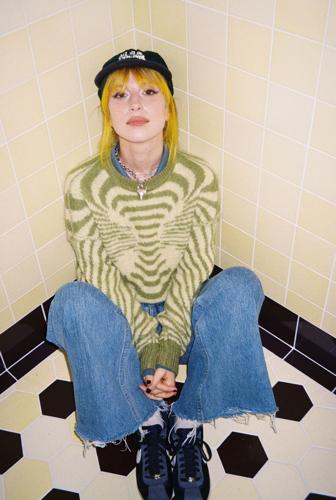
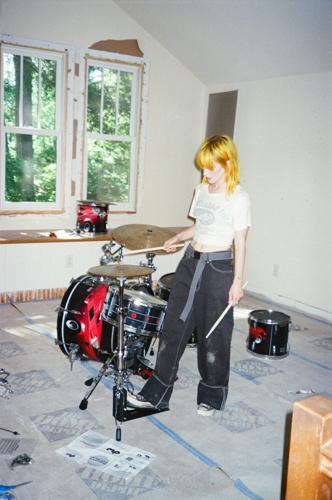
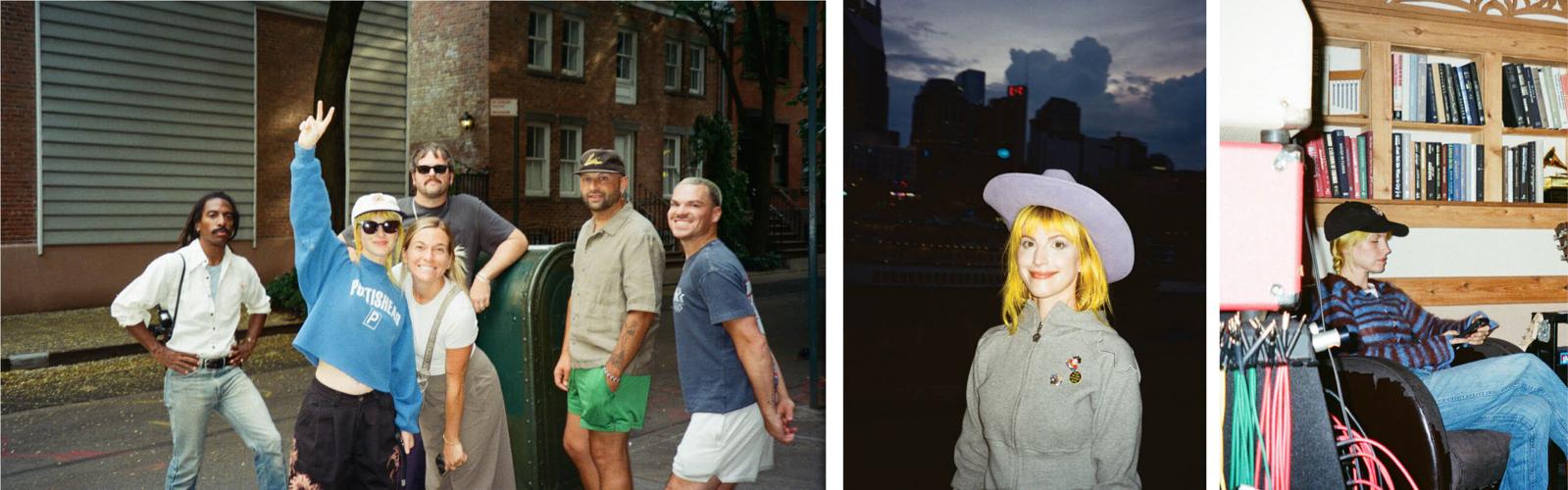
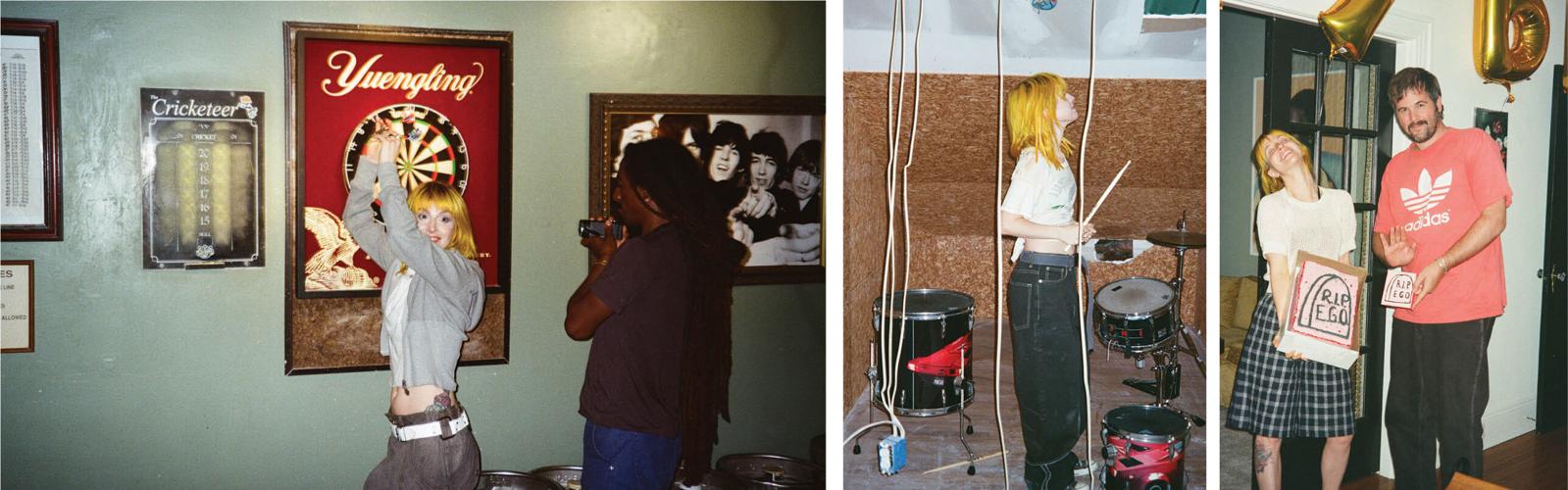
Whoa, that really means a lot. I really feel when I’m not here. I just was in denial about it for a long time. This year’s been such a celebration of everything I love about it. I’ve also mourned a lot of things that are closing down. Like, Margot is closing and Fido’s announced that they’re closing. Fido made me my favorite cake — that they don’t make anymore — for the Ego Death release party. We sent y’all the photos for this piece, and that cake’s in there. Like, everything from those photos is made possible by being back here at home. I’m really thankful you guys are going to run those. Elise is such a great photographer, and [the photos] are just as close to home movies as we have.

Talking with rock star Hayley Williams, counting down our favorite local albums and more



Post a comment as anonymous
Report
Watch this discussion.
(0) comments
Welcome to the discussion.
Log In
Welcome to the discussion.
Keep it clean. Please avoid obscene, vulgar, lewd, racist or otherwise abusive language. Comments featuring hate speech or threatening or violent content will not be tolerated.
PLEASE TURN OFF YOUR CAPS LOCK.
Be truthful. Don't knowingly lie or mislead.
Be proactive. Use the “report” link on any comment that violates our comment policy.
Share with us. We'd love to hear your feedback.