

While considering where you might grab breakfast, pick up lunch, order a delivery or make a reservation for dinner, for a moment imagine a Nashville without immigrants.
No breakfast tacos for you. No gyro, no sushi, no pho, no hummus, no pad Thai, no bibimbap, no tikka masala, no agnolotti, no naan, no samosas, no pupusas, no empanadas, no bánh mì, no birria, no spring rolls and no cannoli. No International Market, no Epice, no Korea House, no House of Kabob, no Kien Giang, no Alebrije.
I’m so Old Nashville that I remember the first authentic Mexican restaurant that opened on Nolensville Road, the first Indian restaurant, the first sushi bar, the first Middle Eastern, the first Vietnamese, the first Korean.
Food may seem a rather insignificant part of the big picture when it comes to what is happening to immigrants in America today, and when it comes to imagining a Nashville — and an America — bereft of the immeasurable contributions of immigrants. But this is a dining column, so that’s the lens I’m looking through.
Which brings me to this episode of Old Nashville Meets New Nashville, in which I ask: Where the hell am I, and what the hell is happening? The last time I was in what was then L&L Restaurant Equipment, I was seeking a large cone-shaped food strainer in the dusty, dark and creaky ramble of a 90-year-old former hosiery mill.
Mixed Grill
Shoot me out of the time machine and I’m standing in the fully renovated, shiny and bright, brightly branded, decidedly New Nashville L&L Market — home to luxury retail shops, a yoga studio, a cycle bar, skin and hair salons, wine shop and restaurants. Those include Kardes Turkish Grill & Bar, which is what brought me to modern-day L&L. (Never thought I’d get here, did you?)
A Nashville without immigrants would mean Selim Ülker would not have come from Ankara, Turkey, to Nashville in 2018. He was the culinary driving force and opening chef behind Edessa when it was reimagined from a hookah bar to a full-service restaurant serving Kurdish cuisine (and owned by immigrants). Two years later, Ülker went on to work for former Spiaggia chef Tony Mantuano when he and his wife Cathy opened Yolan in SoBro’s Joseph Hotel. The very upscale Italian restaurant was quite the 180 from Edessa (which went on to be named one of The New York Times’ 50 Best Restaurants in the country in 2024).
Like many immigrants, Ülker dreamed of opening his own restaurant — one where he would celebrate the culture and cook the food of his country. With brother Cem (who doesn’t cook), he began looking for space and laying the groundwork for a full-service, elevated-dining Turkish restaurant. But in the meanwhile, Tamay Ozari — the owner and developer of L&L, and also an immigrant from Turkey — suggested he take a space in the building for a casual concept.
If Ozari’s ulterior motive was a taste of home, he received it with the opening of Kardes (pronounced “Kardesh”) in October.
The succinct menu is rooted in street food, tradition and home cooking. It’s also rooted in execution, navigated by the kitchen’s small size and limited equipment — prep space, one induction burner and two Japanese-style charcoal grills under an impressive steel hood emblazoned with the restaurant’s name. Dangling from the ceiling are dozens of nazar boncuk, the azure amulet also known as the Turkish evil eye, believed to guard against harm.
A shiny aluminum-topped U-shaped bar separates the cooks from diners, who can claim one of the 20 diner-inspired swivel stools. L&L provides additional open seating at tables close by, and just a few feet from the wine bar Pont Neuf, where my companions purchased a bottle to enjoy with dinner. (Kardes does not serve alcohol of any type.)

Börek
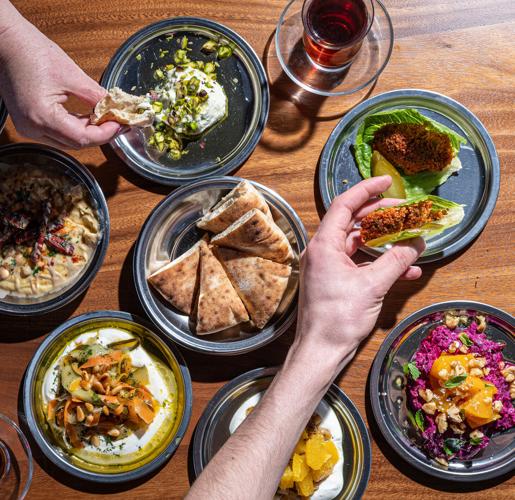
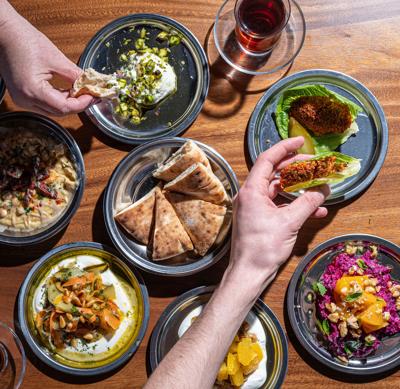
Whether your party is two or 10, begin with the Meyhane Experience and clear table space for the spread of spreads (large groups will want to order more than one). The “experience” is an expression of a type of Turkish tavern known as a meyhane, where people come together casually for camaraderie, conversation, community, drinking and snacking. The Kardes experience is seven individual plates — some hummus-based, some yogurt-based, some grain-based and some root-vegetable-based. All come with lightly grilled pita points (sourced from Nolensville Road bakeries).
Turkish hummus is served warm, with a thinner consistency than Greek or Lebanese, and usually drizzled with tahini; Ülker drapes strips of sucuk — a Turkish beef sausage — over his. (Our token vegetarian enjoyed hers with chickpeas.)
The yogurt-based spreads are dreamy, particularly the one with ribbons of raw zucchini and carrots, pine nuts, black currants and lemon juice, and the celeriac — pureed celery root mixed with yogurt and orange juice, topped with segments of orange and dill.
The “spread” named Za’atar is a strained yogurt whipped with olive oil, formed into a jiggly ball (reminiscent of labneh) and heavily dusted with za’atar, the Turkish dried spice blend. Ezine is Turkey’s feta, and at Kardes it is whipped with basil oil and lemon juice, and sprinkled with lemon zest and pistachio. Walnuts are strewn over the pink sultan — grated boiled beet root mixed with yogurt. I love the use of nuts and pomegranate seeds to add crunch to the spreads, citrus and fresh herbs like mint, parsley and dill. Kisir is bulgur boiled with scallions and herbs, mixed with pepper paste, lemon juice and pomegranate molasses, and served with lettuce cups for scooping and wrapping.
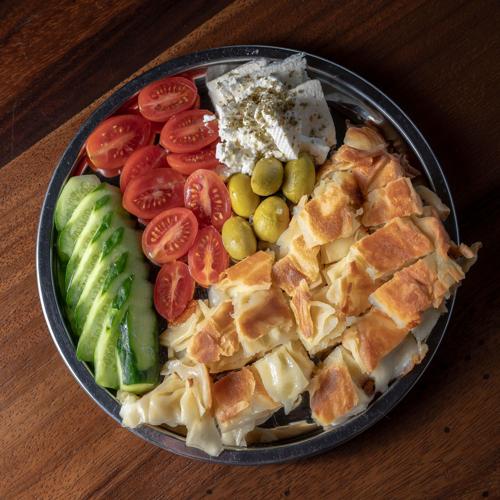
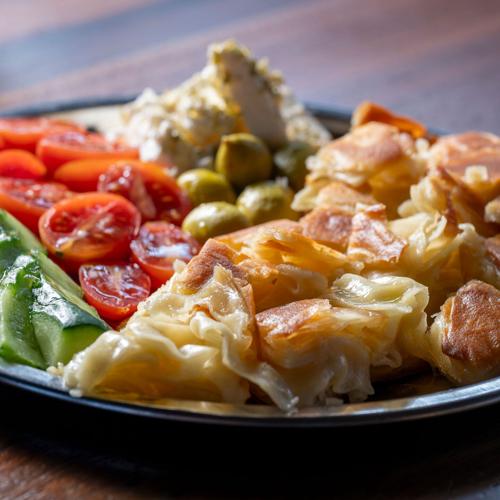
Vegetarian options are scarce, but a meal can be built around börek, a Turkish street food made of dough and cheese, layered and baked. Ülker piles strips of the finished pastry on a plate and adds a hunk of ezine, olives, fresh cucumber spears and halved cherry tomatoes.

Börek
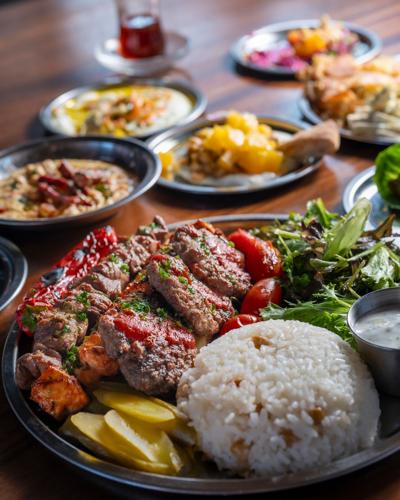
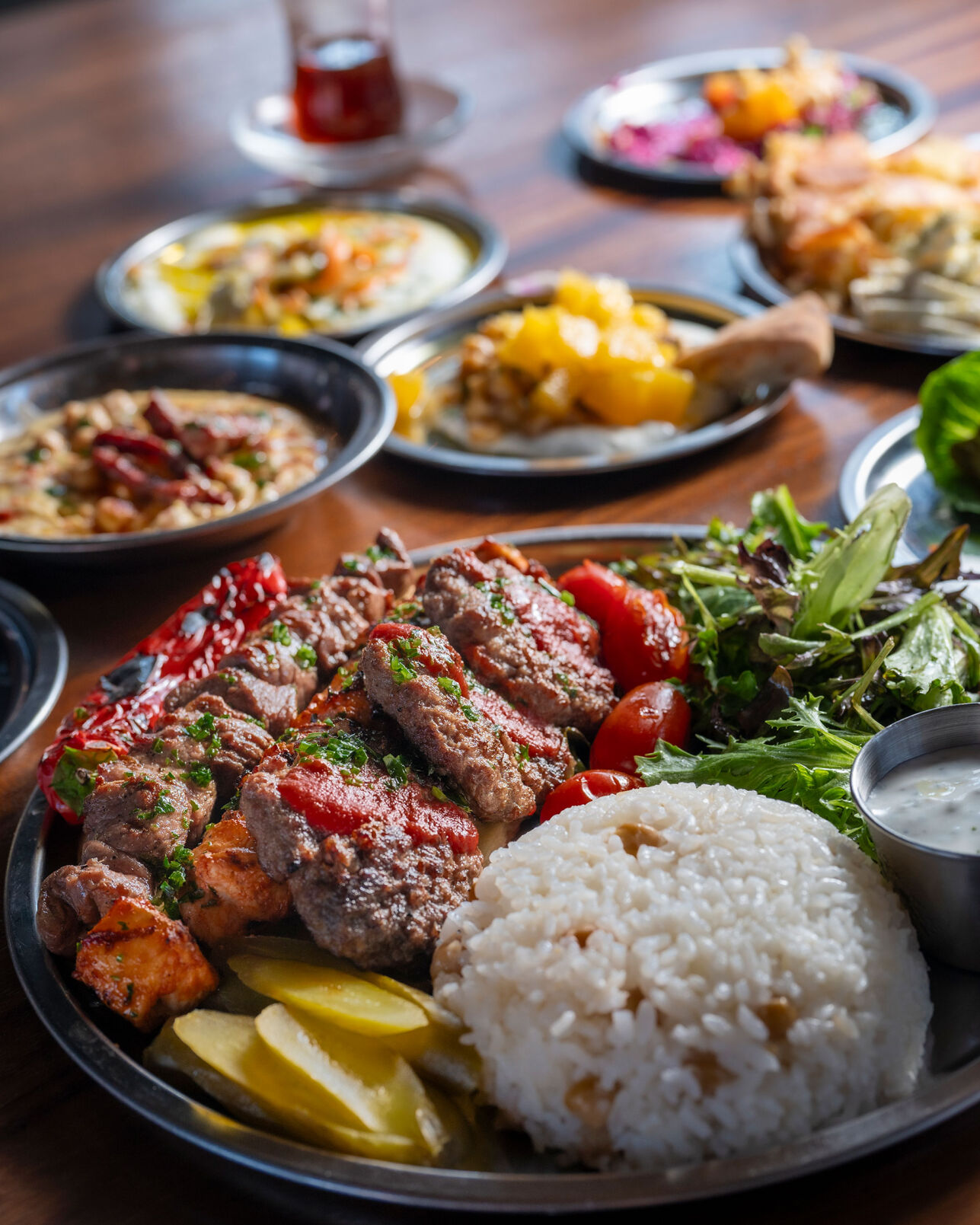
Two chicken, lamb or meatball kebabs are placed on a fan of toasted pita slices and the centerpiece of a composition encircled by a mound of long-grain white rice studded with chickpeas, a tangle of salad, a grilled red pepper and Turkish pickle. Ülker credits the high heat of the grill and the type of charcoal he uses — Prime 6 — for the impressive succulence of the skewered bite-size pieces of chicken and lamb, which make the ramekin of yogurt dipping sauce superfluous.
Unexpectedly — particularly for this lamb lover — the meatballs were the favorite of the trio; a blend of ground beef, ground veal, grated onion, a little bread crumb and salt, they are smeared with a bit of tomato sauce and will provoke fond memories of your mother’s meatloaf. Ülker says meatballs are a thing in Turkey, and different cities each claim to have the very best meatballs. I’m naming them right now Best of Nashville’s 2026 Best Meatball.

Güllac and Turkish coffee
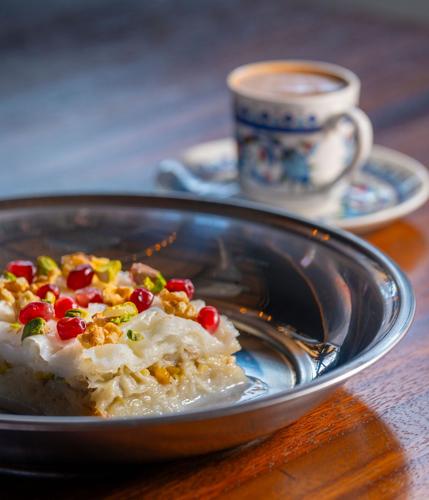
Kardes has one dessert that changes seasonally. We were lucky to catch the peeled half quince — poached in water infused with hibiscus, clove, cinnamon sticks, quince seeds and a bit of sugar. The finished fruit is set in a shallow bowl of the resultant syrup and topped with mascarpone and pistachios. (For the duration of Ramadan, Ülker is making a beloved Turkish dessert known as güllac – delicate sheets made from starch, soaked in sweetened milk, flavored with rosewater, layered with crushed walnuts and finished with a topping of ground pistachios and pomegranate seeds.)
The fruit dessert is called ayva — Turkish for quince. In Nashville, it is the name of the restaurant Cem and Selim Ülker will open this summer in Wedgewood-Houston — home to Sushi Row (Japanese), iggy’s (Italian), Aba (Mediterranean), Pastis (French) and Dos Santos (Mexican). Lucky us.



Post a comment as anonymous
Report
Watch this discussion.
(0) comments
Welcome to the discussion.
Log In
Welcome to the discussion.
Keep it clean. Please avoid obscene, vulgar, lewd, racist or otherwise abusive language. Comments featuring hate speech or threatening or violent content will not be tolerated.
PLEASE TURN OFF YOUR CAPS LOCK.
Be truthful. Don't knowingly lie or mislead.
Be proactive. Use the “report” link on any comment that violates our comment policy.
Share with us. We'd love to hear your feedback.