
Around 9 a.m. on Nov. 3, cellphones of Nashville chefs and restaurateurs started blowing up. Some of the chefs were still in Nashville, while others had already made the trek to Greenville, S.C., in anticipation of the inaugural American South Ceremony for the storied Michelin Guide.
The folks who’d been invited to the ceremony already knew they had been “selected” as part of the first American South region. The excitement to come that evening was finding out who won a coveted star (or two, or maybe even three), who made the distinction of the “Bib Gourmand” and who might have been singled out for a special regional distinction for the sustainability practices or beverage program.

Earlier-than-anticipated press release also honors Hermitage Hotel, Kisser, Uzbegim and more
But by 10 a.m., everyone knew who won what due to a press release snafu that announced the winners 12 hours too early. Nonetheless, it was a heady buzz of happiness and celebration, even if the anticipatory tension of the ceremony had been softened.
Since 1991, the apogee of culinary recognition in the United States has been the James Beard Foundation Awards, divided by region alongside a handful of national awards. Beard-winning chefs have come to our city over the years, but Nashville native Tandy Wilson of City House became the first homegrown chef to win Best Chef: Southeast in 2016. Dubbed the Oscars of the food world, the Beard process uses nominations and peer reviews to vote through two rounds to pick the winners. The “short list” folks get invitations to the ceremony, though only one winner is picked in the regionals.
Saddled with accusations of political favoritism, shameless campaigning and loose judging requirements (note: this writer is a former judge for the James Beard Awards), the hospitality cognoscenti began to wonder if the awards would remain as relevant as they had been.

The Catbird Seat
Then came 2005, with the arrival of the Michelin Guide covering the New York area. Begun in France by the tire company hoping you would take long drives to discover good places to eat — and buy more tires — the guide became the de facto bar-setter for European restaurants. Winning and losing stars brought both euphoria and despair. In the case of Bernard Loiseau, after losing position in another guide, he killed himself, reportedly over the fear of losing one of his three stars.
While the Michelin Guide has spread throughout select cities and regions of the United States, its presence remains incumbent on who will stroke the big check. In a version of pay to play, or at least pay to be reviewed, getting the Michelin Guide costs upwards of $1 million for a three-year contract, per city, based on reports from Atlanta. The fee is usually paid for by local convention bureaus and state-level tourism commissions, who see it as a good investment to continue to attract gastronauts who plan trips around their dining itineraries.
“Tennessee has some of the most talented chefs and most creative kitchens you’ll find anywhere,” Commissioner Mark Ezell of the Tennessee Department of Tourist Development tells the Scene by email. “Michelin is a trusted stamp of approval and puts our talent on an international stage, from James Beard winners to neighborhood favorites in every corner of our state. This partnership is about elevating our story and attracting food-focused travelers from around the world.”
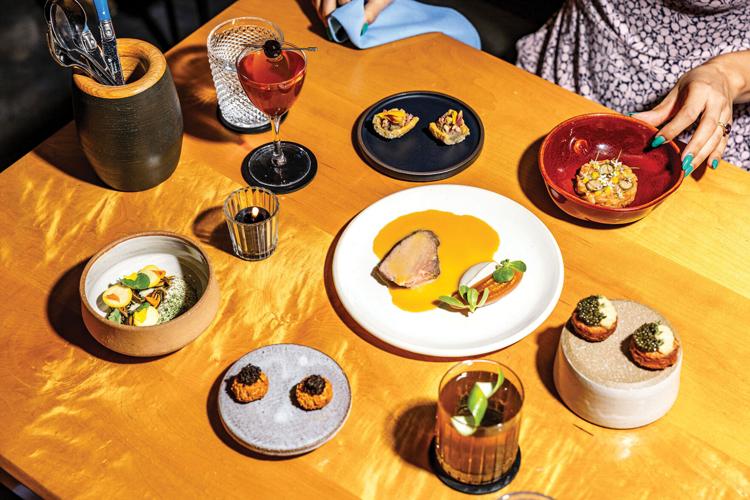
At the Nov. 3 ceremony, 12 restaurants made the basic Guide, and six earned the Bib Gourmand — ostensibly for being good and a good value. Nashville notably scored three one-star restaurants — Bastion, The Catbird Seat and Locust — which all came from the same restaurant group, Strategic Hospitality. The American South Region covers seven states (Louisiana, Mississippi, Alabama, Tennessee, North Carolina, South Carolina and Greater Atlanta), and only one establishment in that area earned two stars: Emeril’s in New Orleans.
Josh Habiger, the soft-spoken owner of Bastion and now a partner at Strategic Hospitality, was thrilled with their showing. “Any recognition is really pretty cool,” says Habiger. “You work so hard in this business, and an award like a Michelin star helps the business, the city and your whole staff. It also fills the seats.” Habiger adds that he felt Nashville restaurants Rolf and Daughters and Peninsula should have won stars as well.

Locust
Habiger’s partner Max Goldberg is more effusive in his praise. “I really have this imposter syndrome, but Josh is the real deal,” says Goldberg, insisting that Habiger ultimately elevated the entire food scene in our city. “We created Catbird for him [Habiger was part of the first chef duo at The Catbird Seat], and now he’s had this tremendous ripple effect.”
Earning a spot in the guide for his family meat-and-three, Arnold’s Country Kitchen, Kahlil Arnold says he loved rubbing shoulders with the fine-dining chefs who point to him as one of their favorites. That serves as a reminder that the Michelin Guide has broadened enough to include a taqueria in Mexico City in its one-star rankings. “I was humbled beyond belief and only wish I could have shared the moment with my dad,” says Arnold.
The Michelin Guide awards claim to eschew the influence of both service and decor, though both elements of the dining experience were repeatedly mentioned during the ceremony while listing the plaudits. That seeming incongruity adds to the mystery of their method. While Peninsula was mentioned as deserving a star, the East Nashville restaurant was inexplicably put in the “Bib” category — though few think of the space, whose chef Jake Howell recently won a Beard Award, as a “value” proposition. Perhaps, as Goldberg mentioned, “value” is not synonymous with “affordability.”
In the end, while James Beard honors individuals — perhaps a nod to the rise of celebrity chefs — the Michelin Guides reward the restaurants, and starred places give communities both cachet and credibility. And once you’re on their radar, you are reviewed on a yearly basis, a sure incentive to keep plugging away with superlative ingredients and creative presentations that reflect the mind and ethos of the chefs behind the food.



Post a comment as anonymous
Report
Watch this discussion.
(0) comments
Welcome to the discussion.
Log In
Welcome to the discussion.
Keep it clean. Please avoid obscene, vulgar, lewd, racist or otherwise abusive language. Comments featuring hate speech or threatening or violent content will not be tolerated.
PLEASE TURN OFF YOUR CAPS LOCK.
Be truthful. Don't knowingly lie or mislead.
Be proactive. Use the “report” link on any comment that violates our comment policy.
Share with us. We'd love to hear your feedback.