

Some whiskey lovers enjoy the thrill of the hunt for a rare new release almost as much as the actual juice in the bottle when they acquire it. I’ve generally never been one of those sorts, so I do maintain a few honey holes out in the country where I can occasionally run across some bottles that don’t last for more than a day in the busier spirits stores of the big cities. (Of course in the current climate of declining drinking, compounded by the result of so much new distilling capacity coming on during the boom of the past decade, it’s no longer rare to see cases of Blanton’s stacked next to the front door at some liquor stores.)
I’ll admit I prefer it when my FedEx driver delivers the latest releases to my front door, albeit often in small bottles. Beggars and choosers, and all that. And let me tell you, the deliveries of the past few weeks have been spectacular!
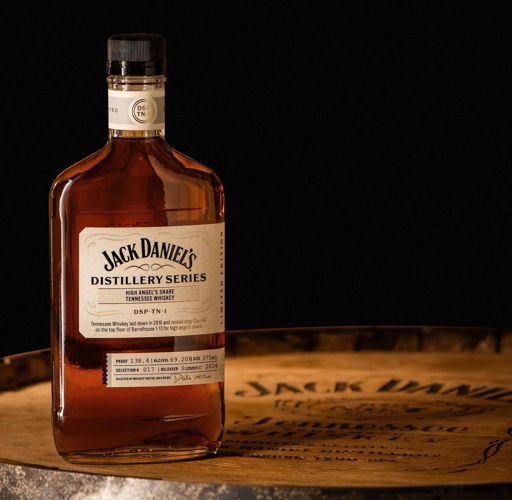
The first came courtesy of Jack Daniel’s with the latest in their Distillery Series. This edition is named High Angel’s Share Tennessee Whiskey, the first Distillery Series release with this designation since the original batch No. 1 way back in 2018. Angel’s share refers to the liquid lost from the barrel due to evaporation over the years, leaving less than a full barrel at the end of the aging process. Those 2018 barrels and these current barrels both experienced a lot of evaporation during their five to eight years in Jack’s barrelhouses, deeply concentrating the color and flavors of the remaining few bottles in each cask.
The difference between the 2018 juice and the current release is that the earlier one was bottled at a relatively tame proof level of 107. This latest release came from the highest floors of the legendary Coy Hill barrelhouse, known for creating extremely high-proof whiskeys as the water evaporates off and the alcohol stays behind.
Distillery Series Selection No. 17, the most recent High Angel’s Share, comes in at a fiery 138.3 proof, nearly 70 percent in ABV — much higher than the minimum 80 proof needed to be called a Tennessee whiskey. When you consider that the maximum barrel entry proof level is 125, this whiskey became much stronger just sitting in the blistering heat of eight Moore County summers on Coy Hill.
So what is the experience like drinking this liquid magma? Actually, it’s surprisingly delightful as long as you’re prepared for it. A beautiful amber/copper in the glass, it offers up a banana-bread aroma that is in line with other Jack releases. Just don’t bury your nose in the glass lest you singe your nostril hairs.
And as expected, the first assault on the palate is intense, numbing the tip of the tongue and offering a pleasant burn at the back of the tongue. Be strong. Give yourself a second to recover, and try another sip. There, that’s not so bad! The elements of oak turn out to not be overpowering as they expand. Sure, there’s some woodiness and nutty characters, but there’s also plenty of room for maple syrup and molasses notes to coat the palate. A drop or two of water allows it to open up nicely, releasing even more caramel and candy corn flavors. It’s definitely a sipper, but this would be a nice bottle to stash away for your friends who love higher proofs to try, especially if they’re not from Tennessee.
Distillery Series Selection #17 will be available in select Tennessee liquor stores and at the White Rabbit Bottle Shop at the distillery in Lynchburg. It is packed in 375-milliliter bottles and retails for a suggested price of $44.75. You’ll take a while to get through that half bottle, so I wouldn’t sweat the smaller size.
The second magical delivery came from the Bardstown Bourbon Company in Kentucky. In addition to distilling some fantastic bourbons and ryes at their facility, Bardstown also has a great reputation in two other important facets of spirits production.
First of all, the blenders at Bardstown do a remarkable job of acquiring, selecting and blending a range of sourced and self-produced spirits to create brand-new products. Secondly, they are experts at finishing whiskeys in unique ways after they have already come out of their original barrels to create an end product that is even better than the sum of its parts.
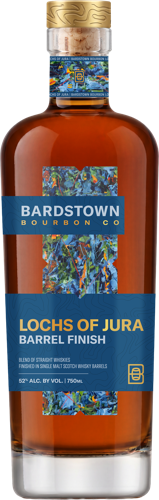
The two products that they sent me to sample are both prototypical examples of what Bardstown does best. The first is a rare bird in that it’s actually a blend of straight bourbons and straight rye whiskey. While I can’t confirm the actual recipe or ages of the whiskeys that were blended, I will say that some notes from a large retailer that sells “all the fermented grape juice” states that the blend is 49 percent 11-year-old Indiana bourbon, 30 percent 10-year-old Indiana rye and 21 percent 12-year-old Kentucky bourbon. So that’s starting out with a base of some potentially excellent hooch.
After blending the sourced barrels, Bardstown poured them into used sherry and bourbon casks (which had most recently been used to age Scotch) for an additional 32 months. As if the process wasn’t already complicated enough, because sherry casks hold 59 gallons instead of the 53-gallon standard for American whisky barrels, they didn’t fit into Bardstown’s regular ricks. You can imagine the aggravation of having to work around the barrels stored in the warehouse aisles, but the end product was certainly worth it.
If you’re worried about how those extra years in Scotch barrels might affect the whiskey inside, these are not the smoky peat bombs that you might be concerned about. The Scotch in question came from Jura, a small Scottish island just north of Islay, the region that really prides itself on putting the peat to their malts.

Jura is tiny and remote, with one road, one pub, one shop, less than 250 inhabitants and one distillery. It’s so secluded that George Orwell chose it as the place to hide away and write 1984, because he described the island as “an extremely ungetatable place.”
Jura is known more for coastal, briny flavors and for drawing the fruit out of their sherry casks. Combining the sweet bourbon and the spicy rye with the essence of Jura has created a magnificent final product with a nose of vanilla and dark fruits and hints of mint, and buttery caramel on the finish. Don’t just take my word for it. Bardstown’s Lochs of Jura Barrel Finish Whiskey scored a 99 out of 100 points in the recent 2026 International Wine & Spirit Competition, making it the top-scoring North American spirit in the competition.
Bottled at 104 proof, Lochs of Jura will be available in limited quantities nationwide starting on Aug. 21 with a suggested retail of $139.99. If you can find it, buy it! (And pick me up one, too. I promise to pay you back!)
The second Bardstown Bourbon Company product I sampled recently is even more experimental. It is the 2026 release of the Discovery series and will also come out on the same date at the same price as Lochs of Jura.
This one starts out like a lot of really good BBC products do, with a blend of Indiana and Kentucky bourbons. (If “Otal-tay Ine-way” is correct, 55 percent 10-year-old Indiana, 25 percent 11-year-old Kentucky and the remainder 7-year-old bourbon from the Bluegrass State.) The barrels were specifically sourced from higher floors of warehouses to ensure that they had a good balance of fruit and wood to stand up to a second period of barrel-aging. This blend spent an extra four months in new oak barrels, but not just any oak.
BBC contracted with a cooperage to create custom barrels made with quercus garryana, a white oak grown in the Pacific Northwest. This rare Oregon oak grows in the Willamette Valley and is known for its tight grain and for contributing flavors like nutmeg and clove to whiskeys from the region.
Bardstown brought the barrels to Kentucky and filled them up with their blend, which they then bottled at 112.8 proof after the double-barreling was complete. The garryana is most apparent as part of the finish, as the whiskey starts out with the toasty wood notes you’d expect from many secondary barrel agings, along with a little bit of a s’mores vibe.
But then the fruits and baking spices kick in. Dark cherry leather and spicy cinnamon linger on the palate as a pleasing part of an extremely long finish that fades into a woody, almost incense-like conclusion. Both of the BBC’s whiskeys were delightful, and I’d be happy to drink either one again. I do think the Lochs of Jura was even more inspired, but your mileage may vary.



Post a comment as anonymous
Report
Watch this discussion.
(0) comments
Welcome to the discussion.
Log In
Welcome to the discussion.
Keep it clean. Please avoid obscene, vulgar, lewd, racist or otherwise abusive language. Comments featuring hate speech or threatening or violent content will not be tolerated.
PLEASE TURN OFF YOUR CAPS LOCK.
Be truthful. Don't knowingly lie or mislead.
Be proactive. Use the “report” link on any comment that violates our comment policy.
Share with us. We'd love to hear your feedback.