

Horror films are having a moment in Nashville. This year has seen the successful release of locally made movies like Hellcat and Dolly, while Where the Hell Is Anna? won Best Tennessee Feature at this year’s Nashville Film Festival. The latest film to join the party is The Other People, the feature-length directorial debut from Gallatin native Chad McClarnon. He’s rocking a shirt from local merch company Music Valley Archive featuring Grizzly River Rampage — a ride at beloved, defunct Nashville theme park Opryland — when we speak. Chad wrote the horror-thriller with his brother Trey, and both have been involved in the local film scene for 20-plus years.

The Nashville-based director — whose film is now available via Shudder — discusses his influences and indie filmmaking
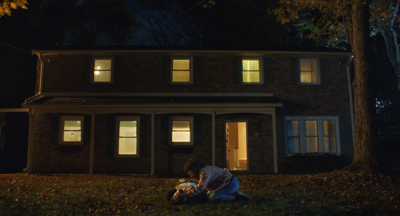
The Other People, released in September and shot in Nashville with a mostly local cast and crew, is a mysterious, timely and downright brutal dissection of the home-invasion genre. It’s something like Wes Craven’s The People Under the Stairs, if Craven had played things straight. Strange things are happening at the home of the Marsh family. But when William (Terrifier 3’s Bryce Johnson) leaves behind his wife Rachel (Sleepy Hollow’s Lyndie Greenwood) and his daughter Abby (Valentina Lucido) for an out-of-town business trip, the weirdness escalates.
The Other People impressed festival audiences, and won the Audience Award at the 2025 Nashville Film Festival. Now, with the film available to rent or purchase digitally, the Scene checked in with Chad and Trey about their careers and the horror genre. This interview has been edited for length and clarity.
Can you walk us through what it’s like to finance an independent film?
Trey: The big thing I would say, as far as trying to raise money for an independent film, is that a lot of people don’t recognize that there are a lot of different ways to do it. And I think if people try to find one way to do it and then do that way, if it doesn’t work, they’re like, “Well, it didn’t work.” Most of the time, you need to use a lot of different methods all at once. You might get some money this way, and then some other money a different way, and then some money from something else. Even for [our film], we had friends and family, we had private equity investment, and we also had fiscal sponsorship through the Arts and Business Council in Nashville. We needed all of those different things in order to make it work. That is a long road, and it’s a lot of different pieces.
What was it like shooting locally?
Trey: If you’re dealing with the Tennessee Entertainment Commission for tax incentive purposes, then there’s a whole bunch of paperwork that goes along with that. But this was not part of that, because they do not incentivize horror movies by rule. … I also want to be clear that that’s not the only content restriction in their rules. They also restrict incentivizing things with sex. They also restrict documentaries.
Chad: [Horror is] statistically the most profitable genre. Cinema would not exist without horror movies. The theaters would be gone years ago. Most platforms would be gone. Horror is the structure that holds cinema together.
What is it like writing a script together?
Chad: We commonly say that if some idea can survive the fight between us, then it deserves to be in the movie, but we go really, really hard with trying to defend whatever it is. I’ve done somewhat similar collaborations with other people that are just friends, and there’s always the fear that, “Oh, I should think about how I say this so they don’t get too upset, because I want to preserve the relationship.” But we don’t have to worry about that with each other. Like, where is he going to go? We’re brothers.
Historically, horror films have been a way to bring big, real-world ideas into a genre package. How do you balance those things?
Trey: Whether it’s horror, whether it’s sci-fi, whether it’s whatever, when you package it in those things, you get a little bit more freedom to talk about real things, I think, because people can distance themselves if they want to. And then the people that want to wrestle with those ideas in a real way can. Looking at things like Battlestar Galactica in the early 2000s, it was doing some of the best discourse on government-sponsored torture,
more than the real military shows. … Genre can fly under the radar sometimes. And the history also reflects that.
What are some of your biggest filmmaking influences?
Chad: I would say that our biggest single influence from a career standpoint, but then also this movie, is Rosemary’s Baby. I think that my favorite filmmaker is Michael Haneke. … There are other films that certainly contributed to this movie. There’s an old George C. Scott movie called The Changeling, which was very influential. … There’s also an old Jessica Harper movie called The Evictors, [and] nobody’s seen it.
Trey: One we watched a lot as a kid was When a Stranger Calls. The way that that film emphasizes your home as safety, and then makes that unsafe. And then for another specific thing, The Innocents. … The idea that the ghosts in that movie are omnipresent in the background of things.


Post a comment as anonymous
Report
Watch this discussion.
(0) comments
Welcome to the discussion.
Log In
Welcome to the discussion.
Keep it clean. Please avoid obscene, vulgar, lewd, racist or otherwise abusive language. Comments featuring hate speech or threatening or violent content will not be tolerated.
PLEASE TURN OFF YOUR CAPS LOCK.
Be truthful. Don't knowingly lie or mislead.
Be proactive. Use the “report” link on any comment that violates our comment policy.
Share with us. We'd love to hear your feedback.