

Aside from his somewhat imposing stature and his tendency to sport a wiry beard, musician Ben Dickey doesn’t bear much physical resemblance to storied country singer and cult icon Blaze Foley. Although he’s 41 — two years older than Foley was when he was shot and killed in 1989 — Dickey has a more youthful countenance. He’s got a handsome, toothy grin that seems a lot bigger than the one hiding behind Foley’s Sam Elliott-esque mustache in photographs and the rare video clip.
But when it comes to Blaze, the new Ethan Hawke-directed film based on Foley’s life, that doesn’t really matter. Dickey is a first-time actor, but his comfort as a performer and his familiarity with Foley’s songs jump off the screen. Even so, he approached the role with some reticence.
“There’s a strange kind of shame associated with stepping into the void where somebody was, and thinking, ‘I can do what they did, and I can move like they moved, and I can relate to the world the way they did,’ ” Dickey tells the Scene. “It was something I was new to and struggled with quite a bit.”
But Dickey overcame it, he says, by immersing himself in Foley’s songs and surrounding himself with people who knew and cared for the late singer. He also put his faith in longtime friend Hawke, who knew Dickey was meant for the role even before he did.
“I had this idea watching Ben sing of what a wonderful actor he would be,” says Hawke, who met Dickey roughly 15 years ago. The two share musical interests, and their mutual adoration of Foley deepened in recent years. “There’s a long history of musicians giving great performances in movies, from Diana Ross in Lady Sings the Blues to Bette Midler to Willie [Nelson] and Kris [Kristofferson] in Songwriter. … Ben is from Arkansas, Blaze is from Arkansas. They’re both large men and dynamic. And Ben can sing the hell out of Blaze’s songs, and he loves them. And I just started seeing this movie in my head. I had the idea of the movie before I even knew what I was going to make it about.”
Foley is revered in many songwriting circles, known for both his lonesome ballads and his finger-picked country-blues tunes. Though his songs have been covered by the likes of Merle Haggard, Lyle Lovett and John Prine, in life he never reached the audience or achieved the status that his longtime pal and fellow tragic Texas character Townes Van Zandt did. But in a very central way, that’s to the benefit of Hawke’s film. Even those familiar with Foley’s life and music don’t have the inextricably ingrained notions of him that we do of household names like Johnny Cash, Jerry Lee Lewis, Loretta Lynn and Ray Charles. That gives Blaze a degree of freedom that films about the aforementioned icons don’t have.
Blaze also avoids a common musical-biopic pitfall — that is, becoming a clumsy, ponderous, self-important slog — thanks to its narrative framing, which primarily jumps between four central devices. The first is a radio interview, of which the aforementioned Van Zandt and his harmonica player Zee are the subjects. The former is played with hillbilly-philosopher aplomb by another musician-turned-first-time-actor, Charlie Sexton, while the latter is a composite character played by the always-rock-solid Josh Hamilton (last seen as the tenderhearted dad in Eighth Grade).

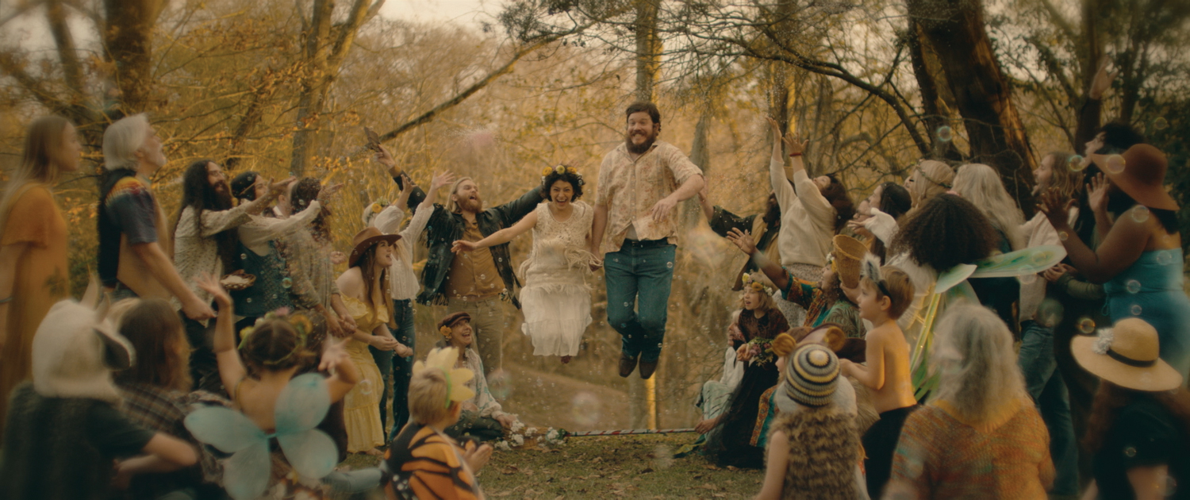
The second of Blaze’s four central storylines is the recording of Foley’s album Live at the Austin Outhouse, which took place just weeks before the singer’s death. The third is the night Foley was killed, and the fourth and most important is his relationship with a young actress by the name of Sybil Rosen, who is played with enthralling depth by Alia Shawkat. Rosen’s memoir Living in the Woods in a Tree: Remembering Blaze Foley was a central inspiration for the film, which Rosen co-scripted with Hawke. It’s her deeply personal contributions that elevate Blaze to something far more captivating than a boilerplate biopic — it’s a love story.
“I knew that for the movie to work, we needed to know why he was worthy of love,” says Hawke of Foley, who — known for his hard drinking and frequently pugnacious attitude — was the basis for longtime friend Lucinda Williams’ song “Drunken Angel.” “We were making a movie about Sybil’s Blaze. That was an exciting movie to me. … I can have my theories about art and music and life, but she knew the man.”
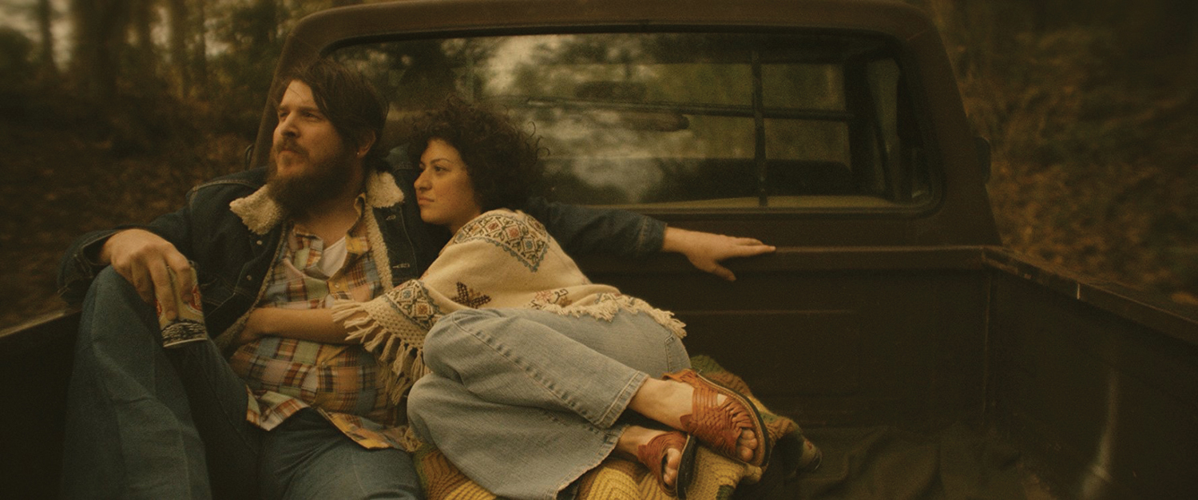
The sequences between Dickey’s Blaze and Shawkat’s Sybil that take place in their treehouse in west Georgia — their own personal Garden of Eden — are intimate and languid, sepia-toned and achingly tender. But Austin, Texas, and Blaze’s mythical future as an under-sung legend are calling. “I don’t wanna be a star,” Blaze tells Sybil. “I wants to be a legend.”
Along the way are a gut-wrenching cameo from Kris Kristofferson as Blaze’s father (he has only two lines, but the second one will sock you in the jaw), Hurray for the Riff Raff’s Alynda Segarra as Blaze’s sister, and a trio of coke-snorting cowboy record execs — portrayed playfully by Richard Linklater, Sam Rockwell and Steve Zahn — who are a good deal more hat than cattle.
In stitching the pieces of Foley’s life together in a nonlinear fashion, Hawke succeeds in making the audience invest not just in what happens to Foley, but in how he gets to where he’s going. After all, we know in the very first moments of the movie that our star will die from a gunshot to the gut during a completely avoidable altercation. Hawke says he wasn’t interested in building that moment up — in indulging what he calls the “pornographic side” of violence — so instead Foley’s death is just another piece of the patchwork.
“Most biographies have this inherent lie in them, that our lives have a beginning, middle and end, and some kind of narrative structure,” says Hawke. “They just don’t. … So by changing the order in which normal movies tell you events, you can actually trick an audience into experiencing it with the characters — really being with them because you don’t have this kind of false lie of a narrative.”
This weekend, Dickey, Hawke and Sexton will attend screenings of Blaze at the Belcourt, where they’ll also introduce the film and participate in several post-screening discussions. Presenting the film in Nashville, as Hawke tells it, was very important to him.
“People call it a biopic or whatever — it’s just a movie about music,” he says. “It’s just a big blues song of a movie. It seems right to me to go to Austin and go to Nashville and give it to the people the movie was made for.”



Post a comment as anonymous
Report
Watch this discussion.
(0) comments
Welcome to the discussion.
Log In
Welcome to the discussion.
Keep it clean. Please avoid obscene, vulgar, lewd, racist or otherwise abusive language. Comments featuring hate speech or threatening or violent content will not be tolerated.
PLEASE TURN OFF YOUR CAPS LOCK.
Be truthful. Don't knowingly lie or mislead.
Be proactive. Use the “report” link on any comment that violates our comment policy.
Share with us. We'd love to hear your feedback.