
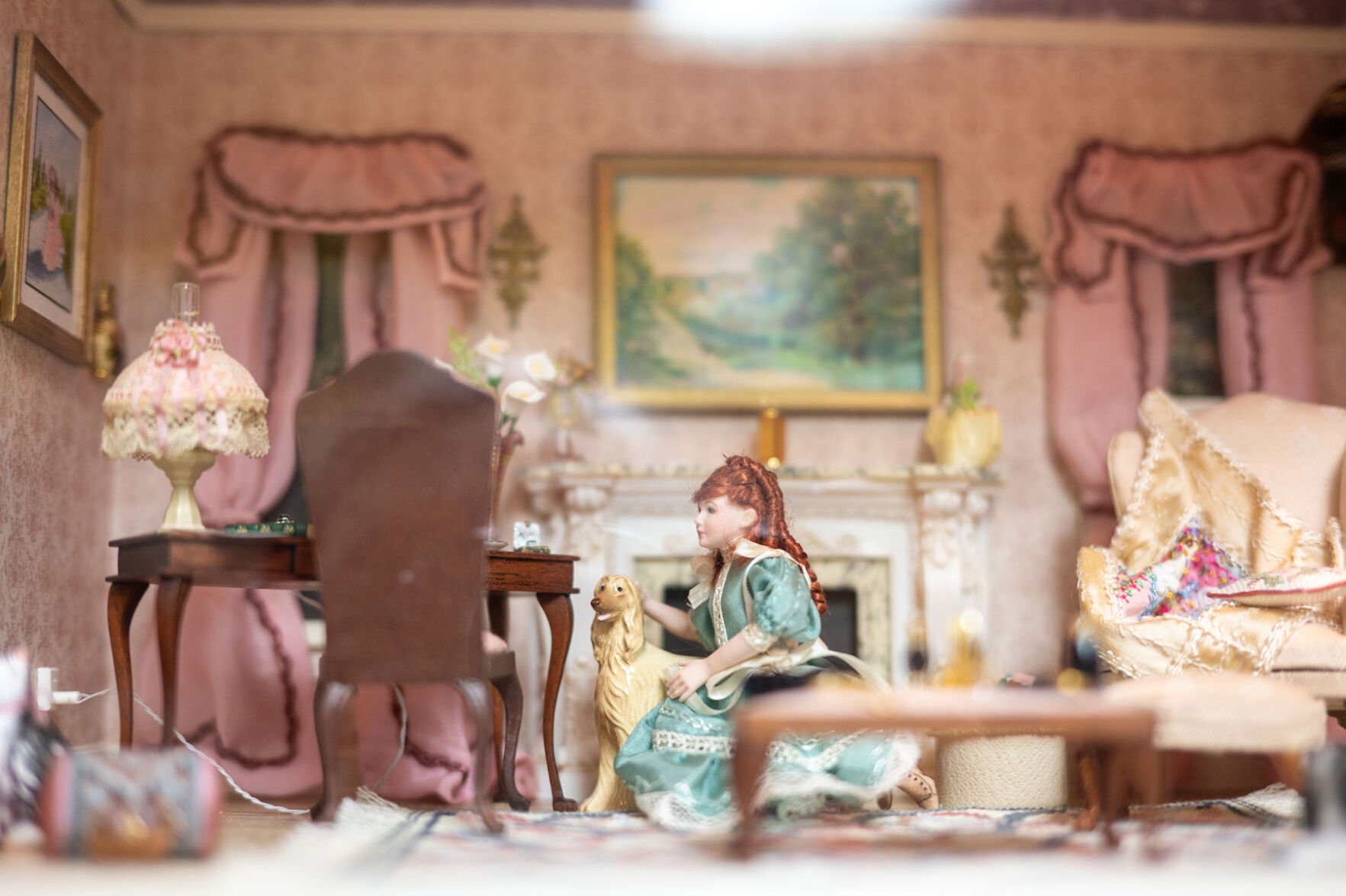

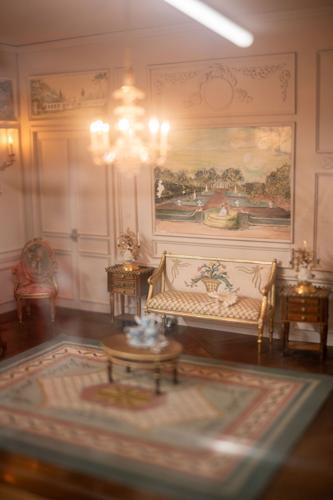

At Miniature Cottage, one of the country’s few shops dedicated solely to miniature things, a customer has a warning for the visiting Scene staff: “It’s a disease.”
Miniature connoisseurs describe the hobby this way: It’s something you get hooked on — an obsession. Once you become interested in miniatures, it never leaves you. And despite their size, they’ll take over your home and your bank account. “It’s the third-most collectible thing after stamps and coins,” owner Reneé Marlowe cautions the Scene at the Berry Hill storefront.
Miniature Cottage has been open since 1977, and Marlowe took over in 2004. The inventory is based on a 1-to-12 scale, meaning one inch represents one foot. Then there’s “half scale” at 1-to-24 and “quarter scale” at 1-to-48. In the store, customers can find furniture, food, books, art, beauty products, toys and light fixtures from all eras, as well as handmade doll kits created by Marlowe. You can get an old dollhouse refurbished, build a custom home with the shop’s miniature builders, or just secure something for a trinket shelf.

Marlowe comes to the business with an artist’s lens.
“It’s just a wonderful hobby,” she says. “It incorporates all of your skills. If you sew, if you do macramé, if you paint — you can do it all in miniature.”
She points out a porcelain doll playing a violin on display in her office.
“My mother made him before she passed away, and she was the root of all evil,” she jokes. “She got me started loving the miniatures.”
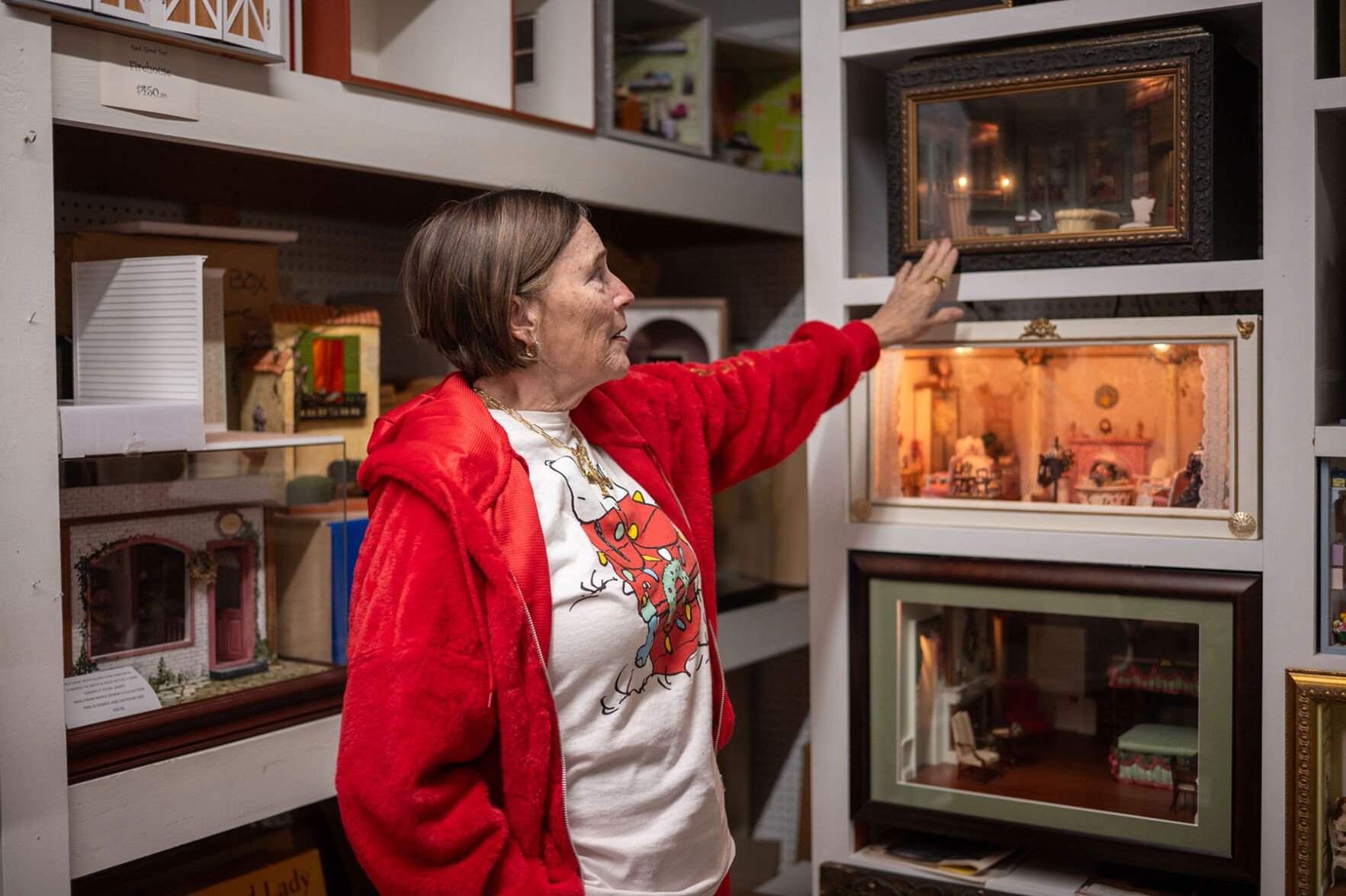
Reneé Marlowe
If a love of tiny things is hereditary — and she suspects it is — then for Marlowe, the gene comes from both sides. She didn’t know her father as a child, but when she met him as an adult, she was thrilled to find tiny wooden boats, trains and a working miniature Ferris wheel in his home.
Marlowe took over from previous owner Jean Flippen, who originally bought the store in 1980. The pair still works hand in hand — Flippen has taught Marlowe the business and inventory side of things, while Marlowe has expanded the store’s artistic offerings.
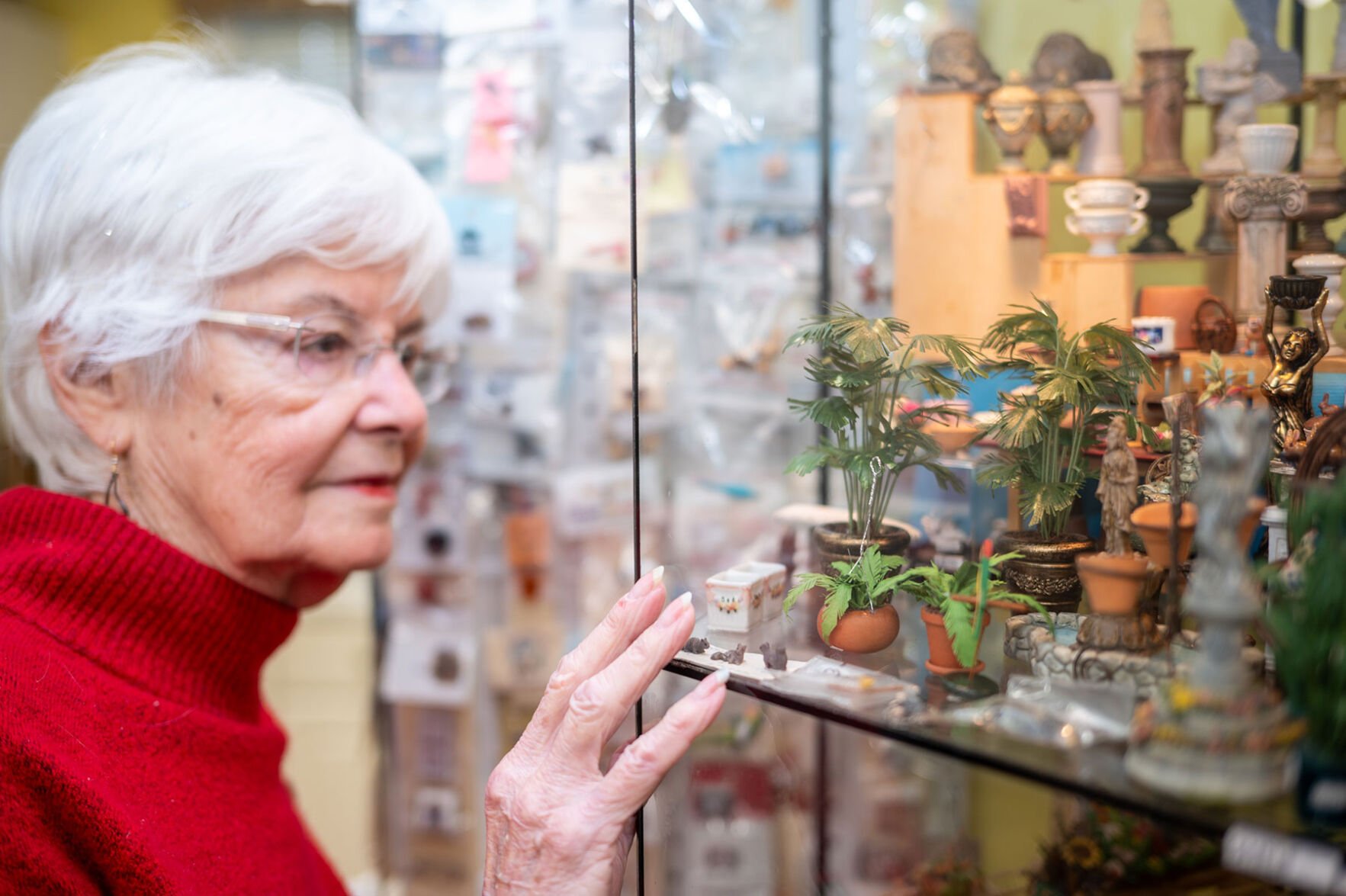
Jean Flippen
“She’s the only person I’ve ever known that could pour a doll mold in porcelain, fire it, clean it, wig it, paint it, dress it,” Flippen says of Marlowe. “She has the most incredible eyes. Her eyes are the best I’ve seen.”
Flippen was never interested in dolls or dollhouses as a child — a fact that she credits to a household of two brothers and sports-reporter father. Still, she’d go into the woods behind her childhood home and make fairy houses. Her most prized recent piece is a tiny toy candy train with peppermints for wheels. Even at 85, Flippen rarely uses a magnifying glass. Her close vision has always been good, and an eye surgery made it even sharper.
“A person that always loves tiny things is hooked,” Flippen says. “I always loved tiny things, even as a child.”
The patrons of the store are mainly adult collectors, often re-creating the homes they grew up in or their grandparents’ homes. For Marlowe’s family, the miniature gene skipped a generation. Her grandchildren create miniature scenes to post online.
“This generation is more minimalist,” Marlowe says of Gen X. “My mother’s generation collected china, and they collected silver and they collected things. I wasn’t as big of a collector till I found miniatures as I am now. My children like wide-open spaces and not too much stuff out.”

In the past it was “Victorian, Victorian, Victorian,” she says. These days, the most popular design style is midcentury modern. Traditional Southern homes like those of the Gone With the Wind era also often include less-than-modern servant dolls.
Marlowe is happy to see the art form evolve — including collaboration with miniature artists who use 3D printing.
“The good thing about miniatures is it’s timeless,” Marlowe says. “It can change, but still be relevant.”

A pilgrimage to BabyLand General Hospital, plus river and casino lessons
While the Miniature Cottage offers any materials necessary to create a home or one-room box, Marlowe insists that professional materials aren’t required.
“The beauty of the miniature world is that you don’t have to have a lot of money to make miniatures,” she says. “You just have to have an imagination — that’s all.”
Property taxes keep going up at the sought-after Berry Hill real estate, and tariffs put a damper on the Asian imports stocking the store, but Miniature Cottage continues on. The shop will begin hosting a club for Nashville-area miniature enthusiasts to learn the craft in January.
“Fortunately, God has blessed me, and so I get to do what I want to do, and I want to stay here,” Marlowe says. “I don’t have to sell it. It’s not logical to stay here, but logic never was a driving force in me anyway.”



Post a comment as anonymous
Report
Watch this discussion.
(0) comments
Welcome to the discussion.
Log In
Welcome to the discussion.
Keep it clean. Please avoid obscene, vulgar, lewd, racist or otherwise abusive language. Comments featuring hate speech or threatening or violent content will not be tolerated.
PLEASE TURN OFF YOUR CAPS LOCK.
Be truthful. Don't knowingly lie or mislead.
Be proactive. Use the “report” link on any comment that violates our comment policy.
Share with us. We'd love to hear your feedback.