
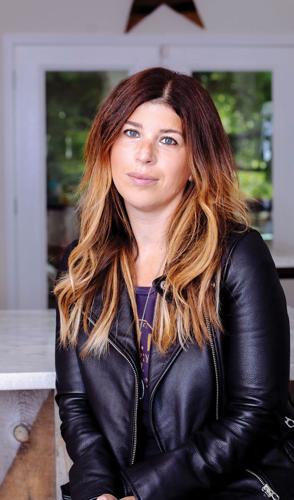
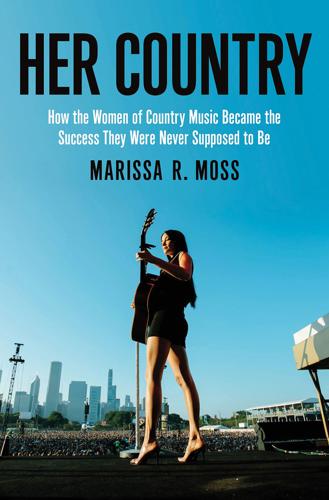


For more than a decade now, Marissa R. Moss has been a vital figure in country music discourse. The Nashville-based journalist and author (and Scene contributor) has interviewed a who’s-who of country icons and emerging artists, and has reported deeply on issues of sexism, harassment and inequity within the famously homogenous genre. Her broad body of work serves as an in-depth survey of a genre reckoning with its often problematic identity.
On Tuesday, Moss will release her first book, Her Country: How the Women of Country Music Became the Success They Were Never Supposed to Be. Below, the Scene catches up with Moss about her writing process, the artists at the book’s core and how current events shaped Her Country’s eventual narrative.
How did Her Country come to be? What were the early days of plotting the book like?
My now-literary agent reached out to me and asked, “Have you ever thought about writing a book about women in country music?” It was yes and no, in that it was so obvious to me in some ways and then, weirdly, not in other ways. But it seemed like the book was the perfect way to do what I had really been wanting to do with my work, which is to make sure — because country [radio] isn’t going to play women or anyone who isn’t a cis, white, straight male, for the most part — that these stories are out in the universe.
When I look back on the past several years of conversations surrounding equity in country music, I often think of your 2018 Rolling Stone story “Inside Country Radio’s Dark, Secret History of Sexual Harassment and Misconduct” as a watershed moment. When you look back on that story now, how do you contextualize its impact?
It’s funny because when I look at that piece now, the first thing that I think is I’m not done. I get frustrated that there’s not more that came out of it, you know? I definitely carry all those stories with me. Pretty much daily, someone from that story pops into my head, and the stories that I heard and was trusted with. So I live with it a lot and I feel frustrated. And I think about what I want to do next to keep the story going. Because the book is a little different in nature. It’s not 300 pages of that kind of reporting. It’s very narrow and it’s a narrative book. But I definitely don’t feel done. I won’t feel done until we’ve actually made some tangible changes and not just talk.
I love the way you structured the book, using the careers of Mickey Guyton, Maren Morris and Kacey Musgraves to look at the broader industry. How did you come up with that framework?
It had to be a mainstream country music story to tell the story that I wanted to tell, which was sort of the foil to country radio. … They’re all from Texas, so that worked out really well, to take people out from one similar focal point and follow their path. And they all three did it in very different ways. Maren is successful in and out of the country radio sphere. Kacey is on a whole other planet of her making without any of that. And Mickey would be in either of those spaces if country music didn’t have deeply embedded racism. … I wanted to find a way to make every chapter about these women, but also about other women at the same time. So, as I wrote or polished each chapter, I had in mind, “Who is this chapter about on the surface? But who is it really about?”

You signed your book deal early in the pandemic, shortly before George Floyd’s murder. How did the ensuing conversations about race in America affect your writing?
I thought a lot about how I can talk about these really crucial issues, having a book focused on country music, or inequity in country music. But I spent a lot of time really examining what my role in that was. It’s not my place to write the book on Black women in country music. But it’s my place to examine, within the book that I wrote, the role that white women have played in upholding racism in Nashville, as part of their “feminist” efforts. So that was something that really became a lot more important to me, as I studied and learned and absorbed and shaped the book.
You interview such a broad swath of the industry — artists, musicians, journalists, executives. Were there any common themes that emerged from those conversations that either surprised you or changed your thinking in some way?
Your best conversations aren’t always going to come from the big talent. There’s some people I would talk to and they aren’t the artists or the celebrities. … A publicist who worked with a label can give you so much and really help you paint a story in a way that even spending time with artists for a couple hours isn’t going to do. … And I couldn’t get every academic or journalist or artist in there, but I put as much as I could, because we all have Google. Hopefully it will inspire lots of wormholes for people to go down.



Post a comment as anonymous
Report
Watch this discussion.
(0) comments
Welcome to the discussion.
Log In
Welcome to the discussion.
Keep it clean. Please avoid obscene, vulgar, lewd, racist or otherwise abusive language. Comments featuring hate speech or threatening or violent content will not be tolerated.
PLEASE TURN OFF YOUR CAPS LOCK.
Be truthful. Don't knowingly lie or mislead.
Be proactive. Use the “report” link on any comment that violates our comment policy.
Share with us. We'd love to hear your feedback.