



Dr. Robyn Henderson-Espinoza embodies many things. They are a transmasculine Latinx activist, thought-leader, public theologian, ethicist and author of Activist Theology. They are a person on the autism spectrum. They are also the child of a loving mother and fiancé to Erin C. Law, both of whom engage in somatic wisdom. But to these personal, occupational and relational qualifiers, we might also add that Henderson-Espinoza is a prophet.
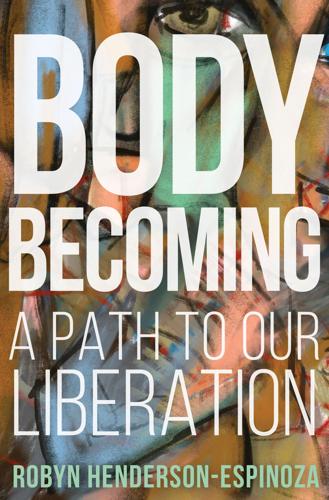
While this designation may seem unusual to some, it is imperative to consider the role of the prophet. The prophet serves two major functions in any society — the business of foretelling and forthtelling. That is, they envision the future, and at other times offer a word of truth. In their latest book, Body Becoming: A Path to Our Liberation, Henderson-Espinoza offers a prophetic vision for a “new democracy and democratic justice.” The book is contoured around ideas of rupture, becoming, difference and repetition, all of which are imperative points on our journey toward becoming collectively embodied. For Henderson-Espinoza, embodiment “is about connecting with our own flesh, about becoming so very familiar with our bodies that we feel and understand that relationship. That’s our beginning place and leads us into collective work.”
Regarding the prophetic work of forthtelling, Henderson-Espinoza engages with their body as truth. They recount their process of trans embodiment, offering their experience — wounds and joys included — as a paradigm for universal embodiment. In this way, the body is data, and the personal becomes political.
In keeping with Henderson-Espinoza’s efforts to teach outside of the academy, the language throughout the book is accessible, but not sterile. With cultural adeptness, Henderson-Espinoza interweaves words and phrases born of Latinidad (a pan-Latinx solidarity). They employ phrases like en conjunto (togetherness) and give a translation, so the reader is invited into Henderson-Espinoza’s experience. They also act as a translator by demystifying the works of philosophers like Gilles Deleuze and Félix Guattari for the everyday reader.
Speaking to an American context, Henderson-Espinoza notes the ways in which white people are disembodied by their lack of historical memory. In 1985’s The Price of the Ticket, James Baldwin asserts that the cost of whiteness is white people’s divorce from their Black counterparts. It is also their divorce from their own embodiment. For them to become embodied, Henderson-Espinoza writes, “They need to move beyond the transactional nature of human life.” It is also imperative to reconsider our relationship to appropriated forms of yoga and meditation that emphasize feeling over becoming. Feelings are ephemeral in that sense, and although they are an important part of the process, they are not the be-all and end-all.

People of color and Black folks are also disembodied by historical trauma. In many cases, this appears as survival. People of color are socialized to participate in systems that accelerate and maintain disembodiment. Henderson-Espinoza does not write as an outsider to either of these groups. They describe their body as “one born of Mexican flesh and white flesh,” or mestizaje, which is a 20th-century term for mixed-race people used by cultural scholars like Gloria Anzaldúa. Mestizaje is about cultural and ethnic relationships — sometimes fraught — that exist in one body.
How then do we experience embodied liberation? Henderson-Espinoza suggests that we can use food toward this end. This is not only about the taste of, say, garlic and cilantro on our tongues, but also about the rituals surrounding food. A meal can reunite us with our ancestral memories, and in sharing, with each other. We return to the business of breaking bread, this time with what we eat being just as important as how.
Breathing is another method of embodiment. This is especially relevant during a pandemic that has attacked the respiratory systems of millions. It is also timely when we consider the recent cries of Eric Garner, George Floyd and Elijah McClain — I can’t breathe. Their gone breaths join those of trans people like Tony McDade and Layleen Polanco. We must do whatever we can to protect breath in this country if we truly intend to be free. Our collective breath can have unspeakable impact.
In the chapter titled “The Journey to Becoming Embodied,” Henderson-Espinoza calls forward a cloud of trans, nonbinary, neurodivergent and allied witnesses. Some of these witnesses practice embodied healing in Nashville, such as Kate Moore (a personal trainer) and Gert Comfrey (a marriage and family therapist). Their various stories attest that individual and collective embodiment is possible.
When asked if love has a role in becoming embodied, Henderson-Espinoza quotes Cornel West: “Love out loud is justice.” In this sense, love and justice will be the result of our effort to become embodied in the personal and political spheres. There is a weathered Old Testament scripture: “The people who walked in darkness have seen a great light.” Henderson-Espinoza shows us that this light is inward — in ourselves and each other.



Post a comment as anonymous
Report
Watch this discussion.
(0) comments
Welcome to the discussion.
Log In
Welcome to the discussion.
Keep it clean. Please avoid obscene, vulgar, lewd, racist or otherwise abusive language. Comments featuring hate speech or threatening or violent content will not be tolerated.
PLEASE TURN OFF YOUR CAPS LOCK.
Be truthful. Don't knowingly lie or mislead.
Be proactive. Use the “report” link on any comment that violates our comment policy.
Share with us. We'd love to hear your feedback.