
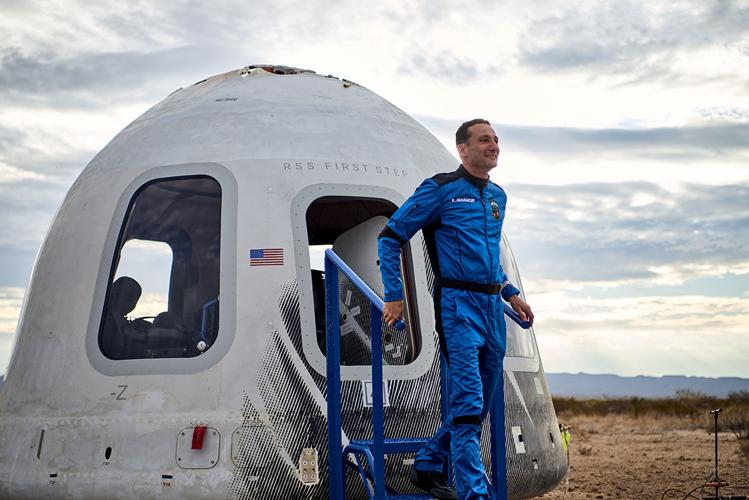

Eiman Jahangir’s story is certainly one of perseverance. He threw his hat in the ring to be an astronaut 12 times before he was eventually accepted as part of an August 2024 Blue Origin flight.
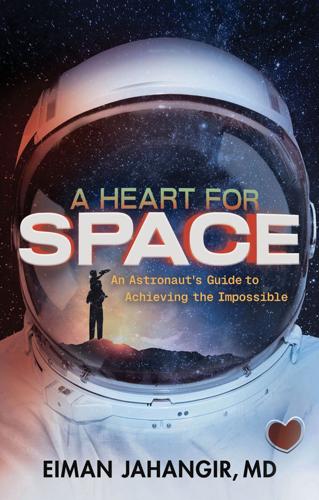
Two years later, the local cardiologist is releasing a book, A Heart for Space: An Astronaut’s Guide to Achieving the Impossible, in which he chronicles his own experiences alongside interviews with eight other astronauts. He tells the Scene that through this writing, he seeks to offer a transferable framework for following one’s dreams of any size, at any age.
For Jahangir, the book is a way to give back to his hometown of Nashville — he emigrated to Music City from Tehran at age 4. He also jokes that it’s a way for him to keep on score with his older brother Alex Jahangir, the city’s former COVID-19 czar who wrote a book of his own in 2022.
Eiman spoke to the Scene about his 20-year quest to reach space, and the importance of representation.
As you got to know other astronauts for the book, what is something you all have in common?
They had a passion for flight — not necessarily spaceflight, but everyone was interested in flying. The other thing is that no one expected to get where they got. While everyone wanted to get to space, no one really thought it would happen, and the way they all got there was different and unexpected in a lot of ways. One thing led to another, and eventually they found their path, even when it wasn’t always clear that they would get there. That’s such a big part of it — people who want to do these big things or crazy things shouldn’t get disappointed when things don’t seem to be going the way they planned.

Can you talk about the contrast between the clear path to becoming a cardiologist compared to the path to becoming an astronaut being pretty intangible?
The reason I pursued being a cardiologist first was that it was exactly that — tangible. I knew that it might be hard, but if I go to school, study sciences, try to get good grades, do all the things, there is a path forward. Space just seemed completely unrealistic as a kid growing up in the ’90s in Nashville. There was no way I could have imagined that would actually happen.
I put all my efforts into becoming a doctor, because that’s what I thought I could do. As I graduated med school and completed med school, I realized when we were down at Kennedy Space Center, I was like, “No, I really want to do this. What do I need to do to be successful at this?” That was the start of my path to trying to become an astronaut. There’s no clear path there. You can do everything right and follow someone else’s example and still not reach it.
What does it mean to be among the first Iranian Americans in space?
It’s pretty exciting for me because I think representation is so important for everything we do, anything we do. It doesn’t matter if it’s wanting to be an actor or wanting to go to space or wanting to be a doctor. The more people we can get doing these things from all sorts of backgrounds, I think the better.
After my flight, there were a few high school students who reached out in different parts of the country who needed to write a biography for school. One of them was like, “Yeah, I was so excited to see someone with your name that’s from the Middle East go to space. There’s not a lot of people from Middle East origin who’ve gone to space.” That’s pretty cool. It was meaningful to me that that’s how he felt.
Are there any points of rivalry between you and your brother at this point?
I have to say there’s friendly competition even today, though he’s my number one adviser. He was probably the first person to read my book. I’ll joke that the only way I could outdo him was by going to space. He did so much work during COVID, and I think he did a lot of good for this city.
We’ve always had a competition. He’s always been older. He’s always done better. He was more athletic. He was stronger, smarter. So I just had to find a way to one-up him. So this was my one up.
Seeing the Earth from a distance had to give you some added perspective. Have you been able to reflect on that?
It’s incredible. It is probably the most beautiful thing I’ve ever seen, both from the colors and the brightness and the earthlight shining back. … There is really something to being like, “Wow, we are all on an island in the middle of space.” It’s one thing to look down to Earth, but if you look up, it’s just like black, and it just keeps going. We are very unique. I don’t know why we’re all here, but we’re here and we’re here together, and it’s not that big of a planet, so we really should be treating each other with humanity and better, and trying to take care of ourselves and this planet.
I think I’ve always had that premise because as a doctor we see that life’s not fair. We see people deal with terrible medical things all the time. I see people die, so I feel like I understand how small we are in the big scheme of things. It’s beautiful that we are here. We’re able to think and act and have emotion and create art and love, and we’re very fortunate as a species to be on this planet and be able to do all those things.

The 38th annual celebration of the written word takes place Oct. 17 and 18



Post a comment as anonymous
Report
Watch this discussion.
(0) comments
Welcome to the discussion.
Log In
Welcome to the discussion.
Keep it clean. Please avoid obscene, vulgar, lewd, racist or otherwise abusive language. Comments featuring hate speech or threatening or violent content will not be tolerated.
PLEASE TURN OFF YOUR CAPS LOCK.
Be truthful. Don't knowingly lie or mislead.
Be proactive. Use the “report” link on any comment that violates our comment policy.
Share with us. We'd love to hear your feedback.