

Vanderbilt University on Tuesday released the findings of an independent review of the March arrest of Nashville Scene reporter Eli Motycka.
On March 26, Motycka was arrested by university police while reporting on student protests regarding campus speech and Israel's military invasion of Gaza. He was released from custody a few hours later and ultimately not charged with a crime, with Judicial Magistrate Timothy Lee not finding probable cause to hear charges against Motycka.
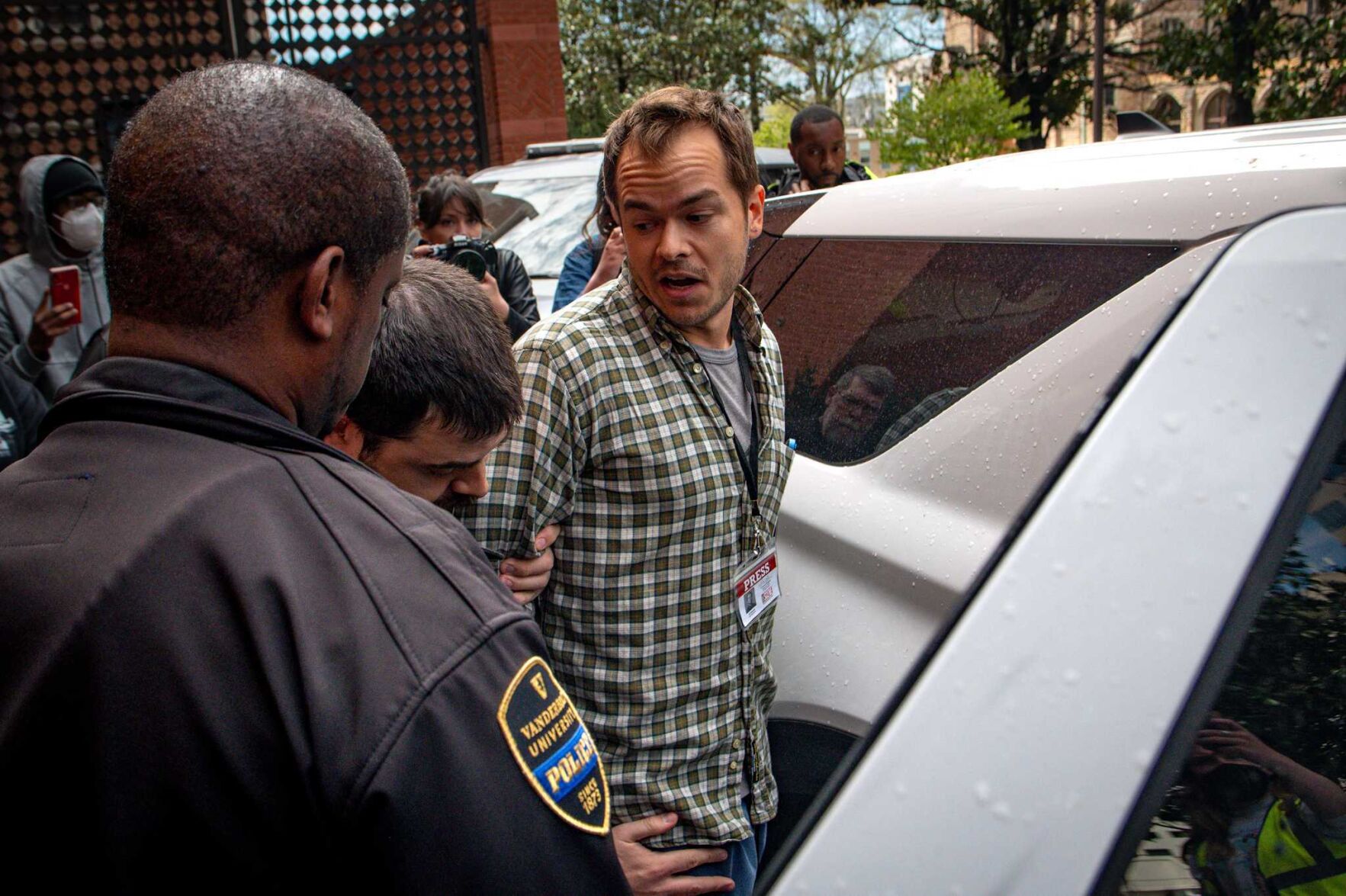
Our reporter’s first-hand account of Tuesday’s events on Vanderbilt’s campus
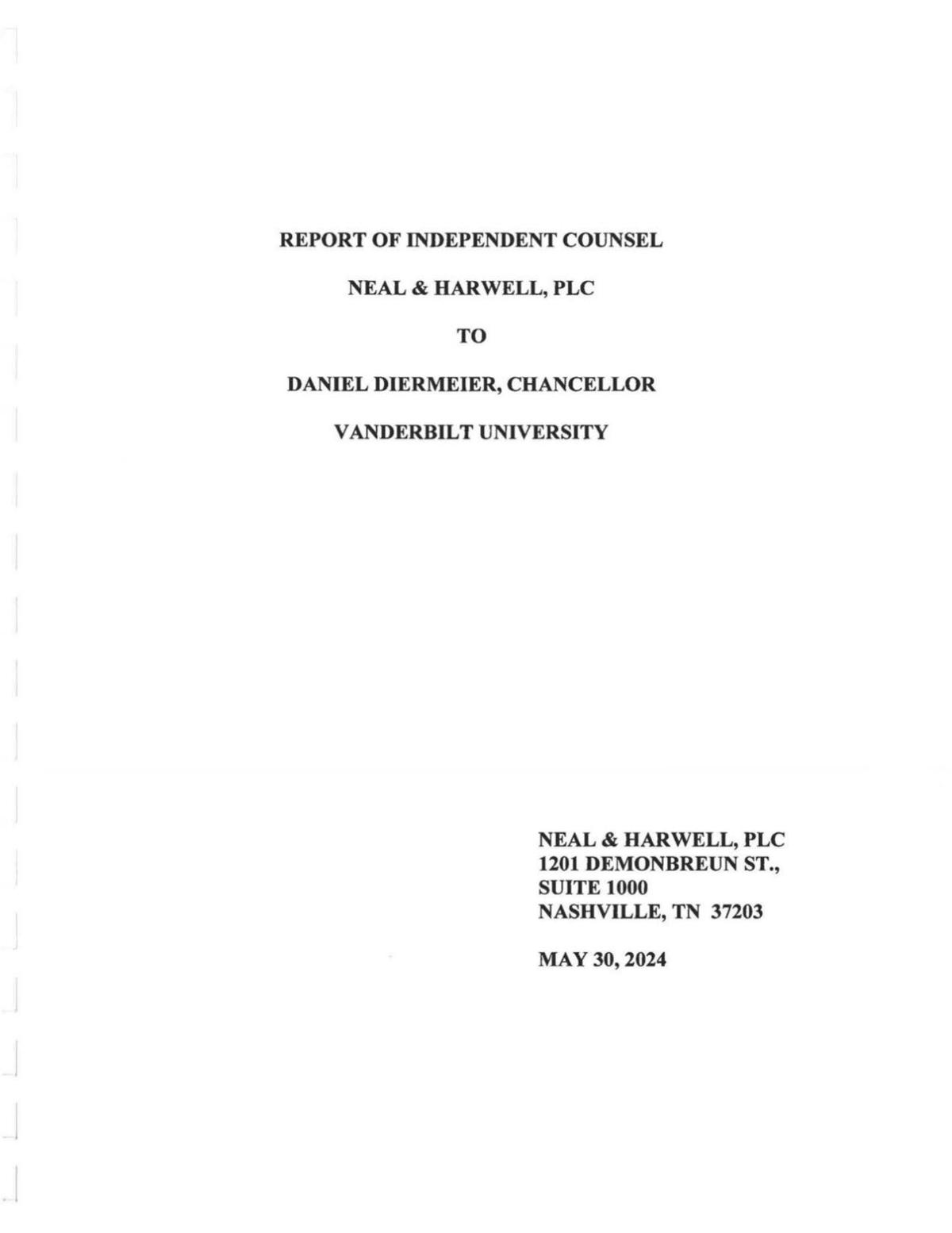
Vanderbilt, at the time beset by ongoing student protests and criticism of Chancellor Daniel Diermeier, subsequently announced that the school had selected Nashville attorney Aubrey Harwell of Neal & Harwell to lead an independent review of the university’s response to the arrest. Harwell recommends in his 27-page report — which can be seen via the PDF at the bottom of this post — a clearer external media policy, better communication between police and administrators and advance warning before campus police make a trespassing arrest.
The report — the public version of which redacts the names of Motycka as well as the arresting officer and multiple members of Vanderbilt staff — notes that the arrest was made “contrary to [a] directive about clearing any arrests through … the chain of command.” The report also notes that reporters from other outlets (including The Tennessean, student publication the Hustler, WSMV and WKRN) were all believed to be present on campus that day, but “were not arrested or removed from the premises.”

Despite criticism over school's response to student protests, university board extends terms of Diermeier's service to 2035
Harwell’s report notes that Motycka “was not asked to leave the campus or given the opportunity to do so” prior to his arrest on March 26, but concludes that “regardless of whether the decision to arrest Mr. Motycka was right or wrong … his being a reporter was not the reason he was arrested.” The report's list of recommendations suggests that the university “adopt a formal written media access policy” that it “widely disseminate.”
Harwell writes: “Absent emergency situations or specific safety concerns, before any arrest for criminal trespass, the potential arrestee [should] be warned and given an opportunity to leave the area.”
Last week, despite criticism over Diermeier’s handling of student protests and arrests, the Vanderbilt University Board of Trust extended the chancellor’s contract to 2035.
See Harwell’s full report below.



Post a comment as anonymous
Report
Watch this discussion.
(0) comments
Welcome to the discussion.
Log In
Welcome to the discussion.
Keep it clean. Please avoid obscene, vulgar, lewd, racist or otherwise abusive language. Comments featuring hate speech or threatening or violent content will not be tolerated.
PLEASE TURN OFF YOUR CAPS LOCK.
Be truthful. Don't knowingly lie or mislead.
Be proactive. Use the “report” link on any comment that violates our comment policy.
Share with us. We'd love to hear your feedback.