
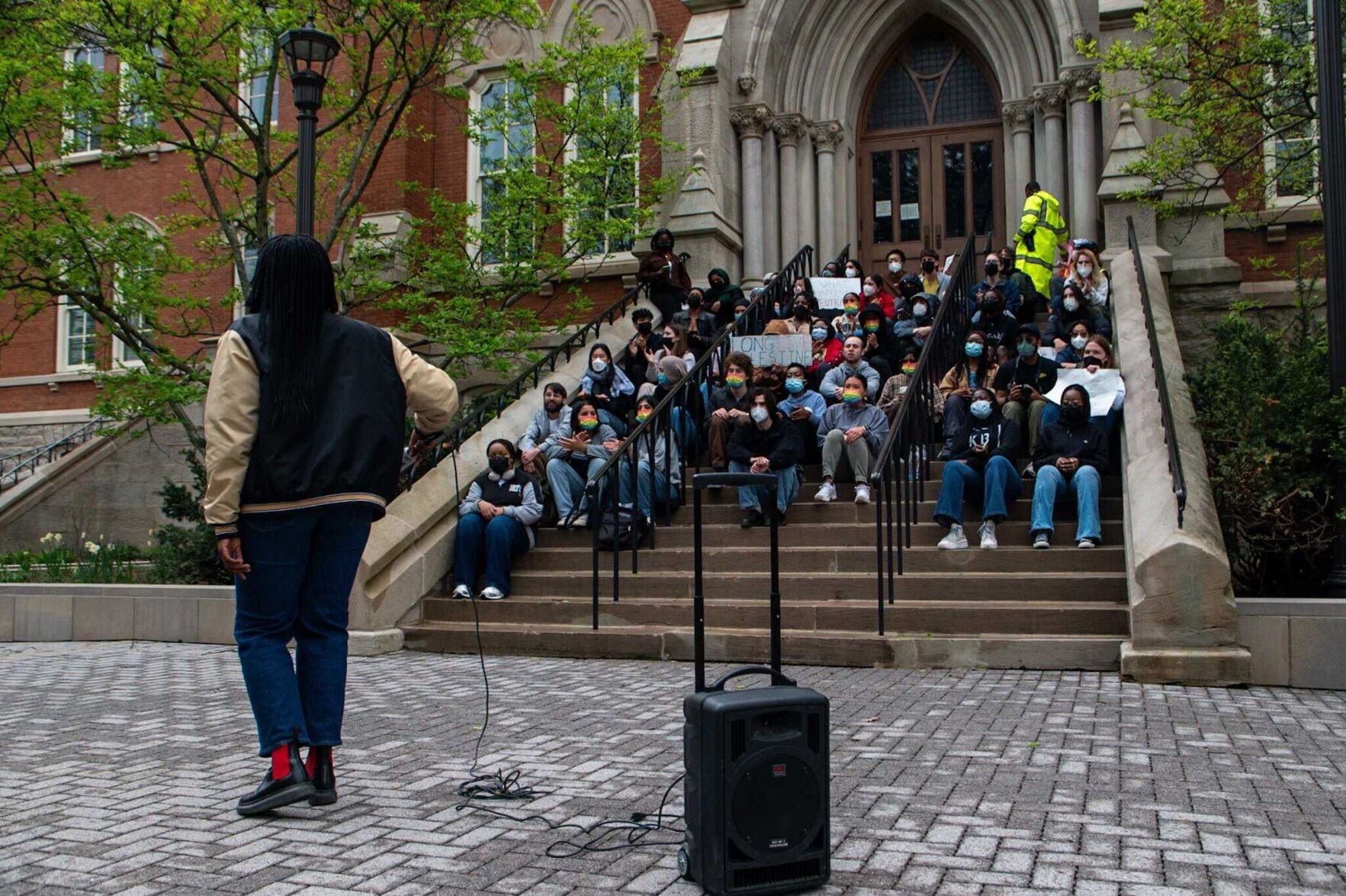

Vanderbilt Chancellor Daniel Diermeier is facing intense criticism from students, faculty, alumni and city leaders for the university’s response to a sit-in held by students last week. Vanderbilt arrested four students related to the protests, and administrators have since initiated internal disciplinary processes against more than two dozen students.

Students are protesting the university’s suppression of pro-Palestine activism
“Twenty-five students are suspended, unhoused and not allowed back on campus,” says one student protester, requesting anonymity amid ongoing legal and disciplinary cases. “We’ve been on interim suspension since Tuesday. Returning to campus could be grounds for trespass. Most of these students are low-income, on full financial aid from the university and rely on Vanderbilt for housing and food.”
Vanderbilt held preliminary hearings with students last week via its internal judicial system, the Office of Student Accountability. At these meetings, students were informed of violations alleged by the university and given potential consequences, which include expulsion. Longer hearings are scheduled for this week.
Widespread campus backlash led to a meeting Monday between Vanderbilt faculty and administrators, brokered by the faculty senate. Professors are circulating a letter addressed to Chancellor Daniel Diermeier, Provost C. Cybele Raver, Vanderbilt’s general counsel and faculty senate president Andrea Capizzi criticizing the university’s response to student protests as “excessive and punitive” and disputing its characterization of student protests as a safety threat. In it, they ask administrators to repeal suspensions and criminal charges and reinstate students’ access to campus.
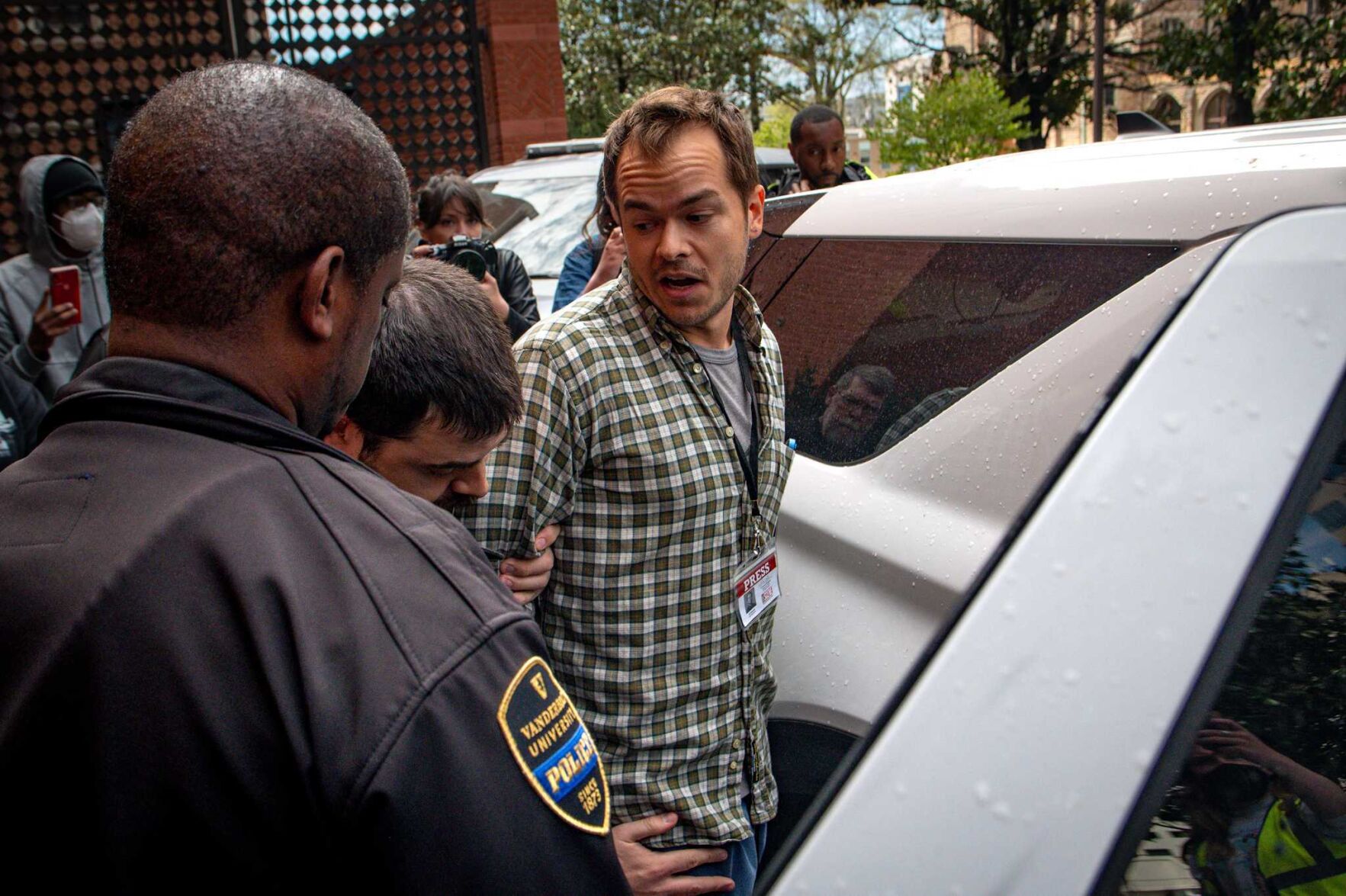
Our reporter’s first-hand account of Tuesday’s events on Vanderbilt’s campus
Students at Vanderbilt Law School and Vanderbilt Divinity School are circulating similar letters criticizing the university’s response to protests. A petition calling on Vanderbilt to repeal the suspensions, drop charges against protesters and allow students to vote on the Boycott, Divest and Sanctions referendum that prompted the sit-in has garnered nearly 2,500 signatures in just 24 hours.
On Thursday, 11 Metro councilmembers led by Councilmember At-Large Zulfat Suara requested that Diermeier repeal the student suspension, drop criminal charges against students and reconsider allowing the student BDS referendum vote. Suara and her colleagues also asked for a meeting with Diermeier. The chancellor ignored this request a day later in a letter defending the university’s response to protests and repeating the school’s public position on the matter: “We will review whether our response aligned with our core values.”
Demonstrations continue over Vandy’s reaction to pro-Palestinian activism as well as student suspensions
Seen as the architect of the university’s ongoing response to protesters, Diermeier faces the brunt of criticism from the university’s various stakeholders. The ongoing fiasco puts the German-born academic in the driver’s seat of an actual reputational crisis, the specific niche Diermeier has spent decades studying as a business professor. He specifically addresses corporate responses to activist pressure and public relations scandals in academic articles and books, like 2011’s Reputation Rules: Strategies for Building your Company's Most Valuable Asset.
The school did not respond to the Scene's request for comment.



Post a comment as anonymous
Report
Watch this discussion.
(0) comments
Welcome to the discussion.
Log In
Welcome to the discussion.
Keep it clean. Please avoid obscene, vulgar, lewd, racist or otherwise abusive language. Comments featuring hate speech or threatening or violent content will not be tolerated.
PLEASE TURN OFF YOUR CAPS LOCK.
Be truthful. Don't knowingly lie or mislead.
Be proactive. Use the “report” link on any comment that violates our comment policy.
Share with us. We'd love to hear your feedback.