
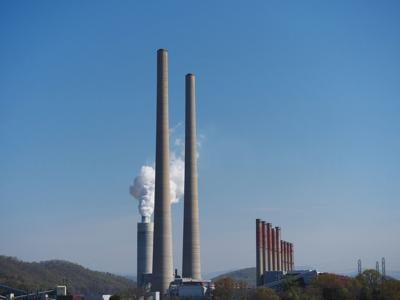

Less than two years ago, the Tennessee Valley Authority published its 262-page Integrated Resource Plan mapping out the utility’s future through 2050 without a single mention of data centers. Since then, Silicon Valley has found a match in the Tennessee Valley, with some 1,340 new server sites planned for TVA’s seven-state service area as artificial intelligence demand transforms American tech.
Executives at TVA have responded, reorienting the federal utility around sharp increases in expected data center power demand. More combustion gas and nuclear power will make up the difference, according to TVA’s revised 2026 draft IRP. The public has until July 22 to submit feedback (at this link) about the utility’s plan. Since the beginning of the IRP process in 2024, the majority of public comments have called on TVA to accelerate decarbonization, the utility reports.

Trump-approved board to reconsider coal power plants despite previous TVA plan for 2027 retirement
“TVA has refreshed IRP assumptions to align with the key changes in the electric utility industry,” reads an introduction to the plan. “The actual and forecasted electricity demand in the Tennessee Valley region continues to increase, primarily due to population growth and data center growth.”
Energy sources in 2050 would be dominated by nuclear power and gas, a fuel source frequently criticized for guaranteeing high carbon emissions despite dire warnings from climate scientists to reduce carbon dioxide in the atmosphere. In this plan, TVA factors in carbon-capture technology and potential carbon legislation, both of which would significantly reduce the utility’s direct emissions, projected at about 50 million tons per year. TVA moved in February to keep coal-fired plants in Cumberland City and Kingston online despite a previous plan for a 2027 retirement; this IRP says both will operate through 2039.
Electricity demand could rise between 16 percent and 60 percent by 2040, according to projections in the new report, which references data centers as a “high-energy user” driving forecasted industrial growth. The resource-intensive buildings require special water and electricity infrastructure and offer scant employment, often provoking intense pushback from local communities. Recent data center projects near the Nashville Zoo and at Fisk University have, in part, influenced the Metro Council’s policy push to begin regulating the sites in Davidson County. Multiple pieces of legislation related to data center regulation passed with overwhelming support at Tuesday night's council meeting.

Republicans abandon Nashville businessman as D.C. adjourns for the holidays
TVA suffered its own volatility recently with Don Moul leaving after just 14 months as CEO to join a private nuclear fuel venture that will soon go public valued at $3.5 billion. In April, executive Mike Skaggs was named CEO by the TVA board of directors, which was itself remade this year with four new appointees. The board struggled to maintain a quorum through 2025 after Trump fired two board members early in his second presidential term. Trump has nominated Nashville businessman Lee Beaman, a major GOP donor, to the TVA board twice; both attempts have so far been unsuccessful in the Republican-controlled U.S. Senate.
Nonpartisan local think tank ThinkTennessee released its own data center report this month warning that the state is at a “critical inflection point” and calling for careful planning across government and industry to ensure that tech investment becomes a strength rather than a liability for the Tennessee economy. State electricity consumption was trending negative before 2020, the think tank claims — a trend reversed when data centers began operating in the region.
“Data center growth introduces risks, including straining grid reliability and expensive outage costs,” reads the report. “Policies set today will determine whether this growth strengthens Tennessee’s economy — or shifts costs and risks onto households.”



Post a comment as anonymous
Report
Watch this discussion.
(0) comments
Welcome to the discussion.
Log In
Welcome to the discussion.
Keep it clean. Please avoid obscene, vulgar, lewd, racist or otherwise abusive language. Comments featuring hate speech or threatening or violent content will not be tolerated.
PLEASE TURN OFF YOUR CAPS LOCK.
Be truthful. Don't knowingly lie or mislead.
Be proactive. Use the “report” link on any comment that violates our comment policy.
Share with us. We'd love to hear your feedback.