

For the past five years, I’ve been trying to write a book about Nashville’s unsolved integration-era bombings. It’s tough work because almost everyone’s dead, police files from before 1963 don’t exist, the FBI lied to me about the existence of a file, and the TBI is forbidden by law from letting me see their files or the files from their precursor organization, the TBCI. But it’s mostly tough work because almost everyone I’m researching was terrible — from police who looked the other way, to an uncooperative FBI, to violent racists.
I have found only three-and-a-half good people who tried to do the right thing: Z. Alexander Looby, whose house was blown up; Rabbi Silverman, who was targeted by terrorists and chastised by critics (but still told his congregation in the wake of the JCC bombing: “We will not yield to evil. We will not capitulate to fear. We will not surrender to violence. We will not submit to intimidation but, as Reform Jews, we will continue to speak for truth. We shall continue to dedicate ourselves to social justice and to the brotherhood of all men, knowing and believing that all men are created in the divine image, and this includes Negroes as well as Caucasians.”); Klan member Thomas Norvell (he’s the half), who did his damnedest to make sure the FBI understood there was a bomb in Nashville and people were planning on blowing up a school; and Lem Dawson, the night watchman at Fisk.
I want to tell you about Dawson. He was born down in Maury County on Sept. 27, 1892. His dad, Eli Dawson, was born into slavery. His grandfather, also Eli Dawson (1835-1894), was a United States Colored Troops vet. Lem, short for Lemon, had an uncle named Grant Dawson and a cousin named Ida B. Dawson, which suggests a great deal about the mindset of the family. They also remained closely entwined with the family that had enslaved them. The patriarch of that family was Mann Dawson (1838-1921) who was described in his obituary as “one of the county’s most substantial and influential farmers and gallant old Confederate soldier” who “was perhaps one of the most widely known men of the county and was held in the highest esteem by all who knew him.” (Postwar conversations between Eli Sr. and Mann must have been interesting.) It seems very, very likely that Eli Sr. had been enslaved by Mann’s father, John, and Eli and Mann grew up together on the same plantation. Mann had two children — Bessie and Melvin. Bessie was married to Frank McGavock.
Now, I know what you’re wondering: "McGavock? Like of the McGavock Pike McGavocks?" Yes. Frank was the great-grandson of Hugh McGavock, relative of all the Randall McGavocks who were at various times mayors of Nashville and tied into Belle Meade, Traveller’s Rest and the Carnton Plantation in Franklin.
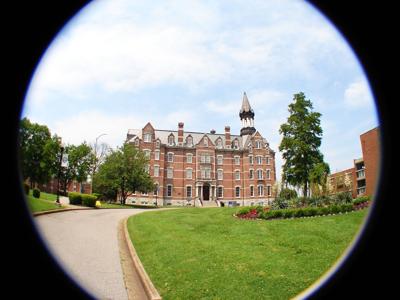
Long story short, the white Dawsons were a rich, well-connected family, and the Black Dawsons worked for them. Eli Jr. was a servant in Bessie’s house in 1930, two years before he died. Lem grew up right next door to Bessie and Melvin, who were only a couple of years older than him. By 1930, Lem, his wife Hattie and their son Clint had moved to Nashville. He owned some properties and worked as a machinist for a bit. In the early 1940s, he took the job as the night watchman at Fisk.
When he retired at the end of 1962, he told Robert Churchwell from the Nashville Banner that he was glad to have the job because: “I was raised up in the woods. ... I didn’t have no education, and I tried to stay here so people could get one without fear.”
Just for a second, let’s stop to appreciate the bigger context of that quote. The Banner was Nashville’s conservative afternoon paper. The paper’s owner, James Stahlman, was a segregationist who used the paper — and his position as a Vanderbilt board member — to get the Rev. James Lawson kicked out of school. Robert Churchwell, the first Black man hired to work at a Southern white-owned newspaper, was using his unique and somewhat tenuous position to honor Lem Dawson at his retirement and highlight his commitment to making sure Black people could be educated — unlike his boss, who tried to end Lawson’s education. It’s just a gutsy move on Churchwell’s part.
Back to Dawson. Churchwell tells us that Dawson was given a nickname by Fisk students — “Willshoot” — and that he had been shot at 11 times on campus and actually shot once off campus.
I learned about him from a section of police file that had been preserved in other investigative files, where he was telling investigators that, on the night before the Looby bombing, he had seen a suspicious car trawling around campus. He recognized the car because he had seen it for the past three or four weeks, at least once a week. And on the week before the bombing, he had caught two white men from that car trying to break into a women’s dorm on campus. He shot one of them with his shotgun, but the two men managed to escape. He followed the car, trying to get the license number, but they had bent the plate up.
We shouldn’t jump to conclusions, but knowing this car was driving around campus the night of the Looby bombing and was likely the bombers, it doesn’t seem like too far a leap to think that they had been trying to get into the women’s dorm to get at one of the other important figures in Nashville’s civil rights movement — Diane Nash.
But even if they “only” wanted into the dorm to terrorize the women in there, Dawson stopped them. He likely thwarted a terrorist action. And at that time, in 1960, that was more than the police, the TBCI and the FBI had managed.
He’s a hero. And he should be one of the city’s known and honored heroes.



Post a comment as anonymous
Report
Watch this discussion.
(0) comments
Welcome to the discussion.
Log In
Welcome to the discussion.
Keep it clean. Please avoid obscene, vulgar, lewd, racist or otherwise abusive language. Comments featuring hate speech or threatening or violent content will not be tolerated.
PLEASE TURN OFF YOUR CAPS LOCK.
Be truthful. Don't knowingly lie or mislead.
Be proactive. Use the “report” link on any comment that violates our comment policy.
Share with us. We'd love to hear your feedback.