

The morning after the Nov. 5 presidential election, Black students across the country received racist text messages that, though they varied in their exact wording, all had the same general message: a threat to enslave Black students, with messaging about working on plantations and picking cotton.
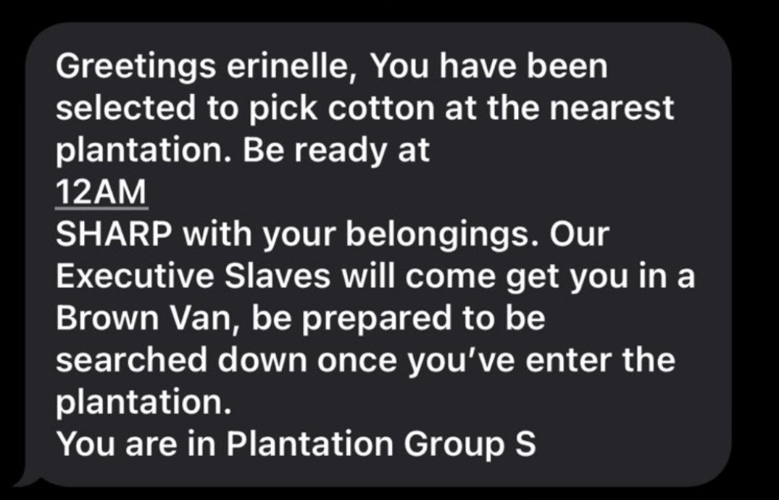
One text, posted on social media, reads in part: “You have been selected to pick cotton at the nearest plantation. Be ready at 12AM SHARP with your belongings. Our Executive Slaves will come get you in a Brown Van, be prepared to be searched down once you’ve enter the plantation. You are in Plantation Group S.”
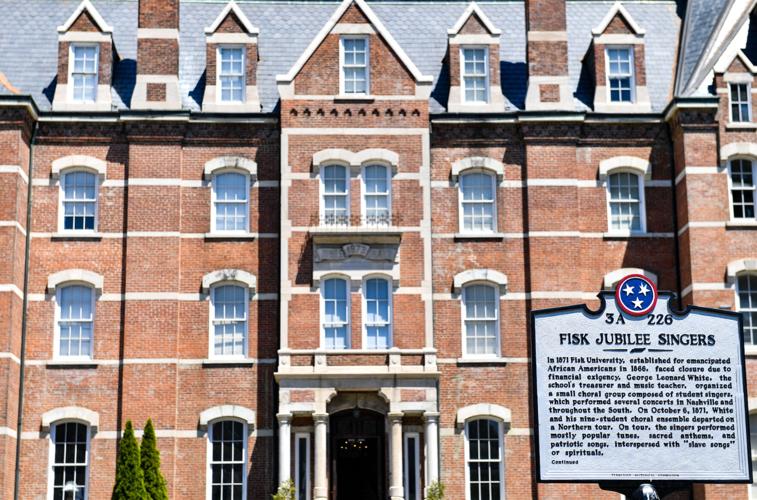
Students at schools across Nashville were among those who received these messages, from historically Black Fisk University to Belmont University and Metro public schools.

One of the racist text messages sent to college students the morning after Election Day
“I think anxiety compels people to not be organized,” Fisk University’s Dr. James Pratt tells the Scene when asked about the messages, noting that acts of racial terror in America are sometimes motivated by a desire to stop political mobilization.
Pratt, an associate professor of criminal justice, has been helping his students cope and work through these texts, as well as helping place them within the broader context of being a Black student in America. Pratt tells the Scene that much of the conversation surrounding these texts also touched on the recent shootings at Tuskegee University, which left 16 people injured and one dead, and Albany State University, which left four injured and one dead.
He characterized the reaction of Fisk students to these texts as surprisingly calm, with students focusing more on what they can do rather than the idea that these texts posed a security threat.
“I think they come to Fisk … to be leaders, training to be better leaders, [and] gain the skills and tools [they need],” says Pratt. “The issues in the communities that they come from already deal with gun violence. Many of them already deal with activated racism and racial aggression.”
A statement from Fisk acknowledges that these texts, though scary, seem to bear no threat of real action.
“We are aware of disturbing and offensive messages circulating on social media, appearing to target members of our community,” reads Fisk’s statement. “These messages, which suggest threats of violence and intimidation, are deeply unsettling. However, we want to assure you that these are likely the work of an automated bot or malicious actors with no real intentions or credibility.”
In Pratt’s classroom, students have been taking a practical approach: looking at security issues, filling gaps in their current security system and considering how to take precautions to keep themselves and their peers safe.
“The work continues in [their] hands, but also, we have moments of celebration and joy,” says Pratt. “Again, this is all happening during our homecoming week.”
He says that while these texts were sent in an attempt to terrorize students, the Fisk student body has been using this as an opportunity to express themselves in a way that allows for joy and hope.
“It’s not just about the work,” he says. “It’s also [about] Black joy [and] ways of expressing oneself. How do we improvise at these times? How do we use our music? How do we use our dance? How do we use our expressions to maintain society? How do we rest?”



