
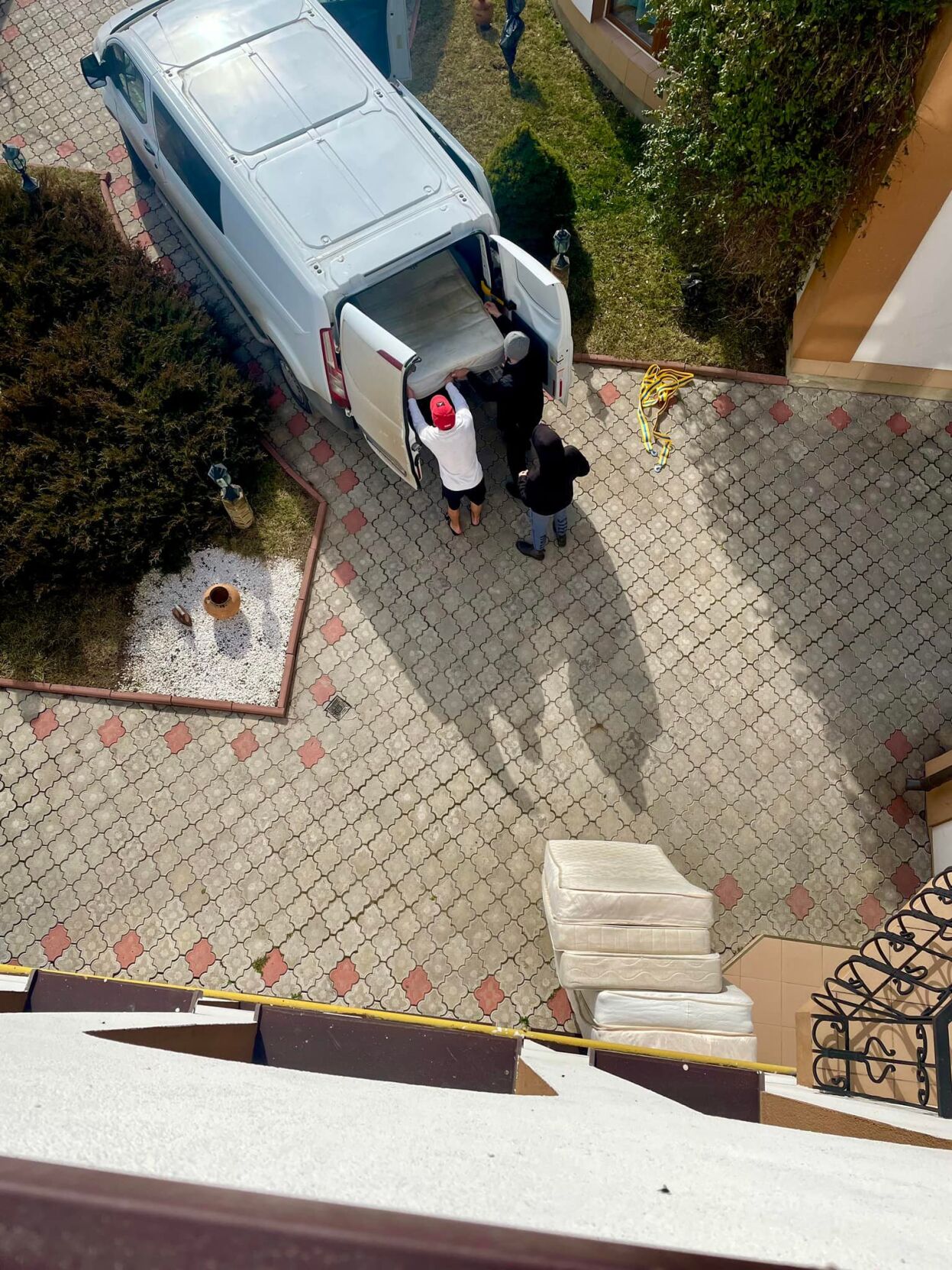
JMI employees load up beds to take to refugee camps near the Moldovan Border
More than 350,000 Ukrainians have reportedly fled from their homeland seeking safety and asylum in neighboring Moldova, as Putin continues to push further into the capital city of Kyiv. Nashville nonprofit Justice and Mercy International is on the frontlines of what the United Nations is calling “the fastest and largest displacement of people in Europe since World War II.”
Since Russia began its invasion of Ukraine last month, JMI’s 40 Molodovan employees have been working to mobilize resources to help the influx of migrants, bringing blankets, warm clothing, food and toiletries to school sports halls and refugee camps along Moldova’s northern and eastern borders, where the the new arrivals are being processed.
“Our employees are working with hundreds of volunteers and multiple organizations at the border to arrange travel and find shelter for these refugees,” says JMI executive director Mary Katharine Hunt.
Last week, JMI deployed two of its Nashville-based employees to assist their Moldovan staff, who are actively setting up partnerships with other organizations like the Baptist Union, which has welcomed more than 1,200 refugees into its camps. At refugee camps in Palanca, a town near the border, Ukrainians can get free meals, SIM cards for cell phones and help arranging travel to other Moldovan cities, Hunt says.
Founded in 2008 by members of Rolling Hills Community Church, JMI runs a program for Moldovan teens who are at risk of becoming victims of human trafficking. The nonprofit operates four transitional homes — two in the capital city of Chișinău and two in the northern city of Bălți, which is about six hours from the Ukrainian border — and aims to break the cycle of poverty by providing education opportunities, mentorship and housing for the country’s most vulnerable children.
Moldova is among the poorest nations in Europe. After the collapse of the Soviet Union, hundreds of thousands of Moldovans were unemployed and vulnerable, and since then, Moldova has become a hotbed for human trafficking.
Hunt says JMI is not abandoning its original operations or the 54 teens currently in its program. In fact, she says, it’s those teens who have helped make JMI’s refugee assistance efforts possible.
“When Russia opened fire on Ukraine, our teens opened their hearts,” Hunt says.
She tells the Scene that the teens have worked alongside its Moldovan staff to help assemble hundreds of food bags, hygiene kits and beds, and deliver them to refugee camps. What’s more, in the past two weeks, people from across the globe have donated more than $172,000 to JMI’s Ukrainian Crisis Fund.
Hunt says donations are critical, especially as the Moldovan government is already physically and financially overwhelmed by the humanitarian crisis. Roughly 350,000 Ukrainian refugees have exited the country into Moldova, with an estimated 150,000 remaining there, according to the United Nations. The Moldovan government has facilities to accommodate only about 15,000 refugees.
“Not a single government, not one organization can accommodate all of these refugees by themselves,” Hunt explains. “It’s going to take all of us — the Moldovan government, nonprofits like JMI and Baptist Union and individuals to ensure we can assist all of these refugees.”



Post a comment as anonymous
Report
Watch this discussion.
(0) comments
Welcome to the discussion.
Log In
Welcome to the discussion.
Keep it clean. Please avoid obscene, vulgar, lewd, racist or otherwise abusive language. Comments featuring hate speech or threatening or violent content will not be tolerated.
PLEASE TURN OFF YOUR CAPS LOCK.
Be truthful. Don't knowingly lie or mislead.
Be proactive. Use the “report” link on any comment that violates our comment policy.
Share with us. We'd love to hear your feedback.