
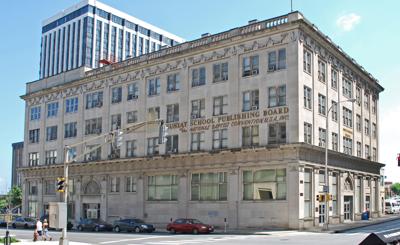

Well, shit. Our own Nicolle S. Praino reported a few days ago on the pending sale of the Morris Memorial Building to a developer who wants to make it into a boutique hotel. I have very mixed feelings about this.
Let’s start with the good. The developer’s plans — or at least what the rumor mill is claiming are the developer’s plans — are to keep as much of the building intact as possible and to not add on a bunch of floors (or any floors, for that matter) and to save what can be saved. This is great. This is what I would have considered the second-best solution, and if it realistically is the only solution, then we have lucked out, because this historic property is going to be cared for and transformed into something that will reopen it to the public.
So let me be clear: I’m not upset or alarmed about the fate of the Morris building as we know it now. As a history buff, I even like the symmetry of that site becoming a hotel once again. (Note to the developer: If you name your hotel The Commercial, I will scream in delight.) As someone raised Methodist, I know better than to stick myself in the middle of any Baptist fight, so I will refrain from having an opinion on the National Baptist Convention selling the building other than to say that they gave the city plenty of warning, and it’s unfair for a city to expect any church group to double as stewards of buildings that don’t fit their needs anymore but that the city still deems important.
What I am upset about is that this city is full of shit. We've been making noises about buying this building for years now. “Oh, it’s going to happen, just not this way with this funding. But we’ll get it.” Over and over, variations on a theme. I don’t believe that was ever the case. The city was just kicking the can down the road because no one had the guts to just say, “No, we’re not going to do that,” and why.
Or take the asbestos business. I’ve heard multiple times over the years that refurbishing the Morris building would be too expensive for the city because of asbestos in the building. Nashville, why did we think there was asbestos in the building? Like, how did that become common knowledge? Did someone go through the building and inspect it for problems? If so, where is that report? This is a loaded question, because I can’t find a report. And I can’t find anyone who’s seen one. To the best of my ability to discern, it seems like maybe someone may have put together an unofficial memo that listed potential problems with any of the buildings around town that Metro might want to repurpose, including asbestos abatement. This wouldn't have meant there was asbestos in those buildings — just that it would have to be checked for and, if there, dealt with. Somehow that turned into, “There’s asbestos in the Morris building.” And the city possibly making decisions based on rumors.
Most importantly, this is the second time the city has made noises about pulling together a museum of Nashville’s African American history and the second time we’ve whiffed it. Memphis has a civil rights museum. Mississippi has a civil rights museum. There’s an institute in Birmingham and another in Atlanta. There’s the International Civil Rights Center & Museum in the Woolworth’s where the Greensboro sit-ins started in North Carolina.
We have a room.
And again, this is no knock on the Civil Rights Room at the Nashville Public Library downtown. It’s an invaluable resource, and the people who work there are so knowledgeable and helpful. But it isn’t a museum. And the people who participated in the civil rights movement are getting older and passing on. If they do have artifacts from that time in their lives, what do we want families to do with them? Just hold on to them and keep them safe on the off chance we as a city someday get our shit together?
May I remind you, dear Nashville, that this was our plan for the Morris Building — that the people who had it would just hold onto it for us until we got ourself in order — and we all see how that’s working out for us. So maybe that should not be our plan for our civil rights history.
So, maybe, we should be proactively making a better plan.



Post a comment as anonymous
Report
Watch this discussion.
(0) comments
Welcome to the discussion.
Log In
Welcome to the discussion.
Keep it clean. Please avoid obscene, vulgar, lewd, racist or otherwise abusive language. Comments featuring hate speech or threatening or violent content will not be tolerated.
PLEASE TURN OFF YOUR CAPS LOCK.
Be truthful. Don't knowingly lie or mislead.
Be proactive. Use the “report” link on any comment that violates our comment policy.
Share with us. We'd love to hear your feedback.