
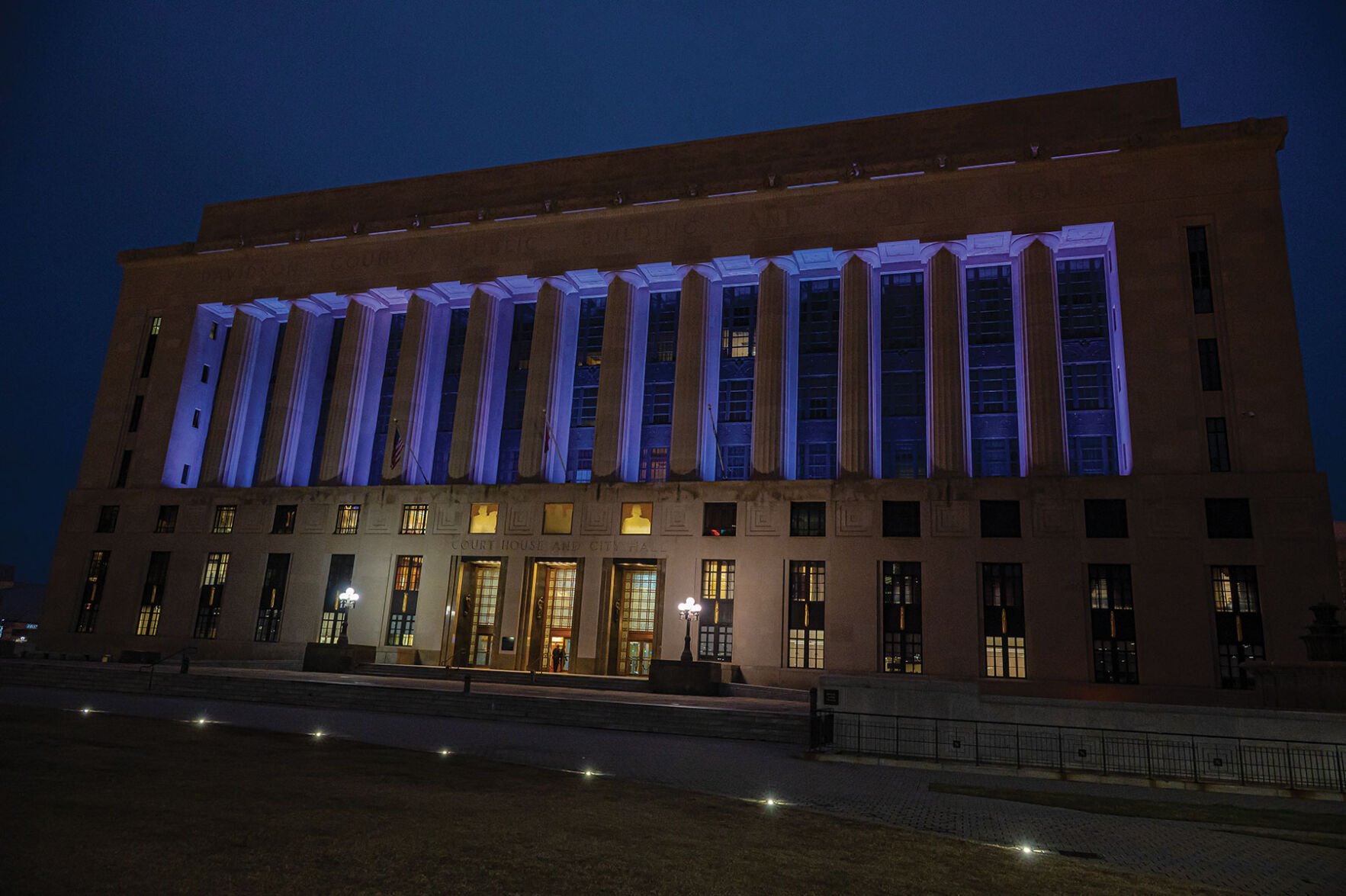

As home prices skyrocket and Nashville faces a growing demand for housing, the Metro Council passed two bills at Thursday night’s meeting with the goal of addressing these matters.
One of those bills, BL2025-1005, creates two new zoning districts: residential neighborhood and residential limited. These allow for housing like townhomes, courtyards, triplexes and quadplexes to be built in areas that typically don’t allow such structures. The legislation doesn’t automatically apply the zoning districts to specific areas of Nashville, but lets councilmembers propose the implementation in their respective districts.
At the meeting — delayed two days to accommodate Tuesday's special election in the 7th Congressional District — the bill passed 28-10 with several amendments intended to quell concerns surrounding the bill. These include a measure that delays the legislation's effective date to April so that the Metro Planning Department has time to update the city’s Community Character Manual and denote where the districts would be appropriate. This comes as an attempt to address concerns from the bill’s opponents, who say they worry how the districts, if implemented, could negatively impact the character of their neighborhoods.

Metropolitik: Recall effort, ethics threat, packed council meeting reflect a divide in local politics
In an additional effort to increase transparency surrounding the housing bills, District 26 Councilmember Courtney Johnston — who has opposed much of the recent zoning reform — pushed for a non-binding resolution that requests Metro Planning develop a countywide map identifying areas designated as appropriate for the new zoning districts.
“I think that the whole thing has been rolled out like a soup sandwich, quite frankly, and it’s really hard to roll that back," Johnston said. "But I think there are some steps we can take to make this better."
The council approved the resolution 22-16.
Several councilmembers made a final effort to defer consideration of the bill, citing vocal opposition from some Nashvillians who want the council to continue discussions on the matter and wait for the results of an infrastructure study, which is set to be released in the coming months.
“I think one of the reasons that we should look at deferring this is the duct tape that is holding it together already,” said Councilmember Jeff Eslick, noting the several amendments and substitutions related to the bill. He also opposed recent rhetoric that the zoning districts are an optional tool offered to councilmembers.
“When it's pushed forward without meaning, without community support, without residents feeling heard, and when the consequences aren’t clear or ignored, the tool starts to feel more like a weapon, something that is used to harm instead of something that’s used to help,” Eslick said.
Another bill, BL2025-1007, received a final OK from the Metro Council, expanding options for detached accessory dwelling units (DADUs) in the city. The legislation allows for the DADUs, like carriage houses and garage apartments, in areas of both the Urban Services District and General Services District. A substitute to the bill was approved that increased parking requirements for the structures.
The council approved the legislation 29-8 with one abstention.
Amendments to both of the housing bills require Metro Planning to create a report that details the number of building permits generated, dwelling units added and infrastructure costs to Metro as a result of the legislation. The report will be presented to the council by the end of April 2027.

Performing arts nonprofit takes a key step toward future facility near the Cumberland River
On second reading, the council approved a bill that would limit the heights of certain residential buildings in single-family residential and two-family residential zones to roughly two-and-a-half stories. Before the bill’s final reading, District 19 Councilmember Jacon Kupin is expected to propose an amendment that would exempt the height restrictions from Nashville’s downtown core.
In other business, the council:
Approved development and lease agreements for Tennessee Performing Arts Center’s new East Bank venue on first reading.
Advanced on second reading the Midtown Business Improvement District, which would create an additional 0.1561 percent fee to the assessed property value to areas within the district. The extra funds would go toward programming like cleanliness efforts and safety patrols in the area.
OK’d a one-meeting deferral of a memorandum of understanding between Metro and the Nashville Downtown Partnership that would allow NDP to use grant funds for surveillance technology, sparking concerns amongst those who opposed the controversial Fusus camera system proposed by Metro in the past.
Passed a resolution accepting a $4.2 million grant from the Tennessee Department of Safety and Homeland Security to fund school resources officers in Metro Nashville Public Schools. The resolution passed 27-6 with three councilmembers abstaining.



Post a comment as anonymous
Report
Watch this discussion.
(0) comments
Welcome to the discussion.
Log In
Welcome to the discussion.
Keep it clean. Please avoid obscene, vulgar, lewd, racist or otherwise abusive language. Comments featuring hate speech or threatening or violent content will not be tolerated.
PLEASE TURN OFF YOUR CAPS LOCK.
Be truthful. Don't knowingly lie or mislead.
Be proactive. Use the “report” link on any comment that violates our comment policy.
Share with us. We'd love to hear your feedback.