


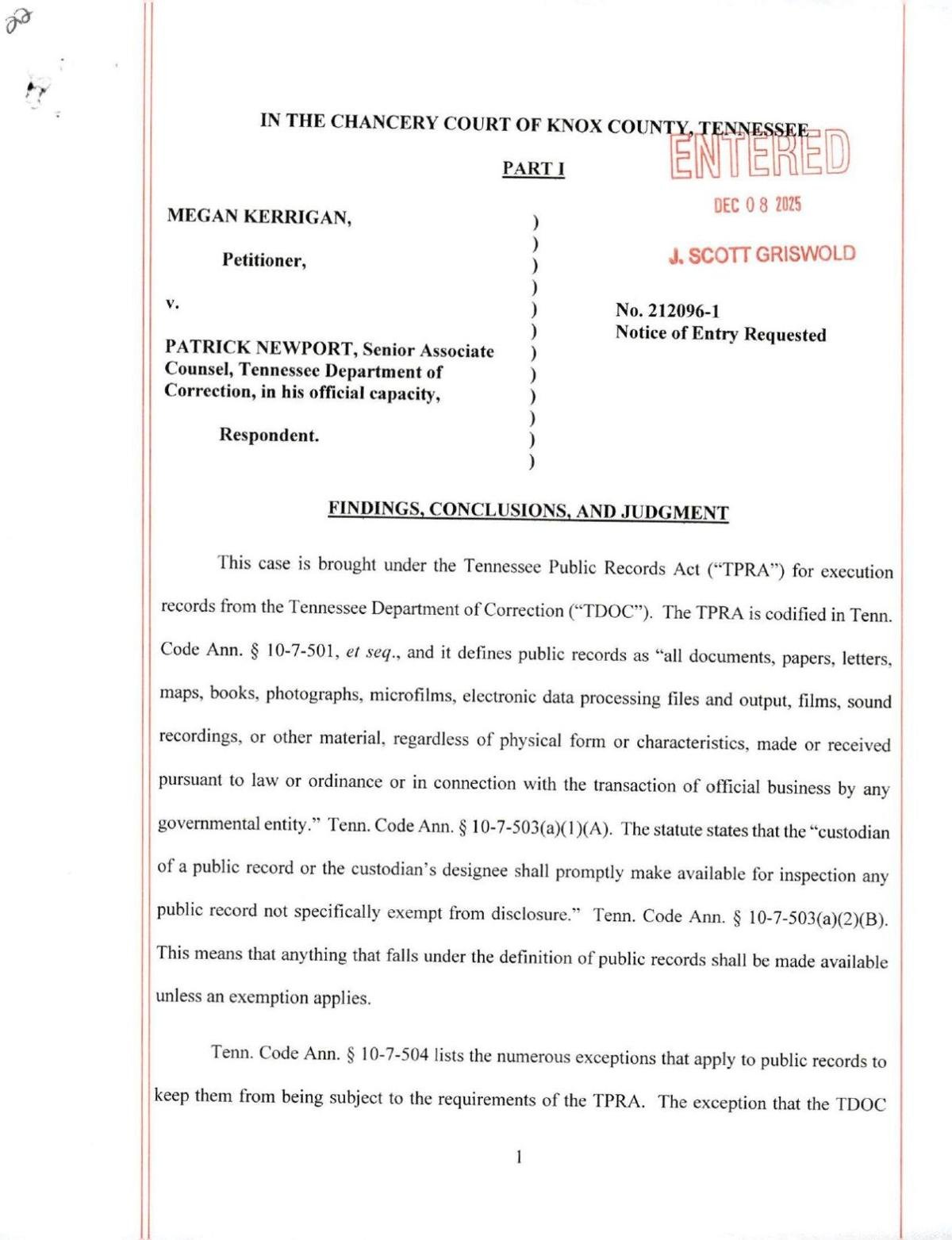
Tennesseans could get a first look into the state’s embattled lethal injection protocol soon following a judge’s ruling in Knox County. The Tennessee Department of Correction closely guarded information around its execution process, overreaching in some cases by improperly applying public records exemptions, according to Knox County Chancery Court Chancellor John Weaver.
Death row inmate Harold Wayne Nichols was previously denied information around the protocol, prompting the lawsuit, as he sought to decide between death by electric chair or lethal injection ahead of his scheduled Dec. 11 execution. The state defaulted to lethal injection for Nichols, who is still waiting on a response after filing a clemency petition with Gov. Bill Lee.

Working against the clock, attorneys wage a multifront campaign against the state and Gov. Bill Lee
In an order issued Monday, Dec. 8, Weaver ordered the state to produce records responsive to a request from petitioner Megan Kerrigan, an investigator with the Federal Defenders Services of East Tennessee who sought more information about TDOC’s lethal injection procurement and procedures. Weaver explains that certain information can be redacted under state law but took issue with the state’s broad application of privacy shields in his 22-page judgment.
“With the exception of the information to be reproduced by the TDOC from the inserts and produced within a reasonable time, the other records, including the reproduction of the information from the packaging and bottles or vials, shall be made available and produced, with the redactions permitted above, to the Petitioner immediately,” Weaver orders. “As to any records not produced for the in camera review or denied as to existence, the failure to produce any such existing record would constitute a misrepresentation to the Court.
Weaver also indicates a future hearing to determine whether the state intentionally withheld records responsive to Kerrigan’s information requests.
The order sets off another complicated process of document exchange between the state and Kerrigan, who requested records specifically related to the executions of Byron Black and Oscar Smith in August and May, respectively. Initially set for April 2022, Smith’s execution was delayed three years after state officials were found to have violated chemical protocols leading up to his lethal injection. The botched execution led to a moratorium on executions in Tennessee, a comprehensive review of the state’s lethal injection process and a new TDOC commissioner, Frank Strada.
Attorney Luke Ihnen has called on the state to pause Nichols’ execution proceedings given the additional forthcoming lethal injection information.
“This swift ruling underscores the importance of these documents being made publicly available,” reads a statement from Ihnen in a press release. “In light of the court’s order and with our client’s execution date imminent, Wayne’s execution process should be paused to give all parties enough time to consider this ruling and allow the legal process to play out.”
On Tuesday afternoon, Gov. Lee issued a statement confirming that he will not intervene ahead of Thursday's scheduled execution: “After deliberate consideration of Harold Wayne Nichols’ request for clemency, and after a thorough review of the case, I am upholding the sentence of the State of Tennessee and do not plan to intervene.”



Post a comment as anonymous
Report
Watch this discussion.
(0) comments
Welcome to the discussion.
Log In
Welcome to the discussion.
Keep it clean. Please avoid obscene, vulgar, lewd, racist or otherwise abusive language. Comments featuring hate speech or threatening or violent content will not be tolerated.
PLEASE TURN OFF YOUR CAPS LOCK.
Be truthful. Don't knowingly lie or mislead.
Be proactive. Use the “report” link on any comment that violates our comment policy.
Share with us. We'd love to hear your feedback.