

A reported Immigration and Customs Enforcement detention center in Lebanon appears to be dead in the water. Explosive public backlash over the reported center this week led longtime Wilson County Sheriff Robert Bryan and County Mayor Randall Hutto to state their opposition to any potential ICE facility in Wilson County.
“I can't see a positive impact from this [potential facility] whatsoever,” Hutto told the Scene Tuesday night, speaking in the empty Wilson County Commission chambers following a three-hour-plus meeting — one that saw more than two hours of emotionally charged public comment.
Hutto opened the meeting with a breakdown of his understanding of the potential detention center, which was first reported by the Tennessee Lookout. A Department of Homeland Security spokesperson reversed course following the report, saying the agency has not purchased property for an ICE facility in the Cedar City.

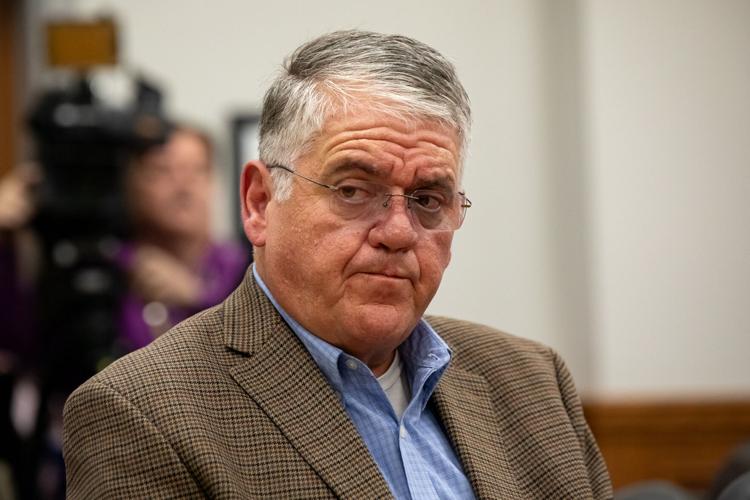
Wilson County Sheriff Robert Bryan, Feb. 17, 2026
The initial report cited a DHS statement that boasted some 7,000 jobs and millions in local revenue, all a part of the agency’s $38.3 billion purchasing spree across the country.
“We reached out to every official that we knew to reach out to, and even as of today, we have no confirmation that any buildings have been purchased here in our county,” said Hutto. “There's been speculation of several places that we ruled out as well. The one that's had the most hits has been the one on [Highway] 109 — but again, our joint economic development person reached out to them. They said there are no contracts there. They have not sold it.” Hutto added that a potential sale of a building to DHS could be under a nondisclosure agreement, which would limit the public’s ability to know about the purchaser of a property.
“I really do not know if they're coming or not,” Hutto said during the meeting. “This body tonight can listen to your comments, but they have no vote and no say-so in that.”
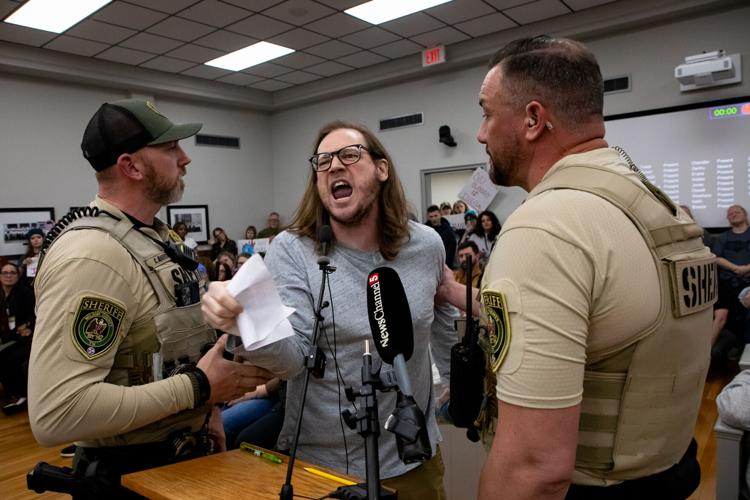
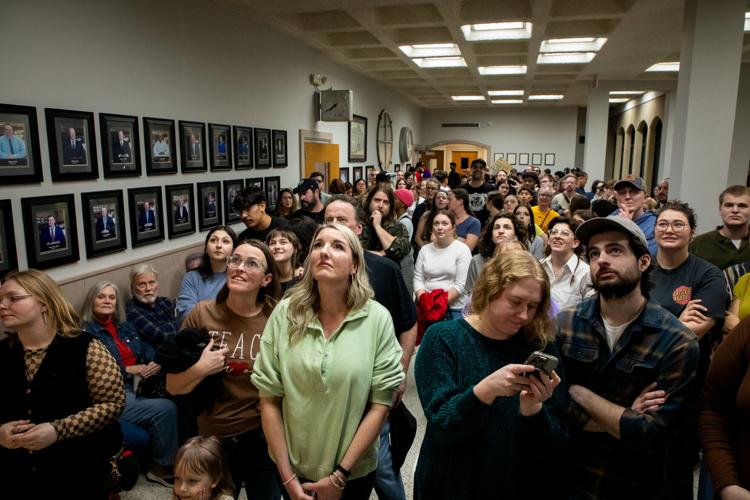
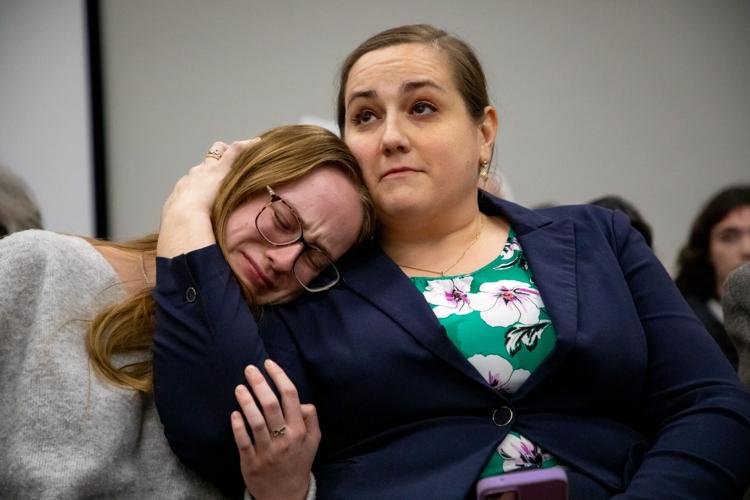
Hundreds of people packed the Wilson County Courthouse in downtown Lebanon on Tuesday night, spilling into the halls. In an overflow room, crowds watched a livestream of the meeting on TVs and huddled around cellphones.

Attendees watch a Wilson County Commission meeting, Feb. 17, 2026
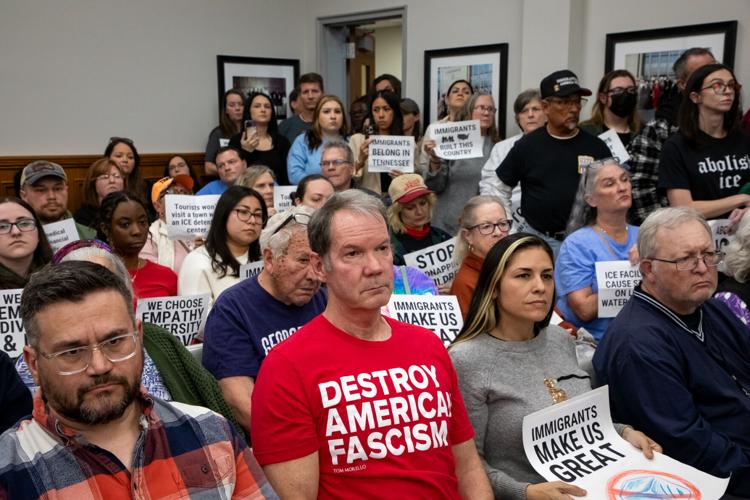
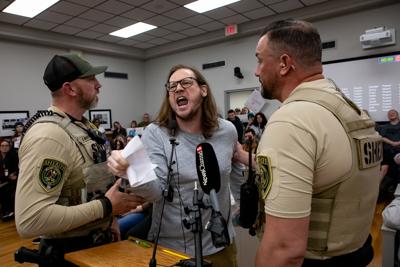
More than 40 people spoke out against the idea of an ICE facility, which was not technically on the meeting agenda. Many called for transparency from local leaders and a commission resolution in opposition to any future ICE facility.
“I am begging you, do not stop representing us,” said Mt. Juliet resident and Democratic state Senate candidate Lindsey Patrick-Wright. “We are asking that you demand transparency from the state, and that you stand with us, your constituents, in making it clear: Wilson County does not want ICE here.”
Among the public commenters were descendants of Americans imprisoned by the U.S. government in Japanese internment camps and Jews forced into Nazi concentration camps during World War II, as well as descendants of American Indians who faced genocide by the American government.
“The treatment of our people is a darkness in this country's history that continues to this day, and we are seeing this treatment on repeat in immigrant communities around the country,” said Lebanon resident Sabrina Buer, a Tennessee Tech professor and co-director of the American Indian Movement’s Tennessee chapter.
Many public comments highlighted numerous controversies of the Trump administration's ongoing immigration crackdown, including poor health conditions inside ICE facilities, rising deaths in ICE custody, thousands of illegal arrests by ICE and high-profile killings of American citizens by immigration enforcement agents.
Sarah Payne, an eight-year Mt. Juliet resident who emigrated from Canada and is now a naturalized American citizen, said she came to Wilson County for the sense of community and safety as she raises her 17-year-old daughter Charlotte.

“Immigration is a complex and multifaceted issue, and it will require bright minds and open hearts willing to donate their energy and resources to finding better solutions,” Payne said. “I urge the leaders of this county to pause and to ask ourselves if allowing an ICE facility here is contributing to solutions and to the safety of the community that you have been entrusted to be a steward over.”
Chris McFarland, a U.S. Army veteran who traveled to the meeting from Clarksville, issued a warning.
“Let me be perfectly crystal clear: These camps will not be tolerated at all,” McFarland said. “This ground you stand on is one of the highest concentrations of combat veterans in this country, people who have already faced tyranny abroad, people who recognize state cruelty because we've seen it up close and stopped it. I'm one of them.”
ICE has operated in Wilson County for years. In January, the Wilson County Sheriff’s Office strengthened that relationship by entering into a 287(g) agreement with ICE for the Warrant Service Officer program, which “allows ICE to train, certify and authorize state and local law enforcement officers to serve and execute administrative warrants on aliens in their agency’s jail.”
Despite the increased cooperation, Sheriff Bryan told the Scene he’s not in favor of an ICE facility in Wilson County. “Nobody in that [commission] room wants an ICE facility,” said Bryan.
“I really don’t want to get in the middle of it,” District 10 County Commissioner Tyler Chandler, who also serves as the Mt. Juliet Police chief of police, told the Scene following the meeting, citing his decision not to seek reelection. Chandler said he’s grateful that community members expressed their opinions, adding that the MJPD will continue to operate as they normally do.

Protesters attend a Wilson County Commission meeting, Feb. 17, 2026
“We haven’t changed anything with our approach to working with the federal government,” Chandler said. “What we’re doing today is what I [did] when I started policing 21 years ago, and I don’t see us changing our approach. We focus on community issues, about keeping our community safe, and I’m going to continue to do that.”
When asked about the impact on general public safety in an era of increased ICE operations across the region and country, Bryan said the WCSO will also continue to operate as they traditionally have, adding that he doesn’t expect to see ICE operations on the scale of those seen in Minneapolis or Chicago.
While the future of ICE’s presence in Wilson County is unclear, the past few days have highlighted a growing anxiety among Tennesseans about the rapid expansion of ICE — even in deep-red Wilson County.
Update, Feb. 23: Lebanon Mayor Rick Bell weighed in on the issue in a Feb. 20 social media post. Bell “confirmed Immigration and Customs Enforcement is interested in property along the Highway 109 South Corridor inside the City Limits of Lebanon,” per a conversation he had with senior counsel for the Department of Homeland Security.
“They are in the due diligence phase of a feasibility study,” Bell said. “They have not contacted anyone with the City of Lebanon Utilities or Engineering Departments.” The mayor added that he’s also been in communication with U.S. Sen. Marsha Blackburn.
“She is working with us along with leaders of the Department of Homeland Security to rectify this situation,” Bell said. “She too believes that the City of Lebanon is not the right location for this facility. As a conservative Republican, I believe we should have a secure border. However, other than the Wilson County Jail, Lebanon is not the place for any type of correctional facility — ICE or otherwise.”
A Blackburn spokesperson declined to address specifics of the senator’s role in the conversations with DHS, but issued the following statement to the Scene: “Sen. Blackburn supports the incredible work ICE is doing in Tennessee to apprehend, detain, and deport criminal illegal aliens, and she is working closely with local and state leaders as well as ICE to ensure the agency can find a proper placement for a new detention facility.”
County Mayor Hutto gave more details in his own Feb. 20 social media post. Citing a conversation with a DHS representative, Hutto called the proposed facility a “mega center — the largest of its kind in the United States — housing between 14,000 and 16,000 detainees from across Tennessee and surrounding states.”
Hutto reiterated his opposition to the proposal, citing its proximity to schools, churches and day cares, as well as “heavy demands” on infrastructure and local law enforcement.
“From what we know today, this facility would bring more challenges than benefits to our community,” Hutto said. “We will continue asking questions, pushing for clarity, and sharing information as soon as we receive it.”
State Rep. Clark Boyd (R-Lebanon) also offered a statement on Feb. 20: “While I agree with and support the mission of ICE, I firmly believe that Lebanon is not the right place for this type of facility.”



Post a comment as anonymous
Report
Watch this discussion.
(0) comments
Welcome to the discussion.
Log In
Welcome to the discussion.
Keep it clean. Please avoid obscene, vulgar, lewd, racist or otherwise abusive language. Comments featuring hate speech or threatening or violent content will not be tolerated.
PLEASE TURN OFF YOUR CAPS LOCK.
Be truthful. Don't knowingly lie or mislead.
Be proactive. Use the “report” link on any comment that violates our comment policy.
Share with us. We'd love to hear your feedback.