
A slate of immigration bills cleared state legislative committees Tuesday — with many of the bills part of a sweeping immigration package proposed by Republican lawmakers at the start of this year’s session.
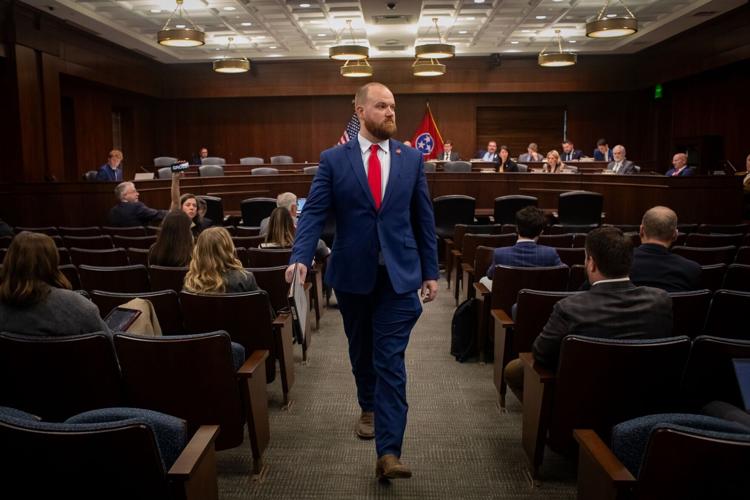
Lawmakers passed three bills during a House Departments and Agencies Subcommittee meeting. Among those was House Bill 2219, which would require local law enforcement to comply with court orders regarding illegal sanctuary city policies.

Verification, reporting requirements part of proposed bills filed
This would require local governments to enter into 287(g) agreements, which allow law enforcement to partner with U.S. Immigration and Customs Enforcement. Under the proposed law, governments that don’t enter the agreements could be financially penalized by the state. State Rep. Johnny Garrett (R-Goodlettsville) sponsors the bill.
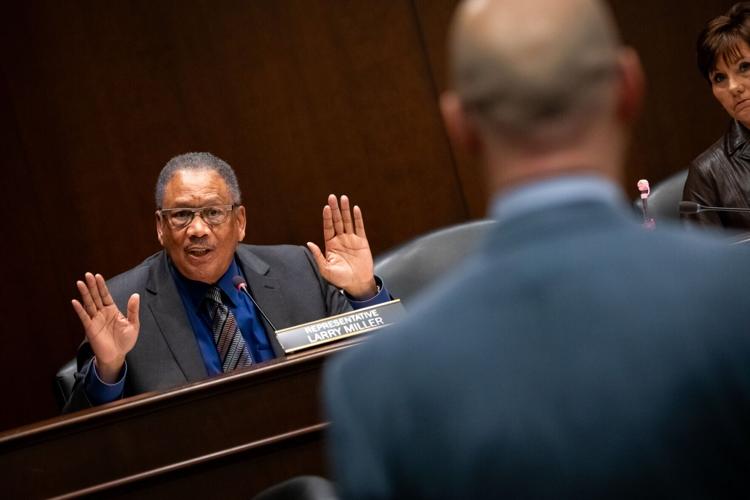
The immigration crackdown bills have been met with opposition by Democrats. State Rep. Larry Miller (D-Memphis) sharply criticized HB2219 during the subcommittee meeting Tuesday, arguing it would unfairly punish Tennesseans due to the actions of their elected officials.
“That’s absolutely amazing to me that you’re willing to go this far to hurt Tennesseans,” Miller said. “Just the thought of this is not morally correct.”
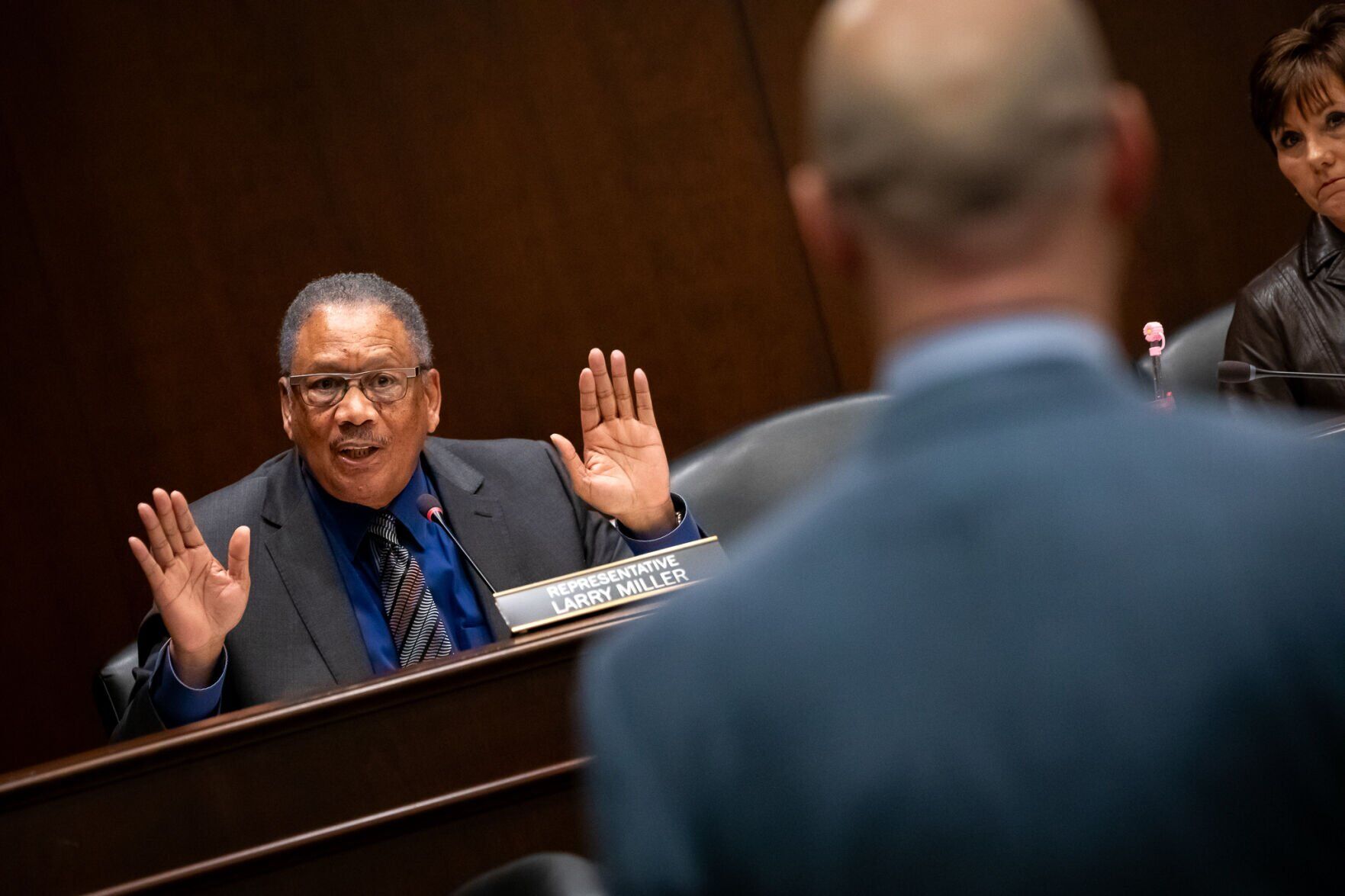
Rep. Larry Miller questions Rep. Johnny Garrett during a House Departments and Agencies Subcommittee meeting, Feb. 17, 2026
Democrats have also criticized Republican-cited statistics that claim there were 11,340 reports of 2025 crimes committed by people suspected of not living in the U.S. legally. The data comes from the “2025 Immigration Report” compiled by the Tennessee District Attorneys General Conference.
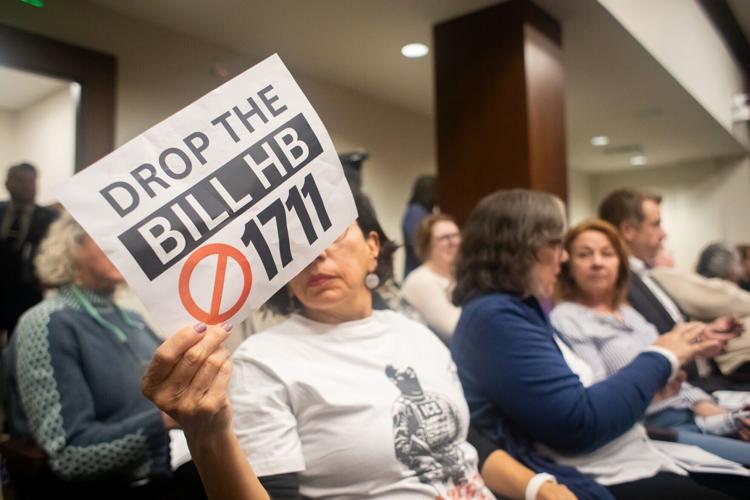
HB1711 — sponsored by Rep. Elaine Davis (R-Knoxville) — passed along party lines in the subcommittee and would require local governments and local enforcement agencies to submit reports to state and federal immigration officials on the illegal activities of people residing in the U.S. unlawfully.
If passed, the bill would also require the Tennessee Department of Finance and Administration to create a report outlining the cost of benefits and services provided to people in the U.S. illegally via public schools and colleges, prisons, hospitals and social services agencies.
Betsy Hobkirk, a Knoxville public school teacher, spoke before the subcommittee, opposing the bill and expressing concerns that it would cause anxiety in the classroom.
“This bill would introduce fear and distrust into our schools,” Hobkirk said. “It undermines the safety we work very hard to build.”
Lisa Sherman Luna, executive director of the Tennessee Immigrant and Refugee Rights Coalition, specifically condemned HB1711 in a press release Tuesday afternoon.

Immigrant rights advocate calls Republican-backed legislation ‘more of the supermajority’s anti-immigrant agenda’
“Anti-immigrant bills like this are in direct opposition to the values we hold here in Tennessee," says Luna, "that regardless of where our neighbors were born, if you're making a life here and contributing to our communities, Tennessee is your home and you deserve safety, resources and dignity.
“Instead of addressing what Tennesseans actually need," she continues, "such as fully funded schools, affordable health care, or making groceries affordable, Speaker Cameron Sexton and Rep. Elaine Davis are continuing to blame immigrants for their failure to deliver relief for working families, all while they hand out billions in tax breaks to giant corporations. But we see through their divide-and-conquer tactics, and we refuse to turn against our neighbors.”
After the subcommittee's passage of HB1711, protesters remained in the room and began singing, which led to a brief adjournment. The subcommittee moved to a new meeting room, where — with little discussion — the lawmakers quickly passed HB1710, which would require local governments to verify the legal citizenship status of applicants for public benefits. They rolled all remaining bills for discussion to the subcommittee’s next meeting in two weeks.
Meanwhile, the House Transportation Subcommittee passed two bills, both related to immigrants’ ability to obtain driver's licenses.
“The failure of the federal government has left states with the unfortunate task of addressing illegal immigration,” Rep. Jason Zachary (R-Knoxville) said when introducing his bill, HB1706.
The legislation would create a class-A misdemeanor for “a person who is unlawfully present in the United States to operate a commercial motor vehicle in this state” — or as Zachary notes, it would codify that “it is illegal to be an illegal with a CLD.” The bill also includes reporting requirements for state law enforcement to federal immigration officials.
Another bill, HB1708, sponsored by Rep. Kip Capley (R-Summertown), would require a one-year restricted driver's license for anyone applying for a license who “cannot speak and read English sufficiently.” The applicant would then be required to take an English-only written exam “without any assistance” in order to obtain an unrestricted license. They would also be required to prove lawful status in the U.S.
“This continues to be an abhorrent use of our time, to be castigating immigrant families who are just trying to participate in our economies and go to work and take care of their kids, just like you and the rest of us in this building,” Rep. Aftyn Behn (D-Nashville) told Capley.
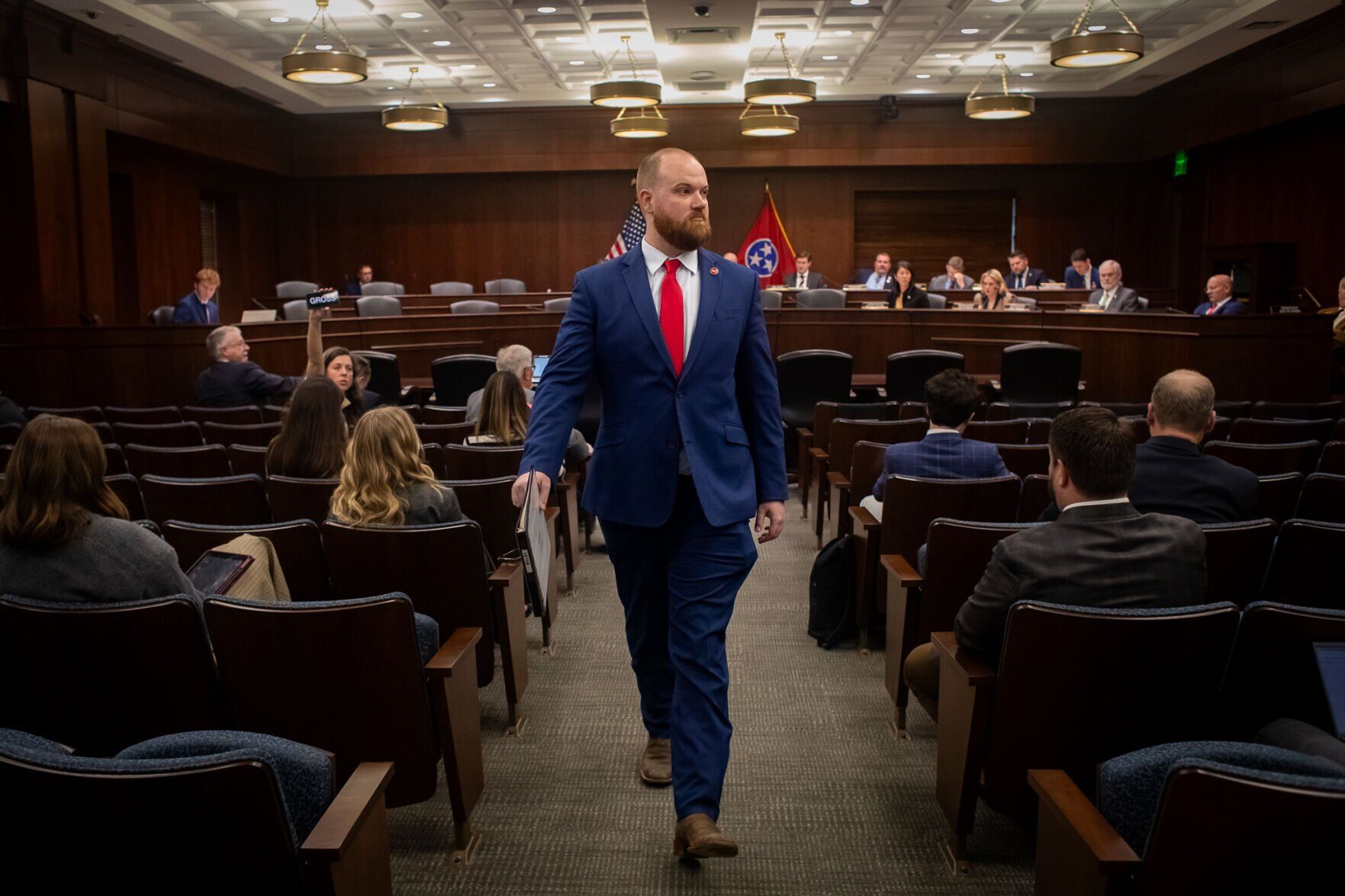
Rep. Kip Capley during a House Transportation Subcommittee meeting, Feb. 17, 2026
Capley’s bill saw public comment in opposition from Brentwood resident Rick Colbert, who shared a personal story about his in-laws. He said they did not read English and were not proficient in speaking English when they came to the U.S. mainland — not from another country, but from the U.S. territory of Puerto Rico, where Spanish is the primary language.
Colbert’s father-in-law was a U.S. citizen serving in the U.S. Army during the Vietnam War. Colbert warned of the “unintended consequences” of the bill.
”We should avoid harming the millions of people, like the [my in-laws], who are here legally, but simply do not read or speak English,” Colbert said.
“We have plenty of functionally illiterate people who speak English, but they can’t read a test in English," he continued. "Apparently this bill would allow those people to get a driver's license even though they can’t read English because they can speak it. But we’re going to take people like [my in-laws] the Santiagos, who are U.S. citizens, whose language is Spanish, and we're going to restrict them to going to work and back, or going to school and back, or going to the doctor and back. They won't be able to go out to dinner, they won't be able to drive to the store. They won't be able to pick up their child at day care. There's so many things they won't be able to do. They won't be able to live as productive citizens of the United States that they are citizens of.”
Both bills passed 8-1 along party lines with Behn voting no on each. Committee member Rep. Justin Pearson (D-Memphis) was not present.
This article was first published by our sister publication, the Nashville Post.





Post a comment as anonymous
Report
Watch this discussion.
(0) comments
Welcome to the discussion.
Log In
Welcome to the discussion.
Keep it clean. Please avoid obscene, vulgar, lewd, racist or otherwise abusive language. Comments featuring hate speech or threatening or violent content will not be tolerated.
PLEASE TURN OFF YOUR CAPS LOCK.
Be truthful. Don't knowingly lie or mislead.
Be proactive. Use the “report” link on any comment that violates our comment policy.
Share with us. We'd love to hear your feedback.