

Earlier this month, 12 Metro Council members signed a letter asking for relief on behalf of a Nashville man who has spent nine years in jail for a first-time nonviolent drug offense — all because it occurred in a "drug-free school zone." Ostensibly enacted to protect school children from drug pushers, Tennessee's drug-free school-zone laws act as as an arbitrary sentencing enhancement that lands offenders harsher sentences than they'd get for rape or second-degree murder.
These drug-free school-zone laws are under the spotlight in a thorough new investigation from Reason. It's full of startling revelations, like the fact that Tennessee is pocked with drug-free school zones that effectively create a mandatory minimum for large numbers of minor drug offenses.
Data obtained from the Tennessee government show there are 8,544 separate drug-free school zones covering roughly 5.5 percent of the state's total land area. Within cities, however, the figures are much higher. More than 27 percent in Nashville and more than 38 percent in Memphis are covered by such zones. They apply day and night, whether or not children are present, and it's often impossible to know you're in one.
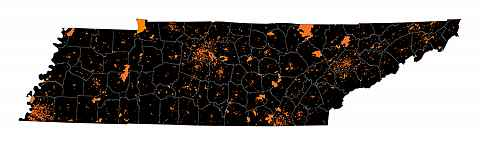
8,544 separate drug-free school zones cover roughly 5.5 percent of the state's total area
Veteran Nashville criminal defense attorney David Raybin tells Reason that police often go out of their way to catch people in these zones despite the fact that the offenders aren't selling or attempting to sell drugs to children — the threat the law is supposed to neutralize.
Undercover cops and confidential informants sometimes go to extra lengths to get these enhanced sentences. David Raybin, a Nashville criminal defense attorney, says that police informants often purposely set up deals in school zones, a practice that has led to accusations of entrapment from defendants and rebukes from judges dismayed by the practice. "The police will frequently have people sell drugs in a school zone so they can enhance them," Raybin says.
As with so much of our criminal justice system, the effect of drug-free school zone laws is harshest on African-Americans.
%{[ data-embed-type="oembed" data-embed-id="https://twitter.com/cjciaramella/status/942777758400352256" data-embed-element="aside">
The feature is a must-read for Nashvillians. And the issue is likely to come up when the state legislature convenes next year.



