
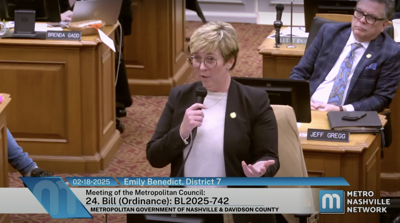

A bill that would put Metro’s Historic Zoning Commission and Historical Commission under the authority of the Planning Department has sparked debate among Metro councilmembers and the general public in recent weeks.
The bill passed its first of three readings on Feb. 18 with some opposition from community members. The bill comes as proposed state legislation that looks to restrict the power of the historic preservation bodies to prevent development works its way through the legislature.

Following an audit, new legislation from Councilmember Benedict aims to move MHZC into the Planning Department
The Metro bill’s lead sponsor, District 7 Councilmember Emily Benedict, tells Scene sister publication the Nashville Post that the looming state legislation was a major factor in introducing the bill and time is of the essence.
“Everything I’m hearing is that we’ve got to move on this — and swiftly,” says Benedict.
Mayor Freddie O’Connell addressed the state legislation at a Feb. 14 press conference.
“It's not clear to us that we could stop those bills from advancing unless we made some changes locally,” O’Connell said. “And I would say this is an ongoing discussion.”
This also comes after a consultant study showed strict enforcement of the commission’s historic regulations.
Some opponents of the bill worry it is being rushed. And others — like David Price, who sits on the Metro Historic Zoning Commission — note that the authorities have worked independently for more than 50 years.
“My fear is that this bill is not actually about enhancing or streamlining how departments operate, but political retribution to bring the Metro Historical Commission to heel,” Price said at a Feb. 21 meeting. “Bottom line, this bill will make Metro Historic staff subordinate to Planning so that staff can potentially be pressured to toe the official line and fired if they don’t. The result will be that Metro Historic staff will lose their independence and could be pressured to approve projects that adversely affect historic properties.”
Benedict says the bill would not eliminate any jobs, and she plans to add amendments to the bill after hearing opinions from the community.

In her latest recap, @startleseasily weighs in on the Metro Council's squabbles over police surveillance and Historic Zoning
“I'm continuing to make tweaks to the bill to make sure it's going to fit everything,” she says. “I've heard a tremendous amount of feedback. I've been in touch with constituents, with state historians, with Nashvillians, with departments.”
Benedict says she hopes the bill will pass before the end of March. The bill is set for a second reading on March 4, and Benedict says she plans to call for a public hearing for the March 18 council meeting.
This article was first published by our sister publication, the Nashville Post.



Post a comment as anonymous
Report
Watch this discussion.
(0) comments
Welcome to the discussion.
Log In
Welcome to the discussion.
Keep it clean. Please avoid obscene, vulgar, lewd, racist or otherwise abusive language. Comments featuring hate speech or threatening or violent content will not be tolerated.
PLEASE TURN OFF YOUR CAPS LOCK.
Be truthful. Don't knowingly lie or mislead.
Be proactive. Use the “report” link on any comment that violates our comment policy.
Share with us. We'd love to hear your feedback.