
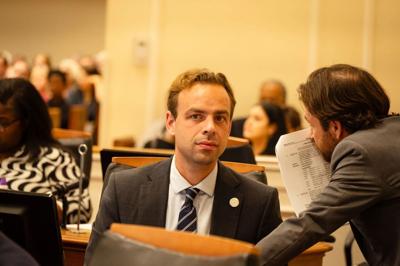

Metro’s Board of Ethical Conduct dismissed an ethics complaint against Councilmember Rollin Horton after vetting its allegations for more than an hour at a Dec. 17 meeting. The complaint was filed by three individuals — Lauren Magli, Rachel Gladstone and Chris Remke — who have mounted a months-long campaign against Horton in response to his push to reform Nashville’s zoning restrictions. They allege three instances of retaliatory behavior by Horton, none of which was determined to warrant an evidentiary hearing for a potential ethics violation.
Magli, Gladstone and Remke filed the ethics complaint after a failed effort to recall Horton from office. Organizing as Voices of District 20, the three have led a small but vocal opposition effort to Horton’s push for more inclusive zoning laws. The ethics complaint, filed in November, demands that Horton be held responsible for an anonymous Instagram post that included Magli’s home address and two instances of interfering with the group’s recall campaign against Horton. In one instance, the Metro Park Police stopped Voices of District 20's signature-gathering effort for lacking proper permitting. In the other, the campaign was asked to stop collecting signatures at a local business, whose owner later fielded unwanted texts and calls from Horton about the incident. Board members unanimously agreed that none of these amounts to misuse of office, harassment, doxxing or intimidation as alleged in the complaint.

Metro attorneys side against disgruntled activists aiming for Councilmember Rollin Horton
Board members relied heavily on analysis provided by the Metro Department of Law before the meeting. City attorney Nicki Eke, who helped prepare Metro’s legal analysis, provided commentary throughout the meeting on the relevant legal standards.
Chair Diane Di Ianni guided most of the discussion, emphasizing that members’ job that morning was to assume the “worst” — that all allegations against Horton were true — so as to determine whether they violated Metro’s standards of conduct or state law and therefore justify a subsequent evidentiary hearing. The framing led members into a hypothetical reality, with Di Ianni at times referring to Rollins’ alleged behavior as “inappropriate,” “disappointing” and “a little snide,” but ultimately not a violation of any standard.
“I’m not happy about this totality of behavior,” Di Ianni said at one point. “Let it be. You don’t have to be there and see if they have a permit. Let the process happen. Let the chips fall where they may. You don’t call someone after they say, ‘Please don’t call me.’ It’s not the high standard of conduct we might wish.”
As the body neared a vote, fellow board member Delishia Porterfield, Horton’s colleague in the Metro Council, briefly reiterated the lack of factual evidence against Horton.
“I don’t think that we can make an assumption to impugne the character of an individual when that is not the task at hand,” said Porterfield.
“The only facts we have are a phone call after being told not to call, which is immaterial — it’s nothing,” Di Ianni responded. “No one is finding anything in this complaint, as guided by the law memo, that would suggest it’s appropriate to go to hearing.”
Magli, Remke and Gladstone sent competing legal analysis, prepared by law firm Holtzman Vogel, to the board members via email the night before the meeting, though members disqualified the third-party document from their consideration based on board rules.

Metropolitik: Recall effort, ethics threat, packed council meeting reflect a divide in local politics
“By declining to review this counter-argument, the Board voluntarily blinded itself to the relevant legal standards,” Remke tells the Scene in an email. “They effectively ruled that unless an elected official commits a literal crime, the Code of Ethics is powerless to stop them from intimidating constituents. We believe this creates a 'protection racket' for incumbents that leaves Nashvillians without recourse when their representatives use their office to silence dissent.”
The board evaluated both state criminal statutes and the standards of conduct for elected officials delineated in Metro Code.
Multiple signs point to continued perseverance from the anti-Horton opposition. Some have eyed next month’s board elections at the Nations Neighborhood Association as a potential avenue to challenge his policy goals. Engaging private counsel suggests that the group may pursue additional legal action against Horton.



Post a comment as anonymous
Report
Watch this discussion.
(0) comments
Welcome to the discussion.
Log In
Welcome to the discussion.
Keep it clean. Please avoid obscene, vulgar, lewd, racist or otherwise abusive language. Comments featuring hate speech or threatening or violent content will not be tolerated.
PLEASE TURN OFF YOUR CAPS LOCK.
Be truthful. Don't knowingly lie or mislead.
Be proactive. Use the “report” link on any comment that violates our comment policy.
Share with us. We'd love to hear your feedback.