
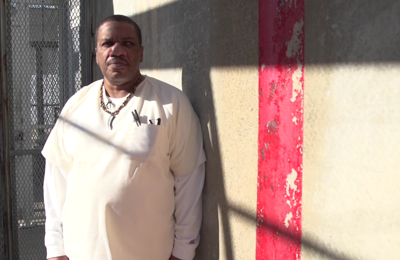


Charles Wright
Charles Wright is set to be executed on Oct. 10, but he may not live that long.
Wright, who was convicted in 1985 for the murders of Gerald Mitchell and Douglas Alexander during a drug deal in Nashville, has cancer that started in his prostate and has spread to his bones. Late last year he was moved off of Riverbend Maximum Security Institution's Unit 2, which houses death row prisoners — some of whom were caring for Wright on a day-to-day basis — to an infirmary at the prison. At least once since then, attorneys and visitors believed he was in his final days. But he lived to see the state set his execution date.
In court filings, attorneys have raised a number of issues with Wright's case, including racial bias in Tennessee capital cases in the 1980s and the fact that numerous other drug-related homicides have not led to death sentences. Like that of Ed Zagorski, who was executed in November, Wright's case is an example of what two attorneys and researchers called "Tennessee's Death Penalty Lottery." Wright has been sentenced to death, even as some Tennessee prisoners are serving life sentences for killing four, five or even six people in drug-related homicides.
The more pressing matter now, though, is Wright's illness. He is seeking clemency from the governor, but specifically, his supporters are hoping to see him released so that he can spend his final days outside of prison with family.
Former Nashville Congressman Bob Clement sent a letter to Gov. Bill Haslam in September pleading for Wright's release.
"It is clear to me that Charles is not among the 'worst of the worst' for whom the ultimate punishment is to be reserved," Clement wrote. "He was a product of his environment and the deprivation in which he — I will not say 'was raised' as the fact is, Charles and his siblings basically raised themselves. He turned to drugs early in his teenage years — he was fourteen or fifteen when an older drug dealer put a heroin needle in Charles' arm. Charles does not absolve himself of his responsibility for making wrong choices."
Haslam's last day in office is Saturday, Jan. 19.
Clement, who is the son of former Tennessee Gov. Frank Clement — an ardent death penalty opponent who famously visited death row and commuted a number of death sentences and fought for repeal — spoke to the Scene on Tuesday about how his upbringing shaped his views of the death penalty. Prisoners were often employed as workers at the governor's mansion at the time, and Clement got to know them as a young boy.
"Those prisoners were my best friends growing up," Clement said, laughing. "Because I played basketball and football with them."
Clement and Wright's attorneys, led by Kelly Henry — an assistant supervising federal public defender based in Nashville — are hoping the governor will grant Wright clemency in one of two ways. Ideally, they'd like to see Haslam commute Wright's sentence to time served so that he can be released and die outside of prison. In lieu of that, Haslam could commute Wright's sentence to life in prison, which would allow Wright to apply for a medical furlough, a release that can be granted to prisoners who are near death. Death row prisoners, however, are not eligible for medical furloughs.
Former WSMV anchor Demetria Kalodimos interviewed Wright as a reporter years ago and has continued visiting him regularly ever since. Her interviews with Wright, and other videos about the case, are available here.
"After covering the death penalty in Tennessee for more than 30 years, it’s clear it needs re-examination at all levels," Kalodimos told the Scene Tuesday. "Charles’ case is so exceptional it should be the catalyst for the reform we need in Tennessee. He has led an inspirational life in hopeless captivity. I wish he had the chance to testify to the legislature and the governor."



