

ALS researchers in Tennessee just got a boost.
Gov. Bill Lee and the Tennessee General Assembly recently approved $11 million for ALS research in the 2026-27 budget. The funds support Vanderbilt University Medical Center ALS Research Center, which began work in early 2024.
The center, led by Dr. Véronique Belzil, is working to find biomarkers and treatments for amyotrophic lateral sclerosis (ALS), often called Lou Gehrig’s disease. Fewer than 10 percent of ALS patients have a family history of the disease. There’s also no test for it, but finding biological differences in blood or saliva in ALS patients, for example, can lead to a quicker diagnosis. Those biomarkers can also track if a treatment is working.

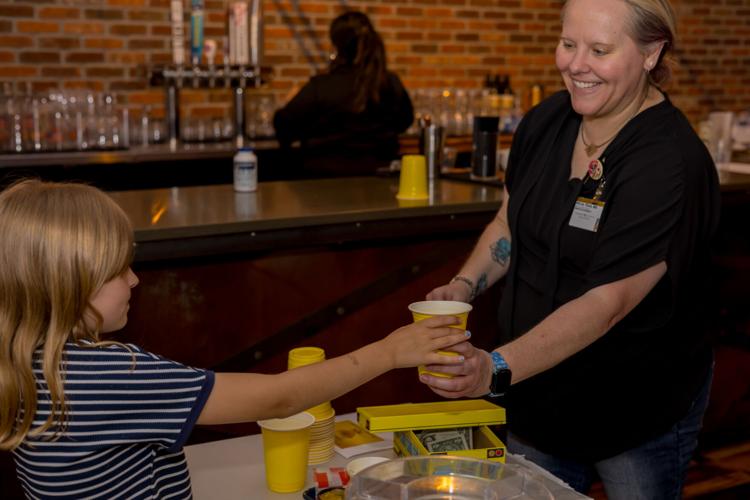
A Lemonade Stand for ALS creator Noella Embry (left) sells a lemonade to NiCole Finch, research lab manager at the Vanderbilt ALS Research Center
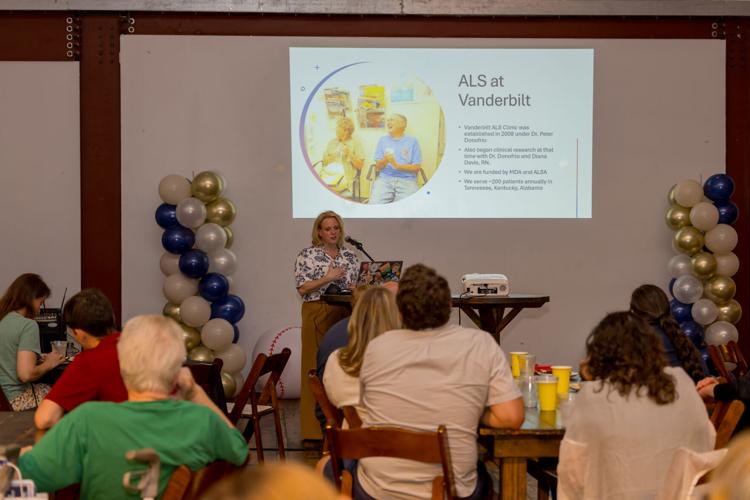
At its second “Reporting the Research” event at Fat Bottom Brewery, Belzil and her staff shared an important discovery: A protein called SHTN1 is over-expressed in saliva samples from ALS patients.
"Accessible fluids such as saliva and blood may hold powerful clues about what is happening in the nervous system during ALS,” Belzil says in a statement. “Our SHTN1 findings highlight the potential of fluid-based biomarkers to make ALS detection and monitoring more practical, scalable, and patient-friendly."
In addition, the Vanderbilt ALS Research Center was recently authorized as a collection site for the nationwide Access for ALL in ALS consortium, which provides even more incentive to grow the number of research participants.
Belzil encouraged attendees to participate in research in three ways: donate biofluids (blood, urine, saliva or cerebrospinal fluid), give skin and muscle biopsies (which requires a minor surgery) and donate organs and tissues after death. The center especially needs controls, or people who do not have ALS, to participate.
Part of the group pushing for the state funding: friends and family of former state House Majority Leader Gerald McCormick, who died from ALS in December.
ALS occurs in 1 or 2 out of every 100,000 people. Once diagnosed with the disease, patients live on average two to five years, during which time they lose control of their muscles, eventually becoming unable to swallow or breathe. Treatment options are nearly nonexistent: There are three FDA-approved drugs that can extend life by a few months.
“We look forward to working with the legislature to ensure that people living with ALS and their families across the state have access to the equipment, support, coverage, and resources they need to navigate this disease day to day,” says Alex Meixner, vice president of state policy at the ALS Association. “Tennessee is now a national leader in funding research to one day make ALS a thing of the past. As we look forward to 2027, we hope that Tennessee will likewise be a leader in helping ALS families navigate the challenges they will continue to face until that cure arrives.”
Dave Warnock, who was diagnosed with ALS in 2019, signed on to donate his body to the research center after his death during last year’s research presentation.
“It’s great to get some help from the state of Tennessee toward finding a cure for this disease that takes so much away from us every day,” he told the Scene at the time.

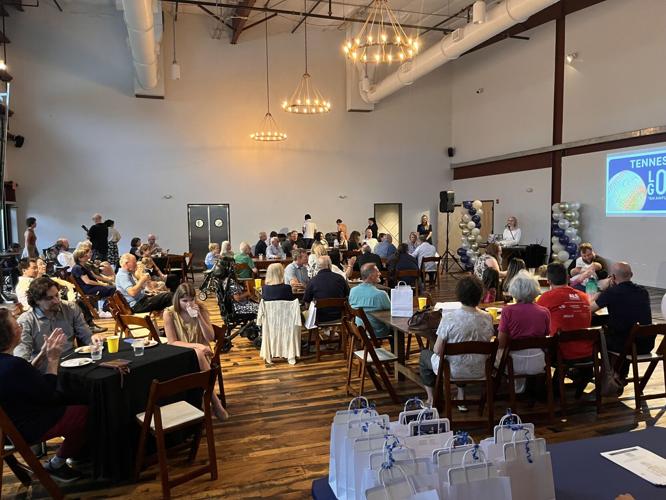
A group gathers to hear from the Vanderbilt ALS Research Center during its 2026 "Reporting the Research" event



Post a comment as anonymous
Report
Watch this discussion.
(0) comments
Welcome to the discussion.
Log In
Welcome to the discussion.
Keep it clean. Please avoid obscene, vulgar, lewd, racist or otherwise abusive language. Comments featuring hate speech or threatening or violent content will not be tolerated.
PLEASE TURN OFF YOUR CAPS LOCK.
Be truthful. Don't knowingly lie or mislead.
Be proactive. Use the “report” link on any comment that violates our comment policy.
Share with us. We'd love to hear your feedback.