
In 1954, Nashville saw the birth of a part of town that has since defined us to the world. The famous Bradley’s Film & Recording Studios was the first recording studio to open on what would become Nashville’s world-famous Music Row. This studio is where the greats of Nashville’s musical lineage recorded hits we all know by heart — Patsy Cline’s “Crazy,” Brenda Lee’s “I’m Sorry” and Roy Orbison’s “I’m Crying” are just three of the thousands of songs to pick from in the history of this remarkable place.
Thanks to efforts to preserve it, that building is now safe and one of the many landmarks saved by music-industry legend Mike Curb and Belmont University. Despite their best efforts, Music Row itself is now threatened with extinction from the Nashville’s recent growing pains.
As a native Nashvillian, I’ve seen the gradual destruction of important structures through the years. Every time I see the Hermitage Hotel, I am relieved that this landmark is safe. I think of the Union Station train shed just as often and regret the loss of that historic structure. I watched the construction of Interstate 40 permanently change the fabric of Nashville’s oldest African-American neighborhoods.
As Nashville changes during a period of growth that is more rapid than we’ve ever seen, I join many others in the collective concern that this growth may permanently alter Nashville for the worse. The new faces, the new families, the new flavors from so many different cultures are a welcome addition to our communities. But the meteoric growth may cause damage that we will not recognize until years from now. It’s only when it’s too late that we see what we have lost.
Nashville saved Fort Negley from destruction last year through the solid effort of many groups, including Historic Nashville Inc., Friends of Fort Negley and many others who worked tirelessly behind the scenes. It took the discovery of human remains to finally stop the bulldozers and wrecking balls from permanently desecrating that ground.
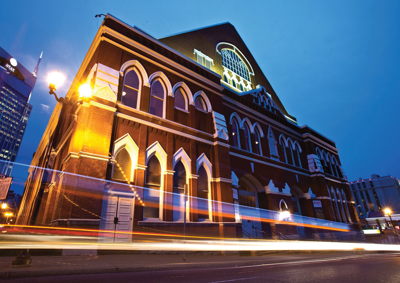
But for every Fort Negley we save, there are hundreds of other historic places that are threatened with destruction. It seems ludicrous today to think that Ryman Auditorium was once on the brink of destruction, but it certainly was. It was saved because of early efforts from people like Emmylou Harris who sounded the alarm and worked toward protecting the historic structure. Much like Ben Folds and his associates’ efforts to alert people in 2014 to the very real danger facing the historic RCA Studio A, the Ryman once came very close to seeing the wrecking ball.
My friend David Ewing, an attorney and historian, said it very well when interviewed for WKRN: “You can’t say, ‘I want to save a building’ when the wrecking ball is about to tear it down. It’s important if you love a building and you want it to be preserved, you should work with the historical commission to get it on the National Register, you should work with the development community to restore it as opposed to tear it down.”
Councilmember Ed Kindall did this very thing recently with the former Club Baron, one of the clubs on Jefferson Street — the clubs that saw the likes of Jimi Hendrix, B.B. King, Etta James, Otis Redding, Little Richard and virtually every other legendary R&B artist play on the jazz circuit during the 1950s, ’60s and ’70s. Kindall helped preserve this building so it will continue to act as a history lesson and remind us all of the challenges we face when we are ignorant of our own history.
Work toward saving the Nashville we know and love. Find out what buildings are threatened. Learn the stories they have to tell. Support the efforts to preserve them. Work with our Metro Council and our Planning Commission to take real steps to preserve important institutions before it is too late. As President Truman once said, “There is nothing new in this world, except the history that you do not know.”
Bill Freeman
Bill Freeman is the co-owner of FW Publishing, the publishing company that produces the Nashville Scene, Nfocus and the Nashville Post.



