

Shellie Marie Shartzer loves zombies, but that's not why she works at Opry Mills. In fact, she has mapped out a zombie getaway plan, should the undead attack the high-end shoe store where she works. But it does explain why, when a group of largely inexperienced filmmakers from Hendersonville asked her if she'd like to spend a month gargling guts and taking a rat's head into her mouth, she didn't say no.
"I'd much rather be a grip," Shartzer says, seated at a table outside the Opry Mills Starbucks. Tourists shuffle aimlessly past, adding an unmistakable Dawn of the Dead vibe. A guest tells her that with her glamorous looks, model's frame and stylish black-and-white ensemble, she could easily be a scream queen, or at the very least the sweetheart of a sci-fi convention. Shartzer, hilariously blunt and hyper-aware, will have none of it.
"Acting is the most boring fucking thing in the world," she says—though not loudly enough to divert the nearby strollers from their George A. Romero rounds.
By the time Shartzer finished shooting the film—called Make-out With Violence—almost everyone involved shared her level of enthusiasm. Filmed in monthlong shoots over two-and-a-half years, with another year-plus of post-production, the movie took a heavy toll on the close-knit group who made it. Friendships that dated back to childhood splintered. Couples broke up and secretly aligned. Some of the screenwriters, friends since high school or earlier, now barely speak.
The result, though, is one of the most striking features ever to originate in Nashville—a lyrical, surreal and deeply felt zombie movie that constantly subverts and rethinks the genre. When Make-out With Violence makes its Nashville public premiere at the Belcourt Sept. 10, as the kick-off event for the burgeoning music festival Next Big Nashville, its makers may face some measure of vindication after almost four years of setbacks and bad luck.
"It's incredibly well done," says Jason Moon Wilkins, co-founder of Next Big Nashville. "Quality-wise, it ranks up there with anything I've seen produced here."
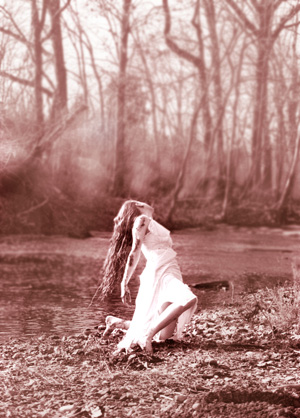
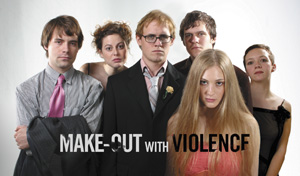
Make-out's plot somewhat resembles the 1986 cult film River's Edge: the death of a teenage girl casts a pall over her circle of friends, whose seething hormones and anxiety on the brink of adulthood escalate to ugly extremes. Here, though, the girl—named Wendy, and played by Shartzer with remarkable control—lives on as a sad, pale wraith with a yearning for flesh. Found by three brothers, Patrick (played by Eric Lehning), Carol (Cody De Vos) and Beetle (young Brett Miller, who delivers the eerily disaffected narration), she's kept prisoner in an empty house because her former friends can't bear to let go of her memory.
The movie's morbid subject matter and abrupt shifts in tone (from gore and deadpan comedy to a dreamy poignance reminiscent of Sofia Coppola's The Virgin Suicides) have polarized the few who have seen it—most notably at a private screening for the Governor's School for the Arts, where it divided its teen audience between wild enthusiasm and outright hatred. But if its disconcerting take on childhood's end strikes a chord with young viewers, that's probably because the anguished coming-of-age taking place onscreen was happening offscreen as well.
Among their peers at Hendersonville High, Chris Doyle and Andy Duensing (who credit themselves as the Deagol Brothers) were regarded with something like awe, according to De Vos. "You've got to understand, by junior, senior year, these were people who already knew about Egon Schiele, [Andrei] Tarkovsky and Terrence Malick," says De Vos, a Scene contributor. When they called De Vos years later with an idea to make their own zombie epic, they were persuasive enough to convince him to return with them to Nashville and live with his parents while he, Lehning and the directors all hammered out the shooting script. Suffused with the group's unresolved feelings about the death of a girl they'd all known in high school, the script evolved from a straightforward splatter movie into something less predictable and more personal.
"I wanted something like magic realism—a realistic treatment of the supernatural," says Duensing, whose soft-spoken, reticent speech patterns and somewhat shy walk are echoed in De Vos' performance. But as the movie mutated, what was supposed to be a monthlong shoot turned into three summers of work, with Chris' yeoman younger brother Kevin as one of the few constants. Cinematographers came and went (four are credited); the leads were cast and recast at the 11th hour—including Shartzer, perhaps the only potential actress in Nashville with a freezer stash of pig eyeballs and fake blood.
As the years ground on, relationships unraveled behind the scenes. Lehning and Shartzer began dating in secret—something that caused enormous strain on the set. "I knew it was wrong," says Lehning, riding through late-afternoon traffic on Ellington Parkway in the back of Duensing's SUV. Then, just before filming a pivotal (and grueling) underwater scene together, Lehning broke up with her and wouldn't speak to her.
"I love Eric, and I kind of hope he catches on fire," says Shartzer, seated next to Lehning at Opry Mills. "I'm glad I kneed him in the balls the first time I met him."
"There were a fair number of...autobiographical elements," says Leah High, a graduate student at Vanderbilt who plays a girl Carol worships from afar. The low point was doing multiple takes of kissing De Vos after downing a catered meal with Papa John's garlic sauce. In between takes, struck with nausea, she'd hurl into a nearby lake, then turn back to her co-star and resume their clinch.
It would be great to report that the years since have gone easier. But they haven't. Last April, excited by an early cut, the Nashville Film Festival announced the film as an official selection and planned an event around it. Not long before the festival, lacking resources to make adjustments and a DigiBeta master, the directors withdrew the film. An award from the Atlanta Film Festival, where they say they planned to show the film as a work-in-progress, ironically spoiled their chance of playing yet another festival.
Two weeks ago, in fear that their Nashville premiere wasn't going to get covered, the filmmakers sent agitated email dispatches to several media organizations (including the Scene) challenging their commitment to local filmmaking. Their relations with the Belcourt and the Nashville Film Festival are also said to be strained. "If their movie weren't so good," one observer who's seen the emails says, "they'd be dead."
But it is that good. Wilkins says word of mouth on Make-out With Violence has been building, partly because of a well-tended MySpace page, partly because its makers are well connected to the local music scene. (Eric's brother Jordan Lehning, who composed an excellent atmospheric score modeled on Brian Eno's ambient soundscapes, is a member of the group Eureka Gold; both are the sons of veteran Music Row producer Kyle Lehning, whose Green Hills home served as their editing "compound.") The Lehning brothers will perform after the second Wednesday screening for the last time as their band, the Non-Commissioned Officers. And then, if all goes well, the triumph of the movie's premiere will heal whatever wounds remain from its making.
"I was relieved [when I saw the movie]," Shellie Marie Shartzer says, with far more animation than the souls wandering past at Opry Mills. "Thank God I didn't waste all those years. If it sucked, I would've set Eric on fire."



Post a comment as anonymous
Report
Watch this discussion.
(0) comments
Welcome to the discussion.
Log In
Welcome to the discussion.
Keep it clean. Please avoid obscene, vulgar, lewd, racist or otherwise abusive language. Comments featuring hate speech or threatening or violent content will not be tolerated.
PLEASE TURN OFF YOUR CAPS LOCK.
Be truthful. Don't knowingly lie or mislead.
Be proactive. Use the “report” link on any comment that violates our comment policy.
Share with us. We'd love to hear your feedback.