

There he was, not many months' distance from civic sainthood in the aftermath of the epic May flood. Rightly or wrongly, even those who'd heretofore been critics were regarding Karl Dean as virtual mayoral royalty. His administration's reaction to a catastrophe that killed at least 10 people in Nashville and created some $2 billion in property damage — and that would take years from which to fully recover — earned him heaping praise and a moratorium on pot shots for a good long spell.
Before that, he'd won overwhelming legislative, if not public, support for the most expensive public project in Tennessee's history — the $585 million Music City Center. That debate had been well under way long before Dean sauntered into the courthouse in his oversized Land's End loafers. But at a time when new big box convention centers were no longer slam-dunks for major metros, he and his administration would have faced a drubbing if they couldn't pull it off. In the end, when the vote arrived, he and a phalanx of monied business interests managed to herd members of a relatively untamed legislative body into the right chute. Praise be to the man who'd always struck opponents (and some supporters) as the Fred Flintstone of Nashville politics.
And then Darrell Waltrip and a coterie of carnies showed up — and they lapped the Mustang-driving Dean like he was standing still. He's still choking on the dust.
What the hell happened?
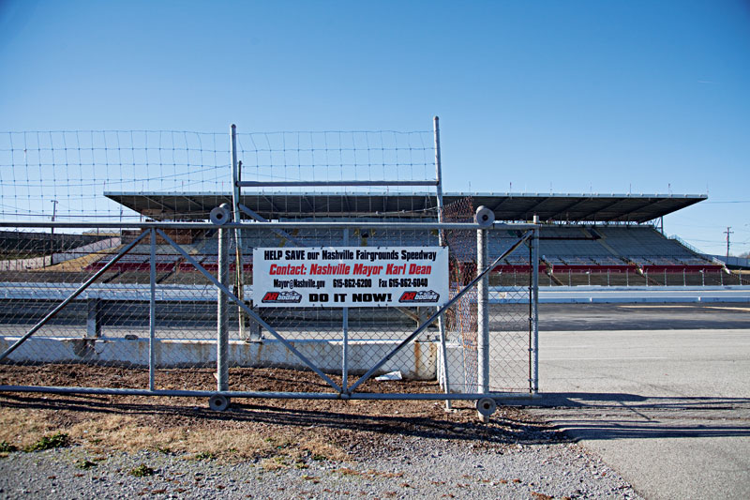
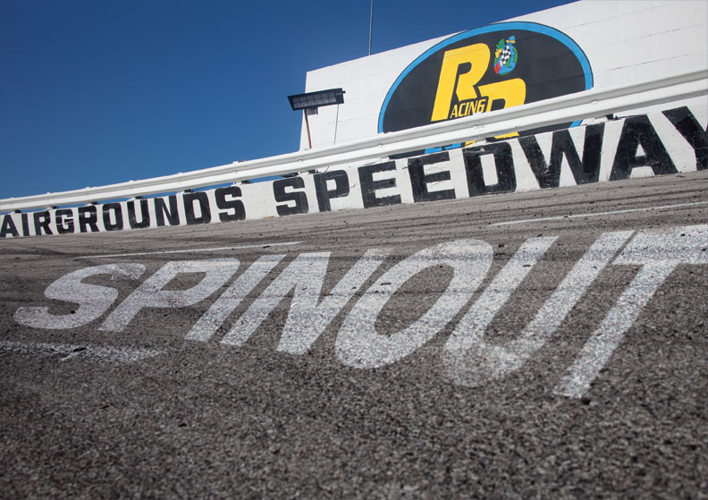
It is time to say what has been becoming apparent for a while now, and I have both the luxury and the shame of doing it from a safe distance, having recently moved away after 21 years in Nashville: Karl Dean's administration is an undisciplined, disorganized machine lacking in managerial sophistication, which is not to say it lacks talented, capable people. This is perfectly illustrated by the fiasco that followed Dean's proposal to redevelop the 117-acre Nashville fairgrounds property in favor of a corporate office park — or, well, something.
I take no joy in concluding so. After all, I once led the editorial team of this newspaper and was responsible, to the dramatic disappointment of many past and current Dean critics, for endorsing the mayor. What's more, my husband worked for the Dean administration and enjoys good relationships there to this day. But while I have never once attended the Tennessee State Fair and feel no personal loss for having missed seeing the Snake Lady, shifty characters running heavy equipment, or sanctioned animal exploitation — and, by the way, I wouldn't know the Busch Series from Busch Gardens — even I can see clear as day that, on this, it was amateur hour at the mayor's office. The breadth and depth of miscalculations and incompetence on their part in dealing with this hot-button cultural issue are staggering.
Where and how did the wheels fall off?
To begin with, consider the first-term context — these two so-called achievements that have marked Dean's first three-and-a-half years in office. We'll grant him, right off the bat, props for acquitting himself just fine in the flood's aftermath, which is significant. And it was a score to close a deal for a privately funded convention center hotel. But despite the vocal opposition from a legislative minority, approval for convention center funding was never really in doubt (though public support for it was). And it wasn't so much an accomplishment of the Dean administration as of a huge coalition who'd been working for years — while Dean was still issuing legal opinions for then-Mayor Bill Purcell — to fund the Music City Center.
The Nashville Area Chamber of Commerce had vetted every single member of the current Metro Council on the issue during the 2007 election. It wasn't a mystery to anybody but the tragically uninformed, the desperately delusional or the hopelessly optimistic how this body was going to come down.
"It was like a train sitting on a very steep grade pointing downhill," says one insider. "They reached in and pulled off the brake and — guess what? — it rolled downhill. Of course it did. The only questions ever about the convention center were would the recession kill it, and were they getting 25 or 30-odd votes. It was never in doubt. It was done."
Which is an important point when considering Dean's handling of the fairgrounds. Because it's not as though the mayor's office had moved mountains to achieve the MCC victory. In other words, perhaps the embarrassing political fumbling that took place on the fairgrounds issue isn't the exception for this administration, but the rule.
While there may be few willing to offer such criticisms on the record, the sentiment is rampant among those who work with, in and around Metro government. Worse, it's no longer coming just from Dean's opponents, but even from many of his early supporters and defenders.
"If you are going to talk about a project this large, the first thing you do is consider the stakeholders," one longtime Dean supporter says. "If you were putting together a plan to move this idea from incubation to fruition, you would talk to these people first. You wouldn't have them read about it in the newspaper or hear about it secondhand. But [Dean's administration] had just come off a huge and important win with the convention center and apparently didn't think there were many people who cared about this. Add in a management style that's very silo-oriented, and it was a perfect storm."
As much as the progressive and business classes have backed Dean and wanted to view him as a city patrician with the same sort of heft and gravitas as his two predecessors, Bill Purcell and Phil Bredesen, there is just no escaping that he's no Purcell or Bredesen — and that he doesn't hold tight reins on the office. Instead, staff members who often don't talk even to one another, much less to important constituencies, work their various issues without much internal input, collaboration or support for each other.
According to sources familiar with the workings of the mayor's office, there isn't even a true standing staff meeting — which is staggering, considering everything that a Metro mayor's office is charged with doing. (One current staffer who didn't want to be identified says that's "sort of" true, but that senior staff do meet with the mayor weekly.) Meanwhile, Dean — smart, friendly and even by the reckoning of some of his most ardent detractors, someone who seems to care deeply about the city and progressive issues — often leaves people with the impression that he's not running the show, and that he shows no passion about the things he has the unique ability to accomplish.
"You can say what you want about Bill Purcell," says one Metro Council member who didn't want to be named, "but when they arrived in the office in the morning, they had a plan. This bunch does not have a plan."
That has been evident in many smaller ways throughout Dean's term — the wishy-washy response to the Belmont controversy, or the failure to overcome tone-deafness long enough to foresee that hiring former Metro Parks Director Jim Fyke, however beloved, for an undefined $64,000-a-year part-time job might strike people the wrong way amid a 10 percent unemployment environment.
But there was generally something to deflect attention from it, something bigger to watch — an impending budget, the Music City Center vote, a devastating flood, the state of Metro schools. But when Dean unleashed redevelopment plans for the fairgrounds, the exposed cracks were an inch thick.
"So the proponents of demolition kept repeating these proposals for a luxury quasi-park/corporate office space, but there hadn't been any commitments from developers, much less financing," says Metro Councilman Mike Jameson, who has frequently clashed with the mayor. "And I'm sitting there talking to these people and saying, 'Don't make my mistake.' I shed blood and lost dear friends trying to get things that never materialized. We rezoned Lower Broadway to get a Westin hotel — and yeah, we got a historic overlay out of the compromise — but today there's no Westin. Why? Because I moved ahead without a guarantee that the deal would ever materialize.
"So before you sign off on these pledges and bring on the bulldozers, make sure something's actually coming. At the fairgrounds, we didn't even have the base zoning to get that in the first place. So c'mon guys, at least get that in order. It belied and revealed all of the weaknesses you would have predicted."
Redevelopment supporters suggest that Jameson and those who share his point of view were simply unaware of how these things work. But that's not to say that the Dean administration handled it well.
"It's not realistic to think that a company is going to want to go there until the site is ready," says Alexia Poe, who recently left her job as director of the Mayor's Office of Economic and Community Development to become Gov. Bill Haslam's communications director. "There was some education that needed to be done about how economic development works, and that was actually a bit of a surprise, so we may have underestimated how much education there was to do."
One Dean insider — a Dean supporter, by the way — allows how the administration was clearly "outhustled" and underestimated the range and influence of opponents. But it was a lot worse than that.
There was no strong coalition of support for what Dean wanted to do, no clear or specific plan for what he envisioned. There were, however, plenty of folks united only by their use of the facility — drivers, racing fans, fair boosters, Christmas Village organizers, herb ladies, blind cyclers who use the track, vendors, comic-book nerds and on and on. Unlike Dean, they could see — and communicate — very clearly what to do with the fairgrounds.
Dean staffers say that the mayor was ready to dispense with the whole issue in November, when it was clear he wasn't getting anywhere with the Metro Council, and that the office did not collaborate with Metro Council member Megan Barry, who filed legislation to bulldoze the racetrack. "It may have seemed coordinated, but it wasn't," one says.
Nevertheless, that legislation followed from what the mayor had started in the first place. Before he knew it, Dean's gauzy idea had inspired the hiring of a political organizer, and the likes of Darrell Waltrip and Sterling Marlin were helping to amass opponents to his doomed damn-the-fairgrounds vision. Three thousand people showed up to the Metro Courthouse the night of the public hearing — by all accounts, more than on any prior issue before the local legislative body — and while an official tally would have been all but impossible, red-shirted protesters visibly outnumbered their yellow-clad foes. Even The New York Times covered the story, casting the debate as "a custody battle over a neighborhood that could just as well have been over the city itself."
Dean nemesis Michael Craddock, the Metro Council member who has filed to run against the former law director in August, describes the fairgrounds debacle this way: "It's almost as though Dean had a fifth-grade class in his office making policy for him. It was just insane."
Though mayoral insiders have speculated that the kind of opposition that surfaced to oppose the fairgrounds redevelopment back in January was "procured" or "AstroTurf" — in other words, people were asked or enticed to show up — Craddock and many others think otherwise, that the average Nashvillian cares deeply about the property.
"I think there are a lot of folks in Davidson County, certainly folks who are kind of older that are longer-term residents, and they remember Fair Park and the swimming pool out there, but they also remember things like Opryland and the theme park, and I think they see Nashville changing in a lot of good ways, but I think they also see it changing in a lot of ways that don't respect our culture and the heritage and history," says Darden Copeland, the political/land-use organizer hired by the opposition group Save My Fairgrounds, who moved to Nashville from San Francisco two years ago. "The highest and best use for that property for many people in Nashville means keeping things a little bit country and keeping things culturally how they have been and maybe upgrading the facility instead of paving over it. I think people just think enough is enough."
[page]
OK, so the Dean team didn't consider that there were people who were going to balk at his idea, which was fatal enough. But he also badly lost control of the messaging. The old Clinton mantra of "It's the economy, stupid" carried the day during the Music City Center tussle, when the recession was near its lowest ebb. That message wasn't nearly as compelling, however, in the fairgrounds fight.
While Dean's team was making a fuzzy pitch about best-value land use — a kind of anti-Field of Dreams "Tear it down, and they will come," and about as inspiring as that sounds — their opponents seized upon a potent mixture of nostalgia and class resentment. The sentiment that carried could be found in a Nov. 1, 2009, City Paper cover story penned by longtime racing scribe Larry Woody, shortly after the mayor introduced the fairgrounds closure. It was titled, "Did elitism doom the fairgrounds?"
In it, Woody wrote, "Folks who make these types of Metro-centric decisions aren't interested in stock car racing, fairs or flea markets. And they don't know Coo Coo Marlin from a corn dog." That line of discourse never really ceased, and Dean's opponents are still hanging onto it. Although the Times reporter who covered the public hearing suggested there were more people protesting the racetrack's possible loss than had attended some recent races, they paint racing as a low-cost tradition for working folk.
"You spend more going to the movies with your family than you do taking them to a race on a Saturday night," says Copeland, the Save My Fairgrounds organizer.
Yet was Dean outflanked by a citizens' brigade, or outfoxed by a well-funded, better organized PR campaign? While he won't release the names or donation amounts of the group's funders — though he has acknowledged the Waltrips and Marlins — Copeland insists that speculation about high fees for his work and tens of thousands spent on the opposition are grossly overstated.
"I think everybody would laugh if they knew what the finances were," he says. "We were scraping together this thing selling T-shirts and taking donations, passing the hat at 5 and 10 and 25 bucks a pop to cobble enough together to get this online, to get a website together, to generate calls. This is a complete shoestring. It was just dedicated volunteers and good social media and grassroots stuff. Everybody says it was AstroTurf. It wasn't that at all."
In the end, it didn't matter that many of Dean's supporters were working families who lived near the racetrack, where concerns about noise and the declining facility had been brushed off for many years. Nor did it matter that the racetrack proponents included well-heeled supporters such as music-biz heavyweight Mike Curb, George Gruhn, and influential racing superstars (some of whom don't even live in Davidson County). With so much class/culture rhetoric in the air, the Dean machine either didn't try — or simply failed miserably — to fire back with a populist message of its own, which could have been persuasive.
"The travesty of this whole thing is it became a working man/working woman's issue," says one Metro observer who notes that the fairgrounds employs only 17 full-time employees. "If you use that site for something real, then how many jobs do you have ending up there? A lot — hundreds, maybe even a couple of thousand. If anything, redevelopment is a pro-working man's concept. How it tilted in the other direction is beyond me."
In an environment of 10 percent unemployment, Dean would have done well to argue more vigorously, and in a more focused way, that the fairgrounds issue was about jobs. He needed to explain it differently if he had a prayer of overcoming failure to run the traps in the first place about who would support the proposal and who wouldn't.
After all, argues Fair Board chairman and Dean political ally James Weaver, the mayor was right to push redevelopment.
"The administration's focus on preparing urban versions of TVA's highly successful 'mega sites' — large development sites that are 'ready' for corporate relocations and expansions before the projects come knocking on our door — is exactly the right approach to a huge problem we have in Nashville," Weaver says. "For way too long we've watched great projects go to other counties because we can't offer big campus-type sites that are ready to go in terms of development potential. Saying to a big company looking to move or expand here that we will get this great site ready for you in 12 to 14 months — if we can change the zoning and community plan, have 15 neighborhood meetings, get NES and Public Works and the Water, Planning and stormwater folks to all agree, have a Planning Commission vote or two and after three readings at council — is not exactly a prescription for success."
The competition, he says, just "laughs" at Nashville. "At some point, we as a city have to belly up to the bar or get out of the game for these type projects," he says. "Seems to me that the mayor is saying that walking away from being able to effectively compete for these projects is dumb. He's of course right."
Now, only the short track's short-term future is in doubt, as the fair, flea market and expo center will all keep their home for two years on the current site pending the release of a master plan being commissioned by the Metro Fair Board. The mayor's murky vision for the property is all but dead for a good long while, given over to a planning process that, ironically, may very well conclude that the current fairgrounds site is the wrong place for a state fair — something that the fair board pretty much determined in 2008.
"[Back then], all the fair board said was two really simple things. One: If you look at the land use patterns around the fairgrounds, you conclude that this probably shouldn't be a fairgrounds," says Weaver, who is about to rotate off the board. "Two: A real state fair should be drawing hundreds of thousands of people to Nashville from outside the city. We were all about, how do we take this thing we've been entrusted with and make it something we can all be proud of ... and make it something that is Nashville. We don't have that now. We have a marginal county fair."
Metro Councilman Jason Holleman, who voted against the mayor's redevelopment proposal, predicts that the master planning process will lead to a keep-it-but-put-it-somewhere-else resolution. "My guess is that what comes out of the master plan is that there's a better plan for that piece of property than what we have now," he says. "And if you take that and you come up with a long-term transition plan that involves finding a place in Davidson County for there to be a state fair, I think that's important. That's probably the most important thing to me."
And to Weaver too, who says he's been baffled at times about how the fairgrounds issue has played out.
"I've never understood this history argument" about saving the fairgrounds on the current site, he says. "These are 1950-era block buildings. This is not the Ryman. Hank Williams has not thrown up in any of these buildings. If he has, we'll find that block and we'll save it. Now there is clearly history around the track, I freely admit. And to people who are racing aficionados, it's damn near sacred, and I'm sympathetic to that."
In the meantime, Dean's office has been out recruiting a couple of former Bredesen aides to join the administration, which may amount to some tacit acknowledgement of his office's weaknesses.
"I know it's enormously hard. And it's not a great deal of pleasure Monday morning quarterbacking a failure, because I know myself that I couldn't have done any better," says one Metro Council member. "But I know there are people who can. Purcell tapped them. Bredesen tapped them, and there's a lot of speculation as to what it all means that Dean is now tapping all of these old-timers who are going to make the mayor's office look like a scene from Cocoon in the next few months. It's because he thinks he needs this experience that he hasn't been getting before."
It couldn't come a moment too soon. As I write, Dean is in Japan, of all places — commingling an economic development trip with a spring break family getaway. Think about that for a minute. The country first suffers an earthquake, then a tsunami that causes more damage than the earthquake. So the mayor's response is to call and ask whether he should postpone his economic development trip? "The mayor conferred with the consul general of Japan in Nashville before proceeding with the trip," a mayoral press release Friday read. "Consul General Hiroshi Sato ensured Mayor Dean he would not be in the way."
So Dean packed up his iPod and his rep ties and hopped aboard a flight to Asia, a move any freshman political science student would find misguided.
"Karl Dean, our little ol' mayor, is over there running around the Japanese countryside!" Craddock practically exclaims. "I just don't understand that to save my life. I just told my wife, I don't know who advises the mayor, but surely they'd have told him, 'Postpone your trip, brother. This is no time to go to Japan.' There is a pattern to this kind of behavior."
That may be the first time I've ever agreed with Michael Craddock.
Email editor@nashvillescene.com.



