


Casa Azafran
This week, the Nashville Bar Association held a seminar with a wider potential audience than the typical Continuing Legal Education event: “What Immigration Attorneys Are Telling Their Terrified Clients.”
As if there weren’t enough justification for anxiety among immigrants — those with documentation or without — President Donald Trump has recently provided fuel for more. On Tuesday, the administration issued a set of orders making it clear that, although individuals convicted of crimes will be the highest priority, every undocumented immigrant is under immediate threat of deportation. As USA Today reported, “The memos instruct all agents, including Customs and Border Protection (CBP) and Immigration and Customs Enforcement (ICE) to identify, capture and quickly deport every undocumented immigrant they encounter.”
Throughout the 2016 presidential campaign and immediately afterward, uncertainty about what policy shifts might be coming was palpable among immigrants and their advocates. But what’s come since is more daunting.
“It’s a bit of uncertainty, but it’s also certainty in that everybody is at risk,” says Stephanie Teatro, executive director of the Tennessee Immigrant and Refugee Rights Coalition. “Before, I think we’ve always thought this was important, and we know very well the lasting impact that deportations can have on whole families and whole communities. That of course is not new. But it’s that anybody at any moment could be picked up by ICE.”
The bar association event had promised to include “know your rights information, how to identify the need for an immigration lawyer and how to assist immigrants you know with safety planning — because the best defense is a good offense.” For years that offense played out in Nashville law offices, where immigration attorneys would help undocumented immigrants get their affairs in order, minimizing the chaos that would result if they were arrested or deported. But in recent weeks, corresponding with news of ICE raids in major cities around the country, local immigration attorneys say they’ve been inundated with immigrants seeking assistance and looking to formulate contingency plans for them and their families.
Much of that work has been happening through organizations like Conexión Américas and the TIRRC, which have been arranging workshops and connecting immigrants with attorneys and other resources to make sure their finances and, in many cases, their children are taken care of if they are kicked out of the country.
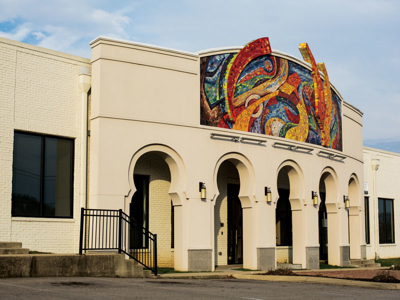
One morning this week, in the TIRRC offices at Casa Azafrán — the thriving South Nashville immigrant community center — a table is covered in documents, social security cards, passports and baptism certificates. It’s evidence of the heartrending work to which Marina Ceron has been devoting her days.
Ceron came to the States from Mexico in 1999 at age 19 and started working to support her family back home. She has lived in Nashville for almost half of her life. But Ceron and her husband — with whom she has four children, ages 15, 12, 5 and 3 — are both undocumented, so they are preparing for the possibility that they could be arrested and ultimately deported, leaving their American-born children here without them.
“I’ve been having conversations with my husband and our older children because the little ones don’t understand, explaining to them our current situation and things that could happen,” Ceron says, speaking in Spanish through a translator.
She has struggled to find the words, she says, to explain to her two older children why she lacks the papers and rights they have had since birth, and she’s told them the story of how she came here, a story she describes as a version of the American Dream.
“They have been getting very, very nervous,” she says, “and, for example, when [I am] driving, they are aware if there is a cop behind them, like, ‘Mommy, Mommy, there is a police officer behind you, is everything OK?’ ”
Mayor Megan Barry, it must be noted, has said repeatedly that Nashville’s police officers will not be acting as immigration enforcement agents. But for someone in Ceron’s position, any law enforcement officer could put her a step closer to deportation.
Ceron has made the sobering decision facing many undocumented immigrant parents in recent months: Who will watch over her children if she is taken from them? In Ceron’s case, her uncle has been given power of attorney and would be the children’s guardian if the worst happens. But while she tears up at the thought, Ceron is not resigned to that scenario, even if she does find herself being asked to show her papers.
“I’m going to fight,” she says. “I’m not going to give in so easily. I have rights, I’ve been living here for a long time. I’ve paid taxes.”
She’s not just been getting herself prepared, either. Ceron has been volunteering with the TIRRC, helping with their efforts to support the immigrant community and arm them with legal resources.
“It’s time to get ready,” she says, addressing a final comment to people who are in a similar situation. “It took me two days nonstop to just gather the documentation, and I’m not even done. I’m not ready yet, and I still have to do a lot of things. It’s time to get ready.”



