


Ryon Westover
In the best of times, it’s a challenge for the majority of musicians to make a living. Even in Music City, where music is a cornerstone of our economy and our cultural heritage, many musicians rely on a patchwork quilt of income sources. Those might include touring, playing on records, running sound at a venue — and often, another job or a parallel career. That other work needs to be flexible, which frequently means working in bars or restaurants. Since slowing the spread of COVID-19 means people can’t safely gather in public spaces, both the entertainment economy and the service economy have practically ground to a halt, and many music business folks have seen all of their income streams dry up at once.
Some musicians are playing livestream shows from home, with tips collected via online-pay apps — which are often divided among paying their bills, paying their bands and donating to relief funds. Venues have launched crowdfunding campaigns to cover their expenses and help support their employees. Organizations like MusiCares, a health-care-focused nonprofit started by the Recording Academy, have launched relief funds for music industry workers. MusiCares’ COVID-19 relief fund, established March 17, recently topped $10 million in donations. Despite Gov. Bill Lee’s initial hesitation about following the guidance of the CARES Act, he relented on April 7, and self-employed individuals (including musicians who work on a contract basis) are now able to file for unemployment benefits via the Tennessee Department of Labor and Workforce Development. This new support system, patchwork as it is, is encouraging. But the wait for the crisis to end is anything but comfortable.
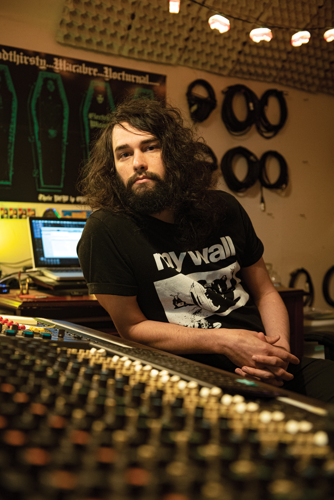
“I see all these GoFundMes or these charities that are asking for donations, and I want to help these people,” Ryon Westover tells the Scene. “But at the same time, I’m one of these people.”
Westover, who records and plays with the heavy-psych band ElonMusk, made his living working the door and as a barback at East Nashville’s 3 Crow Bar, and tending bar at nearby venue The 5 Spot. His girlfriend Kalaway Voss worked at High Garden Tea. The deadly March 3 tornadoes destroyed High Garden, badly damaged 3 Crow and cut power to The 5 Spot, leaving both out of work. On March 23, Gov. Lee ordered all nonessential businesses closed. Westover and Voss are getting by for now, thanks to help from their families, deferred bills and aid from local nonprofit The Heartstrings Foundation. Still, uncertainty about when and how the pandemic will end leaves Westover concerned.
“I don’t know what it’s going to be like once we open back up and bands are playing shows again — if people are still going to be kind of wary … or if everyone is going to be straight back into it,” he says. “At the same time, I’m in a room with a whole ton of people, with the potential of getting sick or spreading things to other people.”

Larissa Maestro
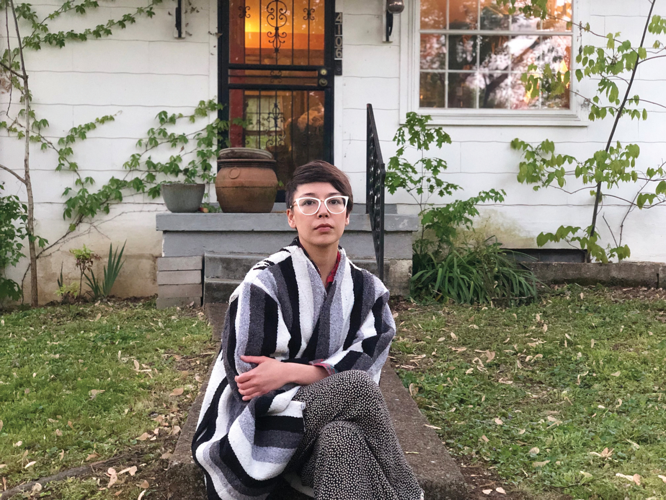
Larissa Maestro, a highly trained cellist and vocalist, has spent more than a decade establishing herself in Nashville’s music community and economy. Though she’s worked in restaurants before, until recently she had a schedule filled with music work. That included recording at studio sessions, writing string arrangements, performing with beloved ’90s tribute group My So-Called Band and a kaleidoscopic array of freelance performance gigs — most of which is on hold for now.
Maestro has received aid from MusiCares that’s helped with her mortgage, and her partner and bandmate Dan Sommers has a full-time job that he can do from home. She’s also attempted every day to file for unemployment, but has been frustrated by an overloaded system that’s been hastily retrofitted to serve self-employed workers. She points out how this has exposed serious flaws in the gig economy, which has always been a way of life for musicians, but has been an increasingly large part of the global economy in recent years.
“Even if we’re successful in our field — working really hard, making decent money and own our own home, all those things — we still don’t have a safety net,” Maestro says. “It’s ridiculous that self-employed people haven’t been able to apply for unemployment in the past, and the fact that they haven’t been able to means that the whole system is set up for them to not be able to access it. And now we need to access it, and we can’t.”



