


Karen Seapker
After I put in my spring seed order at my regular supplier a few weeks ago, I was surprised by the notification I received. Due to an unprecedented demand, the Vermont company would not be shipping orders for 14-20 days — far longer than it usually takes to receive my little packets of seeds each year. Indeed, the prevalence of backyard gardeners during the COVID-19 pandemic is being compared to the victory gardens that sprang up after both world wars. Planting a garden can give us a sense of control, order and agency when the future appears uncertain.
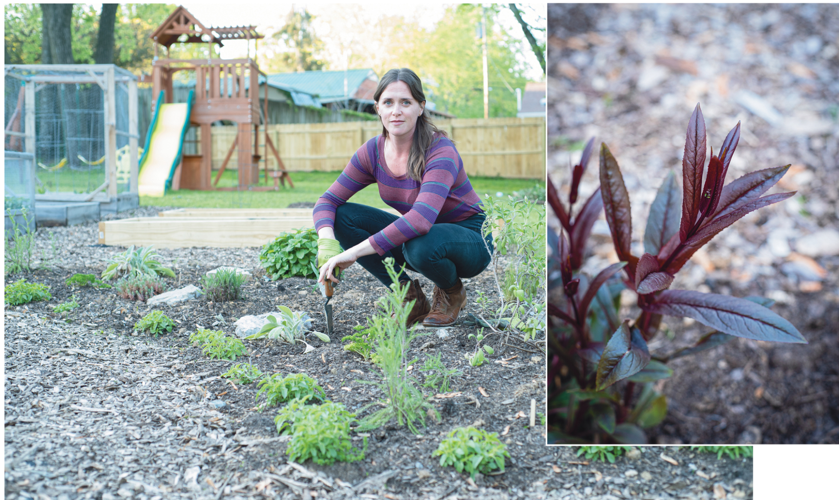
A circular garden structure encourages contemplation, and that’s the shape chosen by painter Karen Seapker. She and her family grow strawberries, vegetables, mammoth sunflowers and zinnias in their big, sun-filled backyard.
In February, I helped Seapker start seedlings that she would grow at Zeitgeist Gallery during her current exhibition Circuities, with the goal of giving them to gallerygoers at a closing reception. Due to the pandemic, the gallery closed shortly after the exhibition began, so the artist took her seedlings home. The tomatoes, kale, coneflowers and more have thrived under Seapker’s grow lights, and she’s now sharing them with friends and neighbors to plant at home. Even though the process didn’t work out the way Seapker planned, it still reflects some of the themes of Circuities — of groundedness and caring for others in an inconsistent world.
Seapker’s project got me thinking: What’s the relationship between art making and gardening? Both are generative processes that present problems to solve. Both bring many elements into play. Both have been making me feel hopeful during these dark times. And so I asked Seapker and other artists about their gardens.
“I’m drawn to the garden as a space that surprises me with incredible generosity, and provides endless paths for learning and experimentation,” says Seapker. “We began this garden only last year, and this year we have expanded it a little more. I feel like I’ve only scratched the surface, really, but feel magnetically drawn to it for some reasons that I can easily identify and also some that I don’t even understand. It is not lost on me that when working in the garden, I am quite literally brought to my knees and connected to the earth. Beyond the physical pleasures, I also always feel better when I have things that I am working on that are in progress, populating my brain, which can be painting ideas, but gardening as well.”
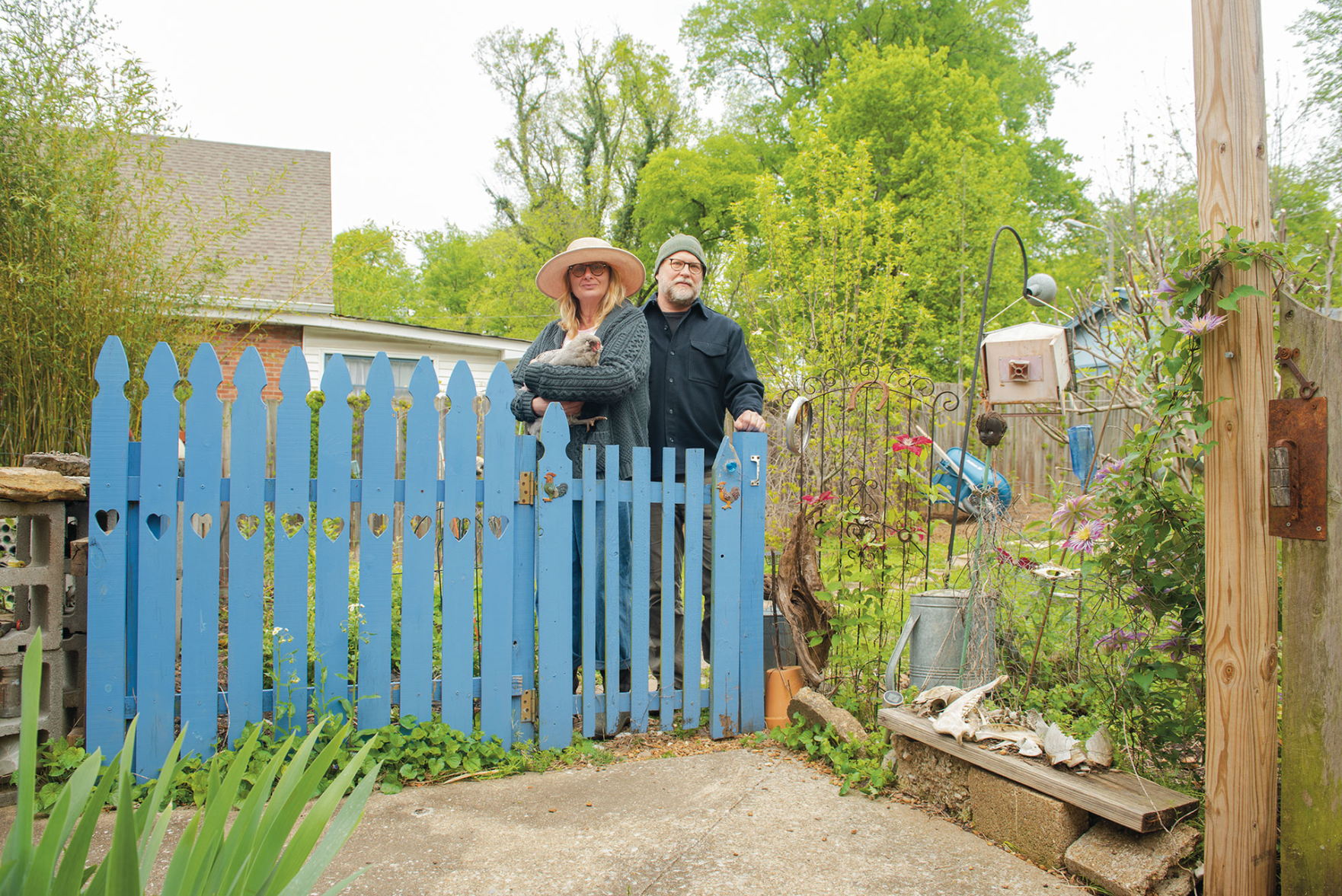
Jennifer and Brady Haston
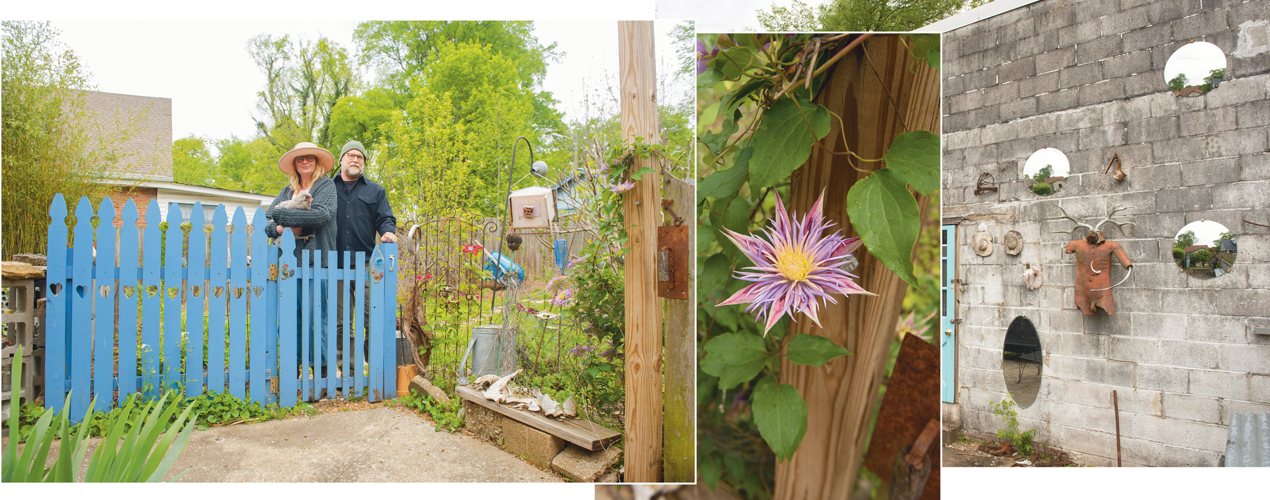
Husband and wife Brady and Jennifer Haston are visual artists who find commonalities in their studio and gardening practices. The couple’s backyard garden extends to their stand-alone art studio. When fully in bloom, it’s full of fruit trees and shrubs, garden beds where they grow vegetables and pollinator-attracting flowers, potted bonsai trees, and a lily-pad-filled pond — not to mention their small flock of hens and assortment of cats. The front yard is similarly packed with vegetation, another small pond and a sculpted hedge. The Hastons invite the weird into their space, like odd concrete statues and disembodied doll heads that are fixed on poles.
“The garden is a way for us to decompress,” says Jennifer. “For me, there is no separation between creative processes. The garden is a constantly developing, integrated creative space. The ponds and the hedge that’s cut into wave shapes give the garden sculptural forms. We have turned a blank privacy fence into a canvas for the muscadine. When the doors to the studio are open, the garden and the studio become one space. Brady and I can work together and separately with room to breathe. Brady has been working on bonsai for over 20 years. His patience for bonsai is similar to his studio practice. I find a similar relationship to time when comparing the gardening to quilting. We are constantly collecting objects like mirrors, bones and fossils that become elements that add to the garden’s visual experience. The arrangement of these elements also relates to how we approach art.”
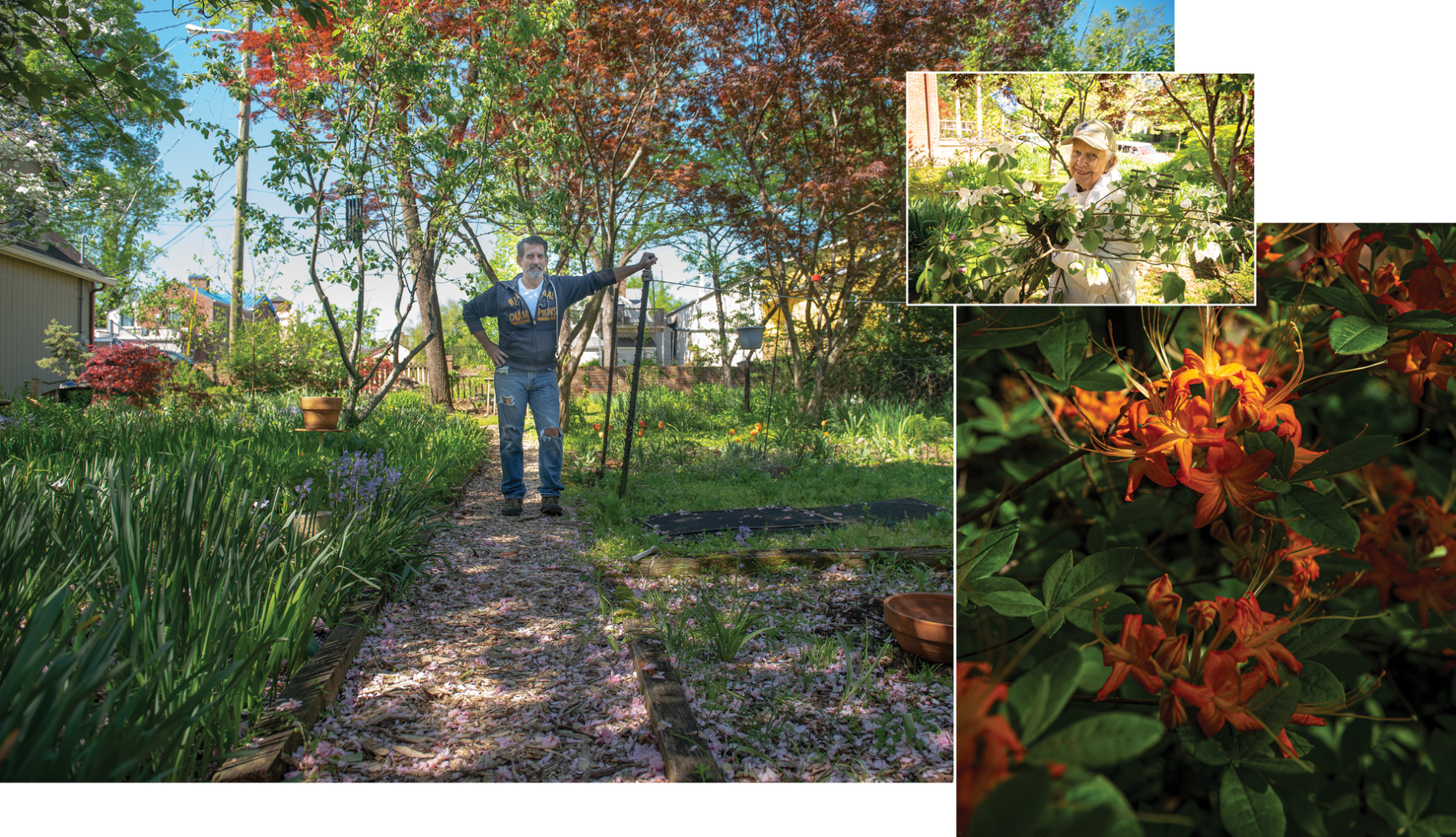
Garris Wimmer and Berdelle Campbell
Theater actor Garris Wimmer has been a mainstay in the Nashville theater community for 40 years. Wimmer is the caretaker of a Germantown garden that was started by Berdelle Campbell and her husband Ernest decades ago. At a quarter-acre, the garden is protected by The Land Trust for Tennessee, and Wimmer manages it from the carriage house on Campbell’s property. Wimmer calls it a “wild garden” — Campbell instructs him never to plant in rows. Jonquils, tulips, azaleas and more are now blooming in the space.
“With the virus and with the tornado, and not having any way to work, I’m out there four, five hours a day,” says Wimmer. “It literally is keeping me sane. There’s tons of weeding to do, and the whole thing is exploding right now. It’s beautiful. It kind of reminds me that the problems we are all looking at — that plants don’t care. The world is bigger. You have to pull back and take a broader view, and for some reason, the garden gives me that bigger view. You’re seeing the cycle of life. It’s been really a good thing.”

Jo-Jo Jackson
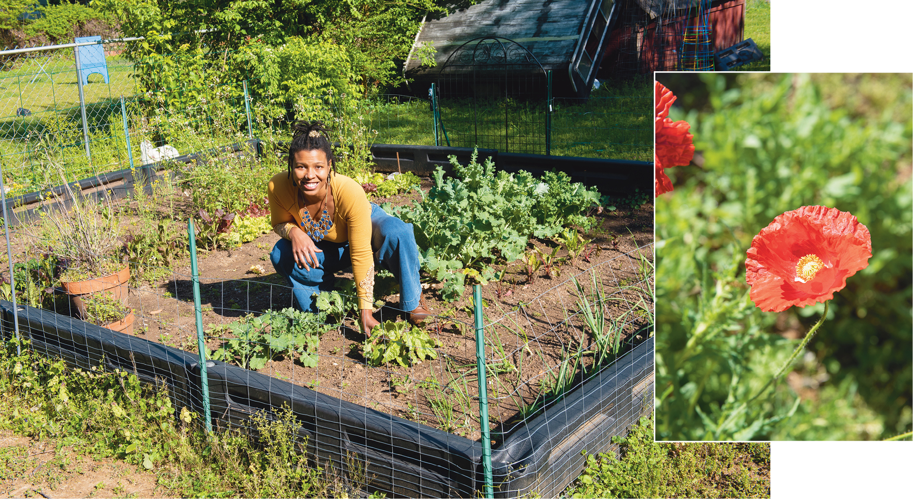
Bassist Jo-Jo Jackson started gardening with her mother in her childhood backyard in Queens, N.Y., and the habit has traveled with her around the country. Now in Nashville, she has a 10-by-15-foot garden plot where she grows garlic, onions, Swiss chard, arugula and more. Also a yoga instructor and Ayurvedic counselor, Jackson sees backyard gardening as an opportunity for connection.
“If we’re able to cultivate a healthy relationship with our ecosystem and our environment, we can also cultivate a healing within ourselves,” says Jackson. “This comes from being with the land, being in tune with the seasons and living in accordance with nature. I feel like there’s a shift in the way that we coexist with nature [that’s] opposed to thinking that nature is a resource to exploit. … We can approach our environment with a sense of stewardship that can start in our backyards. There’s so much we can learn from gardening, not only to be sustainable and self-reliant, but to learn about our highest selves, our true natures.”



