


The GunRunner Hotel
Thanks to the combined influence of powerhouse designers Alabama Chanin and Billy Reid, Florence, Ala., has become an unlikely hub of American fashion. The quaint Southern town is just a little more than two hours south of Nashville, but if you’re looking for a quick, laid-back getaway that has a few of the perks of a fashion-industry destination, this is your spot. Even with the high temperatures and social distance ordinances that marked our summer 2020 trip, Florence was an easy, breezy time.
Stay
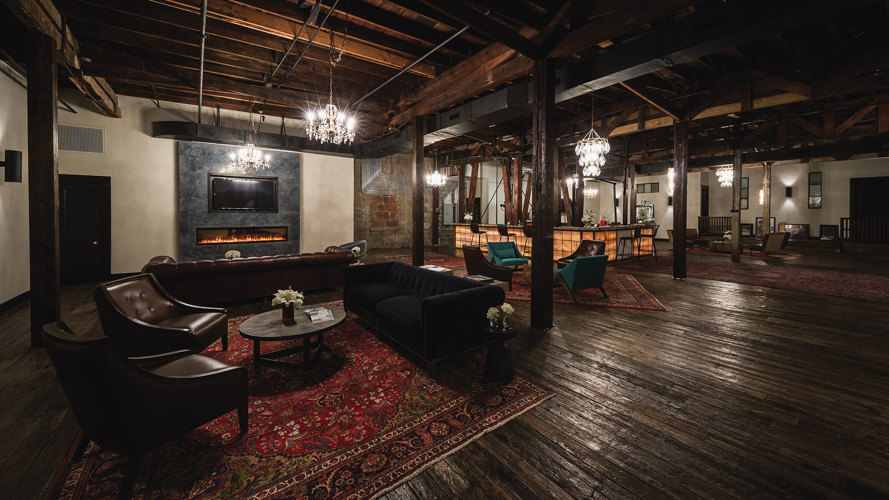
The GunRunner Hotel strikes a unique balance between quirky and luxe. The boutique space is tucked amid the town square. Inside there are thick, creaky floorboards and a jumble of ornate chandeliers hanging from high ceilings — and the nine guestrooms open directly into an airy lounge that has multiple fireplaces, oversized velvet sofas and an expansive bar. During normal, non-pandemic times, I imagine the close quarters within a cozy hangout like the GunRunner would be a positive. But despite the heightened anxiety caused by unmasked patrons and overheard conversations about COVID-19 being “a fad,” the management did their best to make us comfortable. Checking in and out was keyless and contactless — we let ourselves in and out without ever having to exchange in-person information or keycards. We stayed in the Smithsonia room, which served as a post office from 1886 until 1927. A colorful antique Persian rug covers the rustic wooden floors, and thick velvet curtains ensure that no uninvited light will enter your space. Behind that curtain, a small balcony overlooks the quaint square — the balcony itself looks a bit like something you’d find in New Orleans’ French Quarter, though its views are of gas stations and vacant alleyways rather than Mardi Gras revelers and street performers.
In the morning, I took a long shower in the black-on-black tile bathroom and made a quick cup of coffee from the in-room Keurig while wrapped up in a plush red bathrobe the hotel provided. Sitting out on the balcony, coffee mug in hand, was almost enough to make me forget about the pandemic. At night, I took the stairs from behind the bar to the rooftop, which was vacant and provided a clear view of the small downtown district. The familiar hum of crickets and cicadas and the intermittent flicker of traffic lights made the peaceful perch feel especially small-town and Southern.

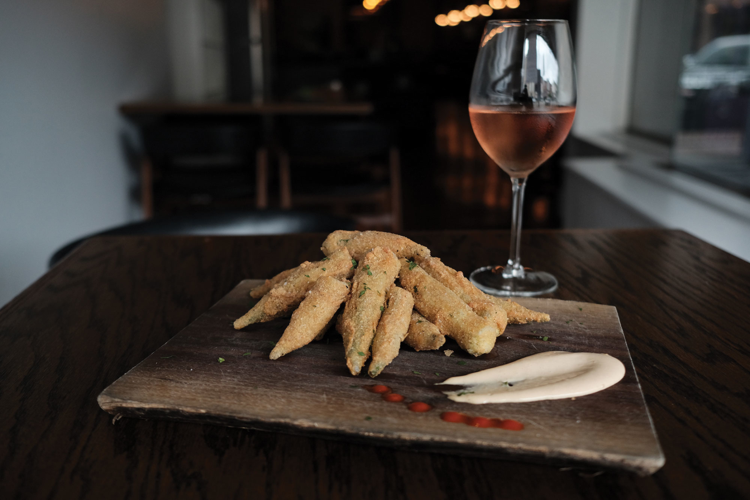
Fried Okra at Odette
The downside of staying at the GunRunner is that there’s no room service. The upside is that the excellent restaurant Odette is just a walk down the block. The restaurant’s COVID precautions include taking patrons’ temperature with a touch-free thermometer upon entry, using disposable paper menus and closing off half the tables so there’s at least six feet of space between parties — and of course the entire staff wears masks. It was weird, in a way, but as someone who hadn’t been to an actual restaurant in months and was pretty hesitant about it, I was appreciative of the efforts.
Odette chef Josh Quick specializes in elevated American food with international flourishes. I highly recommend the whole fried okra and the steak frites, and the salted caramel ice cream sandwich was big enough to split, but delicious enough not to.

The Rosenbaum House
Do
During a global pandemic, almost everything in a public space has the potential to cause many of us anxiety, and tourist attractions can look downright sinister. You must choose your activities carefully, and sometimes just driving through unknown country roads can be enough for a mental reset. But when there’s a Frank Lloyd Wright house less than five minutes from your hotel, you make it a priority. The Rosenbaum House is a pristine example of Wright’s Usonian style — that is, a home designed for middle-class families during and soon after the Great Depression.
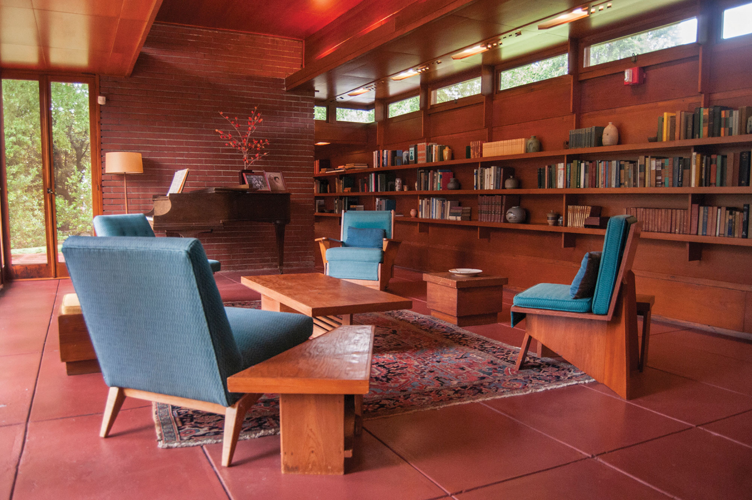
The architecture and furniture — all original, aside from some updated kitchen appliances — seem both extremely American and otherworldly, antique and futuristic. The house was built in 1939, and the Rosenbaums — Stanley (a professor) and his wife Mildred (a former model) — moved in a year later. One of the four boys who grew up in the glass-and-cypress residence was Jonathan Rosenbaum, a renowned film critic who worked at the Chicago Reader for decades and was championed by Jean-Luc Godard. The low ceilings, detailed woodwork and built-in features of the home are all exemplary of Wright’s style — the boys’ room had bunk beds affixed to each other and the wall behind them in a sort of summer-camp-meets-Space Camp, sardine-can aesthetic.
A tour of The Rosenbaum House is a casual offering of architectural and historical insights, and masks were encouraged. It’s relatively easy to be socially distant in a Frank Lloyd Wright home — his houses are designed like mini-compounds that seem to encourage order. I most enjoyed looking through the shelves of antique books and a room that functioned as a Mildred’s weaving studio, filled with tidily arranged spools of colorful thread and a large functional loom.
And you can’t visit Florence without stopping by the Billy Reid flagship store. Fans of classic, well-crafted menswear with quality fabric and attention to detail should not miss it. The Alabama Chanin Factory is another unique, unmissable attraction — founder and slow-fashion pioneer Natalie Chanin is a Florence native who returned home after years working in New York and abroad. Her zero-waste, sustainable mission is reminiscent of Florence itself: quietly luxurious.



