
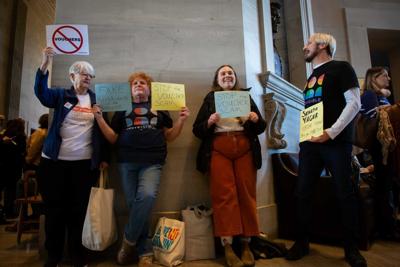

The creation of a statewide school voucher program, largely pushed for by Gov. Bill Lee during a special session, became one of the defining moments of last year’s legislative session. The matter may soon come before lawmakers once again as Republicans eye an expansion of the program and Democrats push for accountability.
When the so-called Education Freedom Scholarship program passed in 2025, it created 20,000 vouchers for students, each worth a little more than $7,000 to cover private school tuition and additional education-related expenses. Under the current program, half of the vouchers are awarded based on financial need, with the other half made available to students regardless of family income.
Lee has said he wants to expand the number of vouchers offered, though the exact amount is not yet known. With a potentially tight budget year looming, voucher expansion could mean costs have to be cut elsewhere. As reported by Tennessee Lookout, some rural Republican lawmakers have also expressed opposition to expanding the program due to the fiscal note. Rural areas in Tennessee also typically have fewer private schools than the state’s more populous cities.
As of this writing, more than 50,000 applications have been received for the program ahead of the 2026-27 school year. The governor’s office has touted the number as an example of high interest in the program.
State Democrats have long opposed vouchers, saying they take money from public schools, adding that private schools have the power to deny admission to students based on disabilities and other factors. Lack of transparency on who exactly is benefiting from vouchers has also become a concern, and some lawmakers are working on legislation to increase oversight.
State Rep. Caleb Hemmer (D-Nashville) tells the Scene he intends to sponsor legislation requiring the Tennessee Comptroller of the Treasury to audit the voucher program, reviewing student eligibility, deposits and expenditures and whether the funds are used for intended purposes. Sen. Jeff Yarbro (D-Nashville) and Rep. Sam McKenzie (D-Knoxville) are pushing transparency legislation filed last year (Senate Bill 1338/House Bill 1052) that would require the comptroller’s office to create an annual report of information about students participating in the voucher program. The report would then be submitted to the General Assembly for review. Proposed Republican-sponsored legislation (SB 1643/HB1544) would require the Tennessee Department of Education to submit an annual report on the program to the legislature.
Outside of vouchers, several controversial education bills from last year’s session could make their way back into lawmakers’ discussions this year. One bill in particular (HB 793/SB 836), sponsored by House Majority Leader William Lamberth (R-Portland), would prohibit undocumented students from attending public schools. An alternate version of the bill would charge public school students tuition if they can’t prove their citizenship status. The bill passed in the Senate but never made it to the House floor for discussion, with Lamberth saying it was stalled while he awaited information from the U.S. Department of Education regarding funding concerns. At a press conference on Jan. 15, Lamberth said the bill was still alive. At that same press conference, Republican lawmakers said they want to verify the immigration status of all public school students in Tennessee.
Also revived from last year’s session is an attempt to take over Memphis-Shelby County Schools. HB 662/SB 714 would strip a large portion of control from the district’s school board and create a state-appointed oversight board. The body, made up of Shelby County residents, would wield a majority of the power over the school system’s operations, which include its budget and its contract with the district superintendent. State Rep. Mark White (R-Memphis) has said the legislation comes as a method to improve academic performance in the district, though Democrats call it an overstep.

From immigration enforcement to voucher expansion, the Republican supermajority is pushing for Tennessee to be the nation’s conservative leader



Post a comment as anonymous
Report
Watch this discussion.
(0) comments
Welcome to the discussion.
Log In
Welcome to the discussion.
Keep it clean. Please avoid obscene, vulgar, lewd, racist or otherwise abusive language. Comments featuring hate speech or threatening or violent content will not be tolerated.
PLEASE TURN OFF YOUR CAPS LOCK.
Be truthful. Don't knowingly lie or mislead.
Be proactive. Use the “report” link on any comment that violates our comment policy.
Share with us. We'd love to hear your feedback.